
The Last Straw: How Penny Maltby Preserves A Dying Craft
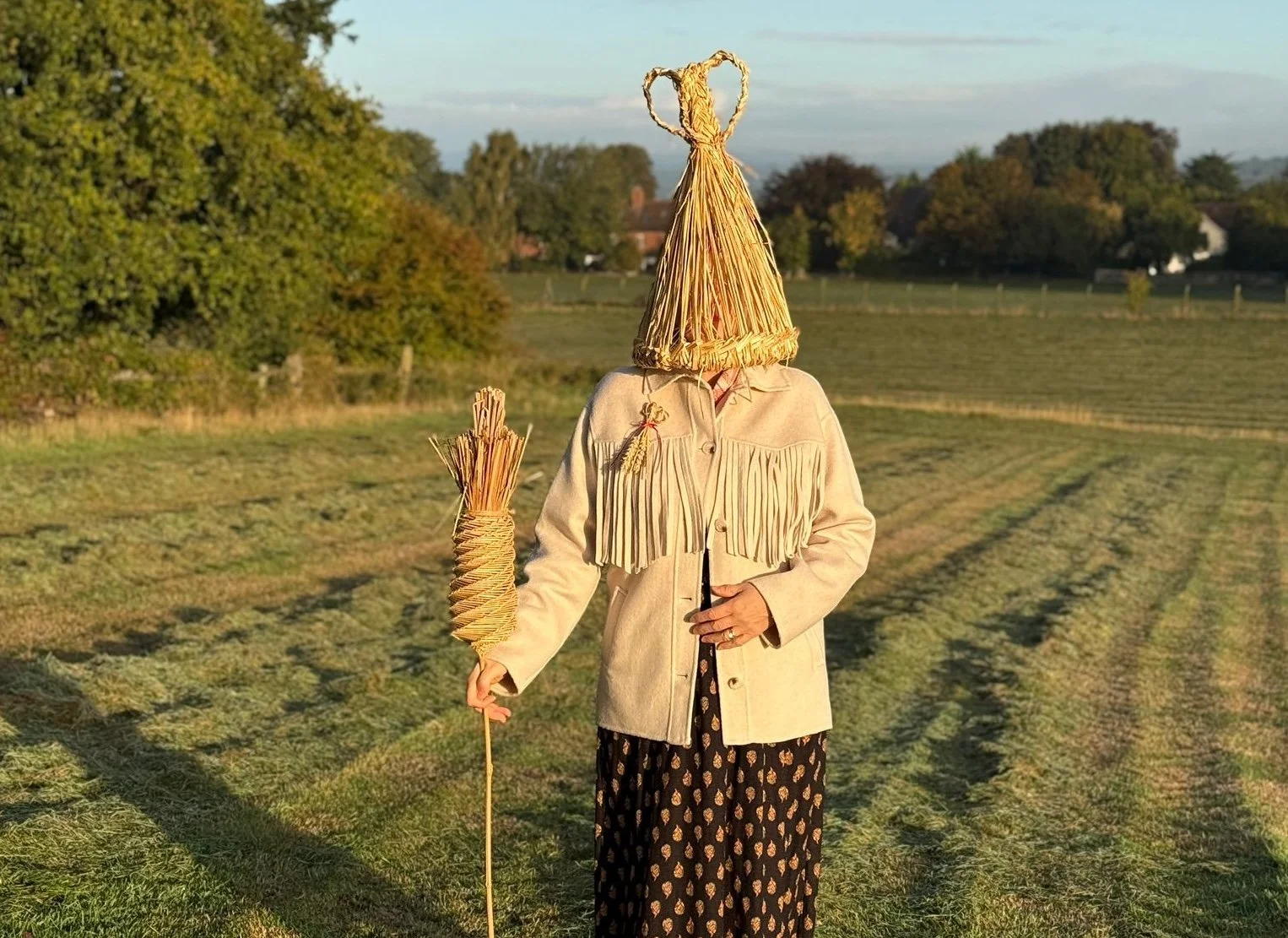
‘I love spending hours on my own working with straw: the sound of it, the rustle, and its smell. I find it quite ritualistic to prepare,’ says Penny Maltby, an artist and designer dedicated to preserving this craftwork. ‘I'm never happier than just working with my hands,’ she continues. We’re at her studio in Oxford: a maker since childhood, in her fifties she pursued an arts degree at Oxford Brookes University and now she creates works in textile and straw.
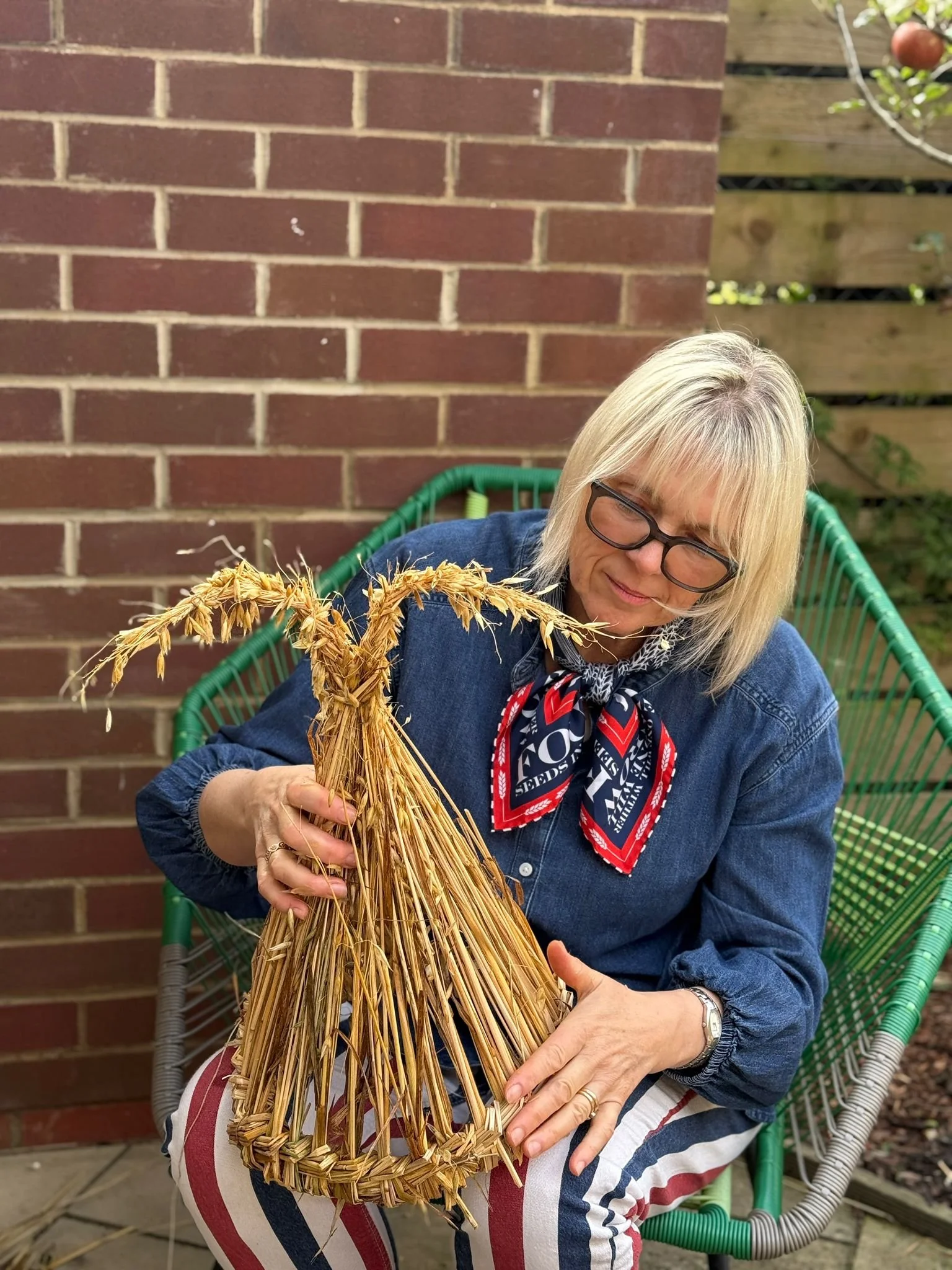
Penny Maltby
Unless you’re a farmer, you’re unlikely to have strong opinions about straw. Yet straw working has many traditions, each with distinct skills, history, cultural and rural customs which connect people to each other and the land. Nonetheless, it’s on the red list of endangered crafts due to loss of knowledge and teachers, as well as supply issues (heritage wheat varieties are no longer grown and harvested in enough quantities).
‘I'm never happier than just working with my hands’
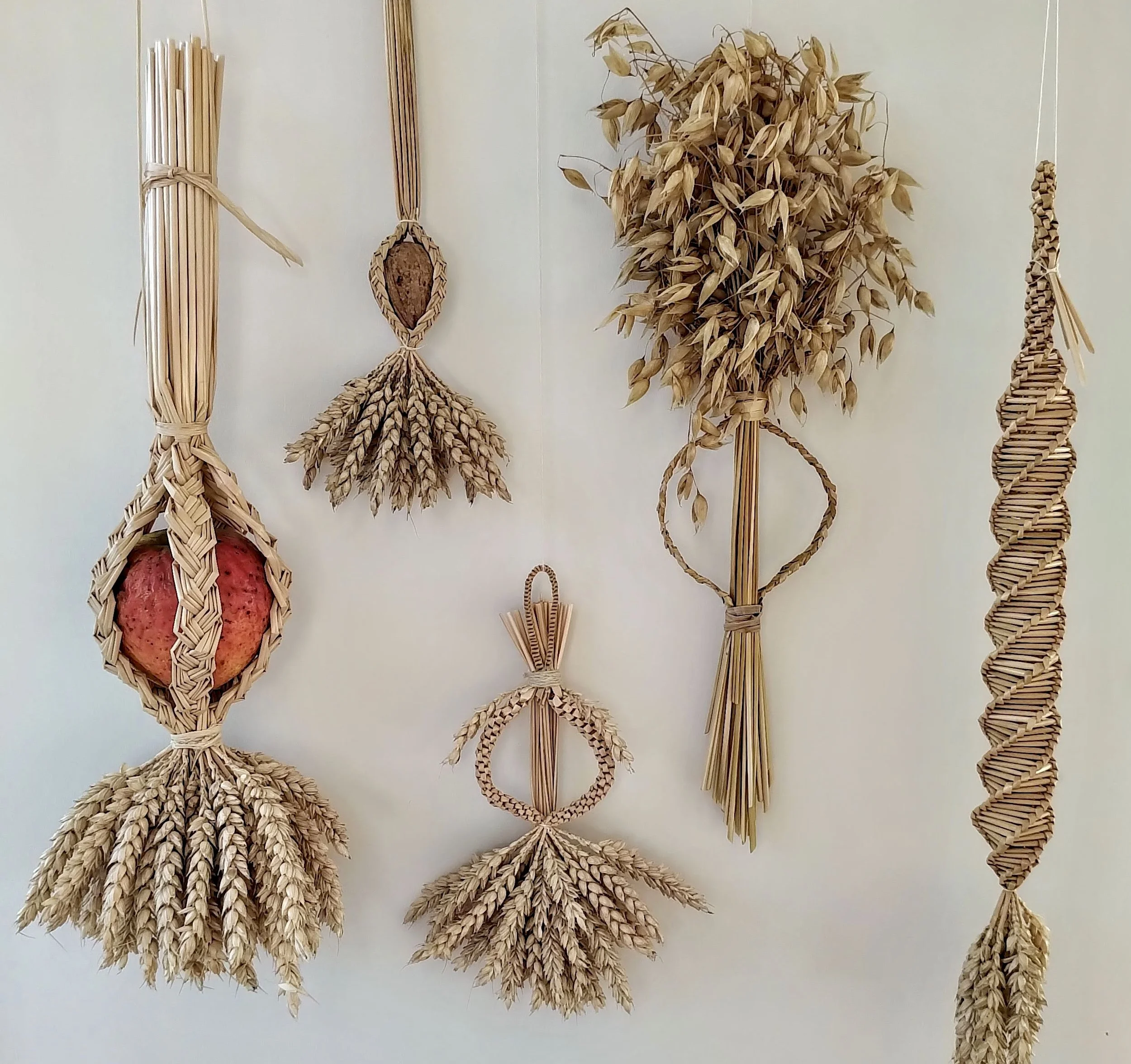
Straw work is a craft that turns dried cereal straw into decorative objects: Maltby uses a heritage variety prepared through a traditional process involving cutting it from the bottom and making it into sheaves, and then combines this with other materials like oat and rye straw, each of which has its own qualities. The results of her work include corn dollies or harvest trophies, decorative objects traditionally plaited out of the last sheaf of the harvest, which are believed to hold the spirit of the crop until the next season. The aesthetics and shapes of these traditional patterns in turn inspire the designs of the silk scarves and bandanas she makes.
‘I like to play with the material and see how far I can go’
She has chosen to work with straw in part because of the challenges and qualities it poses. ‘Straw is a complicated material,’ she says. Depending on the harvest and climate, straw is different every year, and traditional methods of straw-growing limit how much can be produced. ‘I like to play with the material and see how far I can go,’ Maltby shares.
We’re amidst a renaissance of appreciation for traditional arts and humble mediums like textiles and ceramics, but Maltby notes that there’s still an element of snobbery about craft in the art world that neglects the refined, inspiring pieces that are being produced. ‘The amount of skill that goes into craft is still undervalued,’ she says. ‘One day an appliqué work on a patchwork is considered craft, then the next minute it's in the Victoria & Albert Museum because it's a folk costume, and there’s a folk exhibition, and everyone gets very excited.’
Who gets to gatekeep what’s fine art and what’s ‘merely’ craft? Frequently marginalised due to the cheapness of the materials, and their domestic or agrarian origins, such crafts are miles away from the salons and galleries that were historical tastemakers. But Maltby’s pieces, rooted in tradition and with playful new twists, allow us to question these often arbitrary distinctions.
‘The amount of skill that goes into craft is still undervalued’
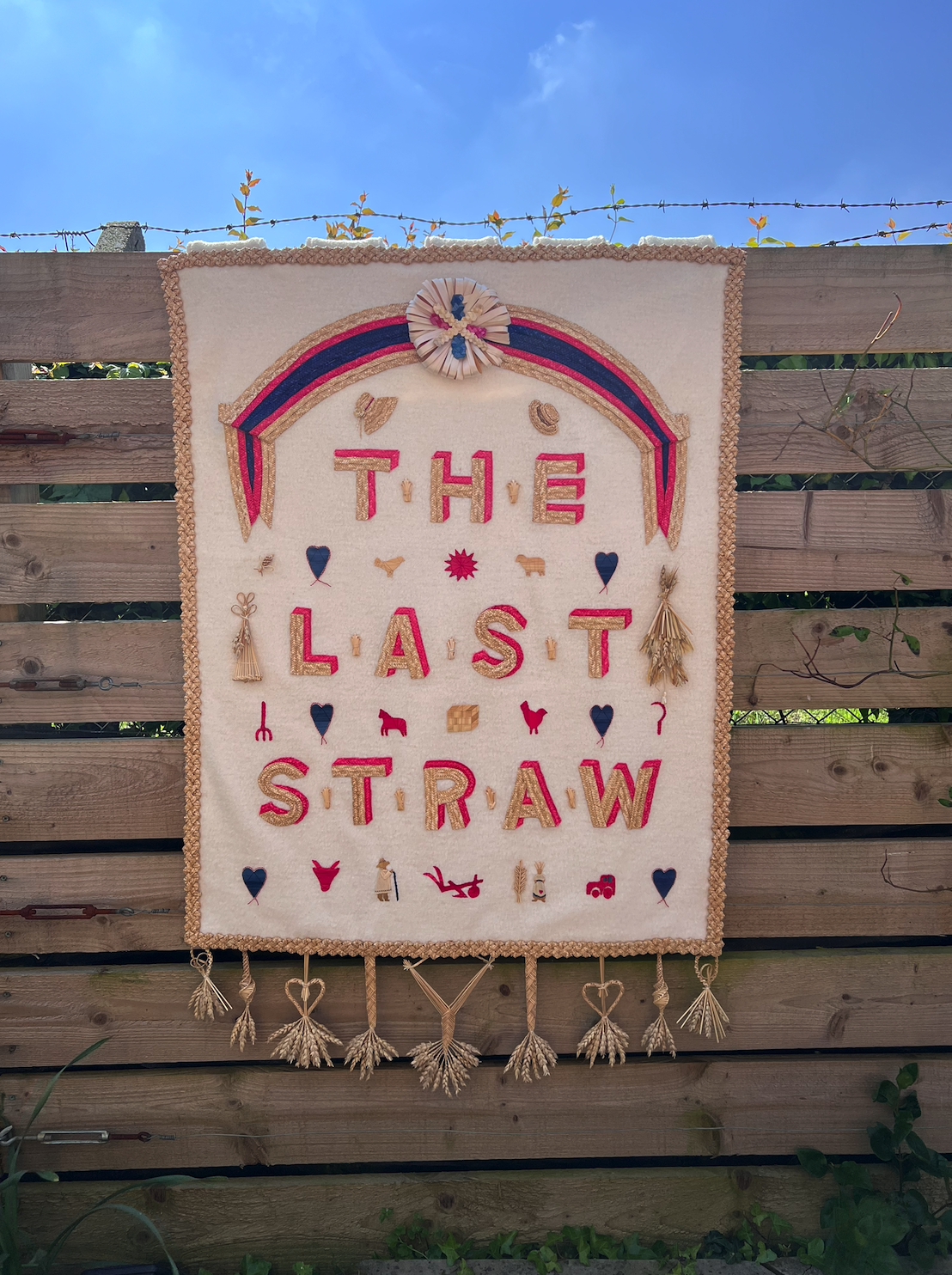
Consider her textile piece The Last Straw. The titular inscription on this banner hints ‘how close we are feeling the last straw as a society in this moment in time’. It’s an ode to Britain’s history of protest, where women artists and textile makers were influenced by the suffragettes, with its hybrid of jolly visuals and political subtext giving the banner its subversive note. Maltby is very aware of the words we use daily in our language that are connected to textiles and she wants to use more of them. She’ll display the banner at Design Nation’s What Is Precious exhibition in Manchester this August.
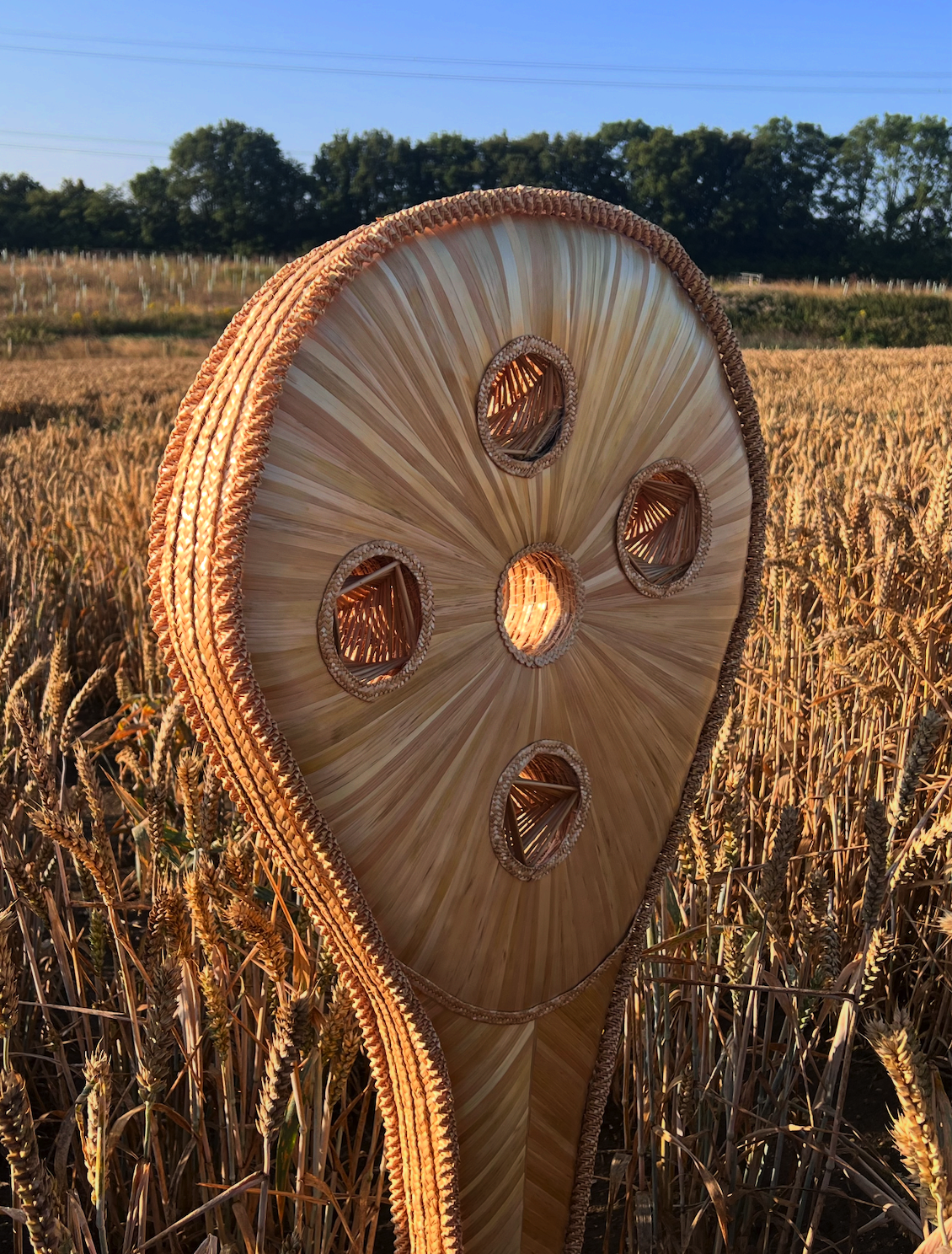
These works don’t exist solely for their own sake, but also serve to protect an endangered art form. Maltby wants more people to experience a connection with craft and offers workshops in heritage crafts like plaiting straw. ‘Although I’d like to pass on my skills’, she notes, ‘it’s difficult to make it happen when you work with such a niche material.’
‘People think you're just doing it because you love it, but loving it doesn't pay the mortgage.’
Another barrier is the financial challenge of sustaining a career. ‘People think you're just doing it because you love it, but loving it doesn't pay the mortgage,’ she says. Whereas we’d never expect a tradesperson such as a plumber to fix a toilet for free, she points out that artists are constantly expected to work for little or nothing. This dilemma is a concern for Maltby, who thinks about ‘how to encourage the next generation to become straw workers.’
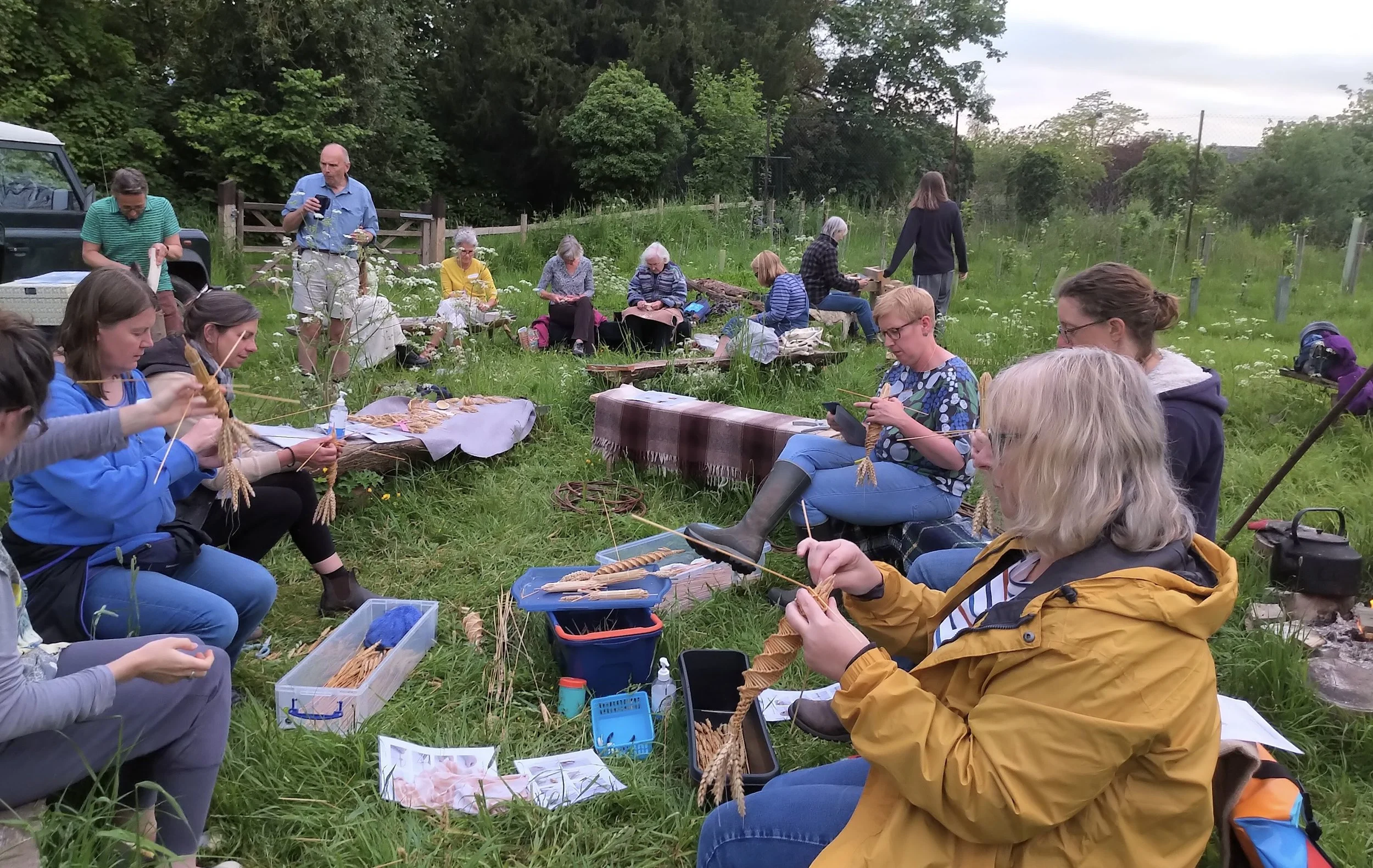
Urbanisation and the increasingly mechanised nature of farming likewise endangers these crafts. Creating a harvest trophy was once a celebration of the seasons and the crops that farming communities depended on, but how many of us nowadays know when Britain’s harvest season begins? Thus Maltby says, ‘I love it if I’m successful getting into an exhibition, because I think I’ve got straw out there in the world, where people wouldn’t normally see it. I like when people come across my work in a different context – that gives me a little “yes!” feeling’.
Ultimately, Maltby hopes her work will give straw work and related crafts the credibility they deserve. ‘A lot of craft people, particularly women of a certain age, feel less visible, or even invisible.’ Mostly, Maltby tries to ‘put her head down and do my thing. I’m allowing myself to do what I want, which is to make.’
Photographs courtesy of Penny Maltby