
‘I Give It A Year’: Are Microcinemas The Future Of UK Film Distribution?
Although the sun was setting, it was still 32 degrees when I keyed in the code for the gate at Pelican House. A gaggle of Eritreans clustered in the alleyway, waiting to be let in to a party for their national day of celebration. They barely glanced at me as I shuffled politely past and went in.
Up on the second floor, in the common room of the Pelican House office building where I booked out a space for a couple of hours, I set up the projector and arranged the furniture. I rolled down the blinds and cracked open a can of Stella. Over the next half hour, around thirty people arrived one by one, two by two. I began to breathe a little easier; I had worried that the heat and the scrappiness of the set-up would put people off. Not so. The people were up for it.
As the room filled up, I began to wonder what it was that drew everyone here. Indeed, what made me put the event on in the first place?

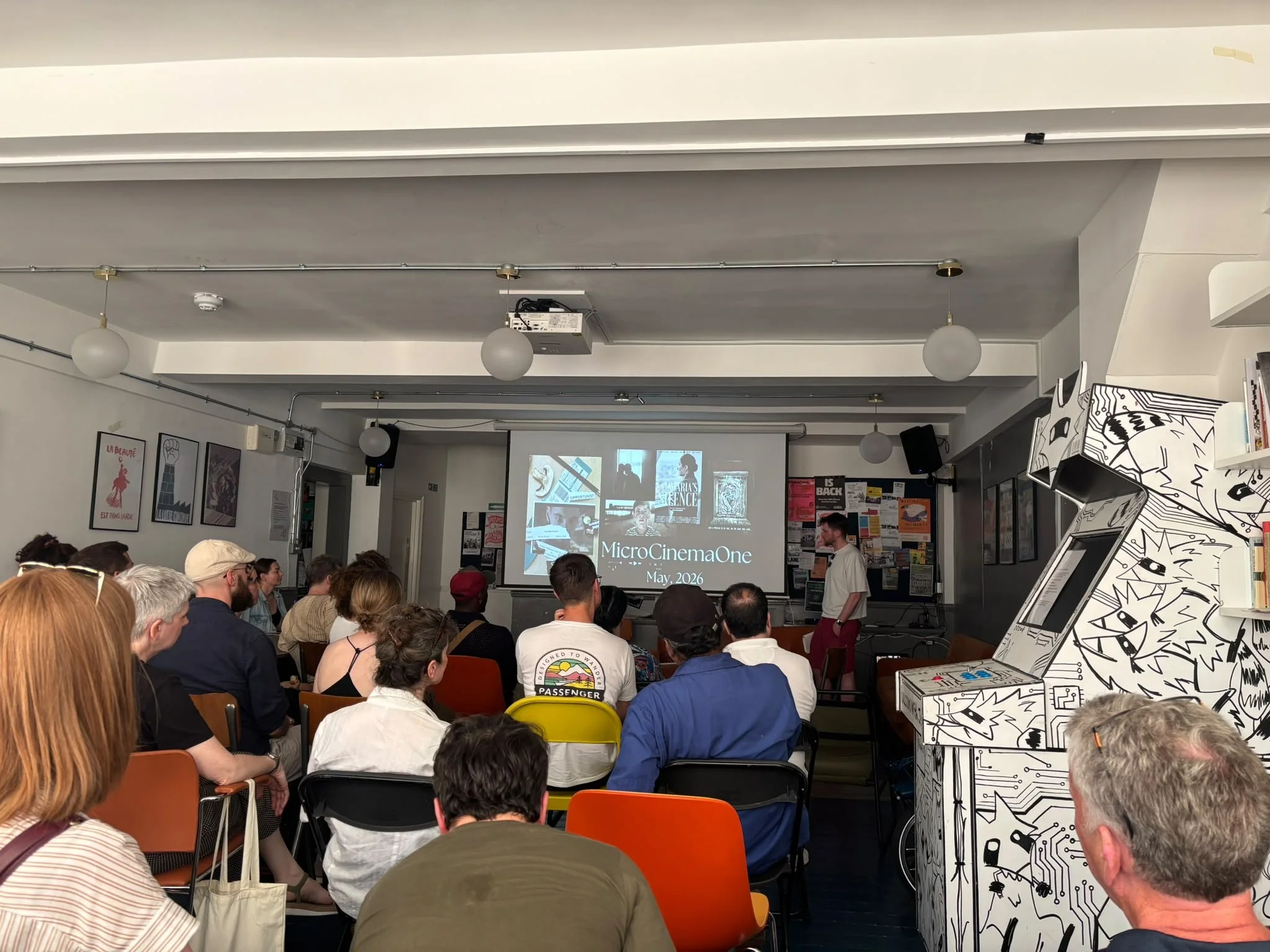
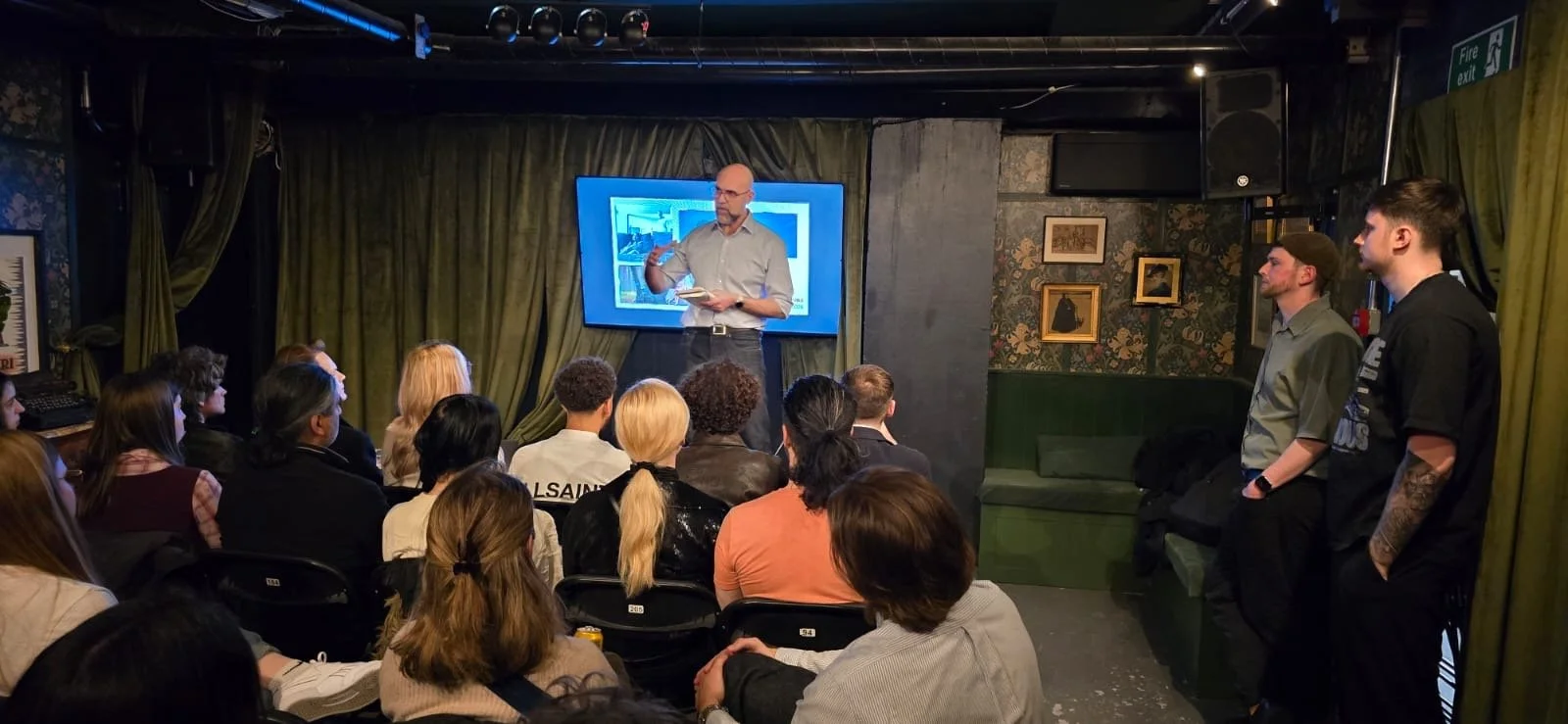
Attendees at a microcinema evening hosted by James McLoughlin
This is what one of the UK’s proliferating microcinema evenings looks like: events designed to help early-career filmmakers overcome distribution challenges and connect with new audiences. It’s easy to see why they might appeal to filmmakers, but it has also become clear in the last few years that audiences are craving a different cinematic experience.

Microcinemas offer an alternative to the narrowness of mainstream programming and the soaring cost of cinema tickets, and they extend the viewing experience beyond the screen, bringing audience and filmmakers into the same room, opening up discussions. The recent success of films like Iron Lung, Obsession and Backrooms is evidence of the growing demand for indie content and the power of nurtured connections between filmmakers and film-lovers.
Microcinemas offer an alternative to the narrowness of mainstream programming
I became involved in setting up these screenings in London after connecting with a community of filmmakers via Substack. We meet monthly, and from the first evening we realised we all had a shared gripe: how on earth are young and early-career filmmakers, or those without big financial backing, supposed to find an audience for their films?
The common route for most is this: make a short film to prove your chops, submit it to film festivals, and hope that in the process someone with money sees it and gives you the budget to make another film. This hope is really more of a pipedream; it rarely pays out. Development funding is scarce in the UK, with much of it centralised around the BFI, though it doesn’t have the supply to match the demand and is regularly criticised for ignoring certain types of films (and crews) in favour of others. Short films are meant to function as proofs of concept so investors can see a snippet of your work before shelling out for a full feature, but they are a punishingly expensive proof.
The UK’s microcinema scene has emerged as a response to these conditions. As with most cultural movements, it is downstream from the US, where a bevy of newcomers have set up and taken root in the last few years, including Ellis Sutton’s Coffeehouse Cinema and Jake S. Weisman’s Filmjourn.
Filmjourn runs microcinemas across Los Angeles. Alongside its own microcinema — Movie House L.A. — it also connects other venues, pop-ups, and series to help solidify what Weisman calls the burgeoning Los Angeles Mini-Circuit.
Short films are meant to function as proofs of concept, but they are a punishingly expensive proof.
‘A musical act doesn’t wait until Royal Albert Hall is available to perform their first show,’ Weisman says, explaining why he feels the microcinema format is so important for early-career filmmakers. ‘They aren’t “cutting their teeth” at the O2. Films shouldn’t be waiting for their big break either. They should be playing smaller venues until they play bigger venues. Smaller budgets until they command larger budgets.’
There have been attempts to establish microcinemas in the UK for the last decade; there’s no shortage of appetite for alternative distribution models. For instance, writer-director Maj Jukic founded CineShots, which took place in Streatham, London, in 2018.

‘We wanted a space where we could watch short films, chat about them and network. Early-career filmmakers who came along would often find their crew for their next film. A lot of people came back every month, and for a lot of filmmakers this was their very first “film festival” kind of event, with Q&As after the screening. It meant a lot to them to find a live audience and speak about their work.’
‘Films shouldn’t be waiting for their big break.’
Microcinemas have grown in popularity because they are relatively easy and low-cost to stage; all that’s needed is a room, some chairs, and a screen. But as Jukic points out, turning a one-off screening into a loyal audience and monetising it is a different matter entirely. CineShots ran for two years. When asked about the challenges of making microcinemas sustainable, Jukic pointed to the finances involved.
Venue and room hire in cities like London can become prohibitively expensive. If you can’t find a way to monetise your screenings or leverage them to get your next project off the ground, the costs begin to outweigh the advantages. If you monetise in a way that feels inauthentic, audiences may drift back to the more familiar and reliable paid environs of traditional cinema.
Perhaps the success of Coffeehouse Cinema, based in Los Angeles, can offer a template for how the UK might go about it. As Sutton wrote recently, a microcinema works best when it treats short films as the whole experience, rather than as placeholders before the ‘real’ bit starts. That requires intentional curation, spaces designed to be enjoyed (note to self: no more hired gaffs that turn into pseudo-saunas), and a sense of occasion that makes audiences feel they’re part of something they’re willing to pay to come back to, something that doesn’t feel unfinished.

Building on this, Jake Weisman argues that it’s only a matter of time before microcinemas become the default mode. ‘Keeping movies locked in the corporate infrastructure and film festival lotteries helps almost nobody. The proliferation of open screenings (like open mics for movies), shorts culture, pop-up micros, and smaller audiences will only spread the love of genuine indie/nondependent cinema to places which have only been able to experience corporate cinema.’
‘Keeping movies locked in the corporate infrastructure and film festival lotteries helps almost nobody.’
But what will it take for this to become mainstream? On Substack, there are dozens of filmmakers, at various stages of their careers, supporting and promoting each other as momentum against the status quo continues to grow. A tipping point is close, Weisman reckons: ‘A very popular artist will find us, agree with us, decide to play, and *blip* everything will change. When a big name purposefully, personally tours their film around the world for intimate audiences, we’ll have won. I give it a year; timestamp it.’
Even in their scrappiest form, microcinemas can deliver an experience for early-career filmmakers that on the festival circuit feels like pulling teeth: a real audience, with live conversations and a regular space in which to build a community around their craft. The hard part, as ever, remains money, scale, sustainability. Yet as the UK scene learns from the more networked, venue-flexible US model, the outlook is promising. The appetite is there, it’s time we all dig in.
Photos of microcinema events supplied by James McLoughlin