
Made in Britain: Can Handmade Workwear Survive in Great Yarmouth?
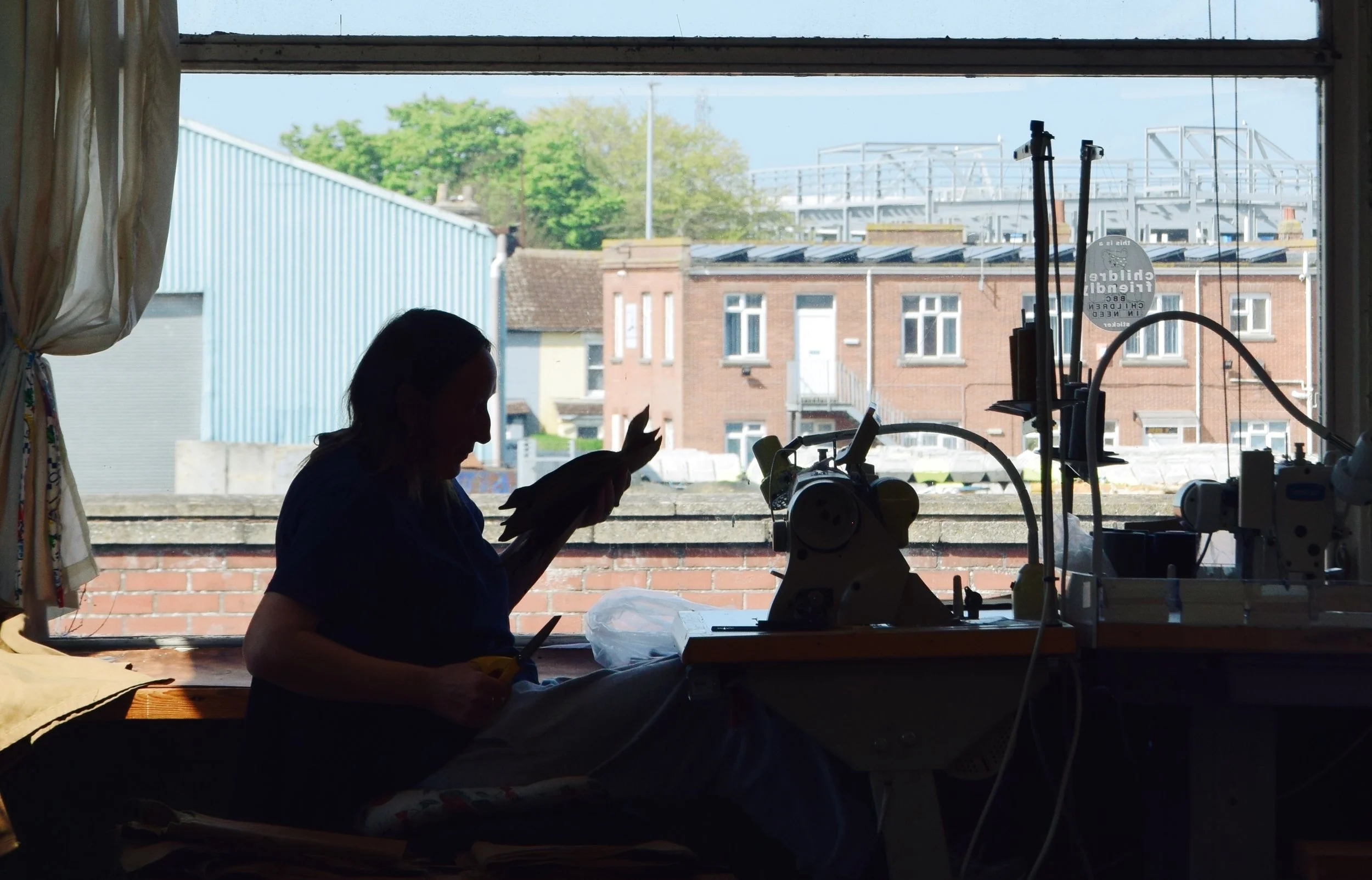
At ten o’clock on Monday morning the riverside of Great Yarmouth is quiet, save for the din of the junkyard and the screech of gulls. The fishing industry collapsed in the late twentieth century and the billions of pounds earned by the offshore industry, centred just a mile away, do not seem to reach the shore. The street is fossilised in post-industrial gloom.
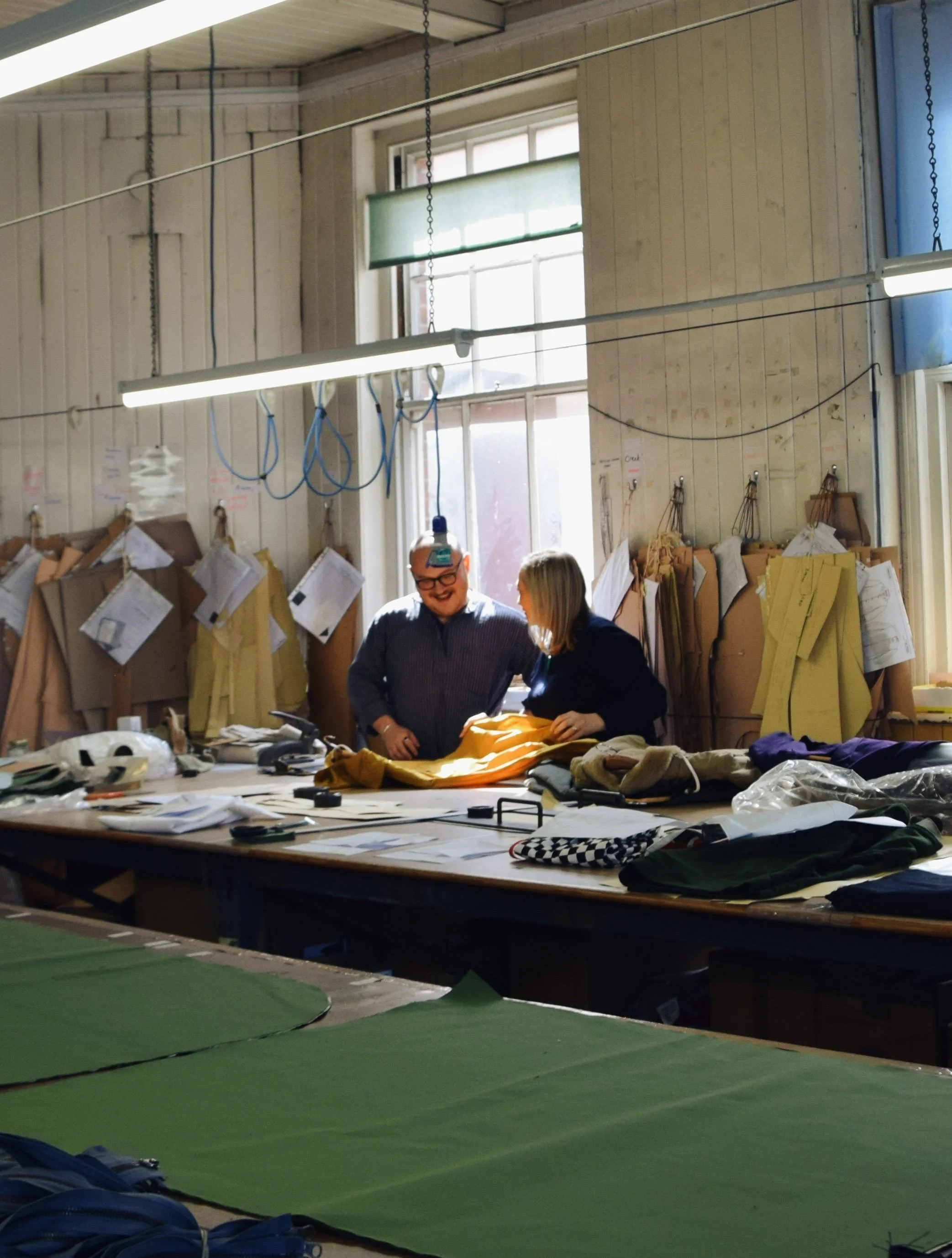
Writer George Robson and Sophie Miller
I wonder what this town felt like in its heyday? Built on a spit between the North Sea and the River Yare, Great Yarmouth was a beloved holiday destination for decades, and much of its population still relies on income from tourists to the coastal side of town.
Sophie Miller grew up here. She now runs a brand steeped in the heritage of her hometown, particularly that of its industrial Riverside, which she calls ‘the real nitty gritty side’.
The history of Yarmouth Stores is the history of Great Yarmouth.
The Riverside’s industries have declined, yet Yarmouth Oilskins have, somehow, weathered time and tide. The clothing brand remains in the factory established over 120 years ago, and continues to use many original patterns. The first garment-makers I meet is Sue. She’s worked here 44 years.
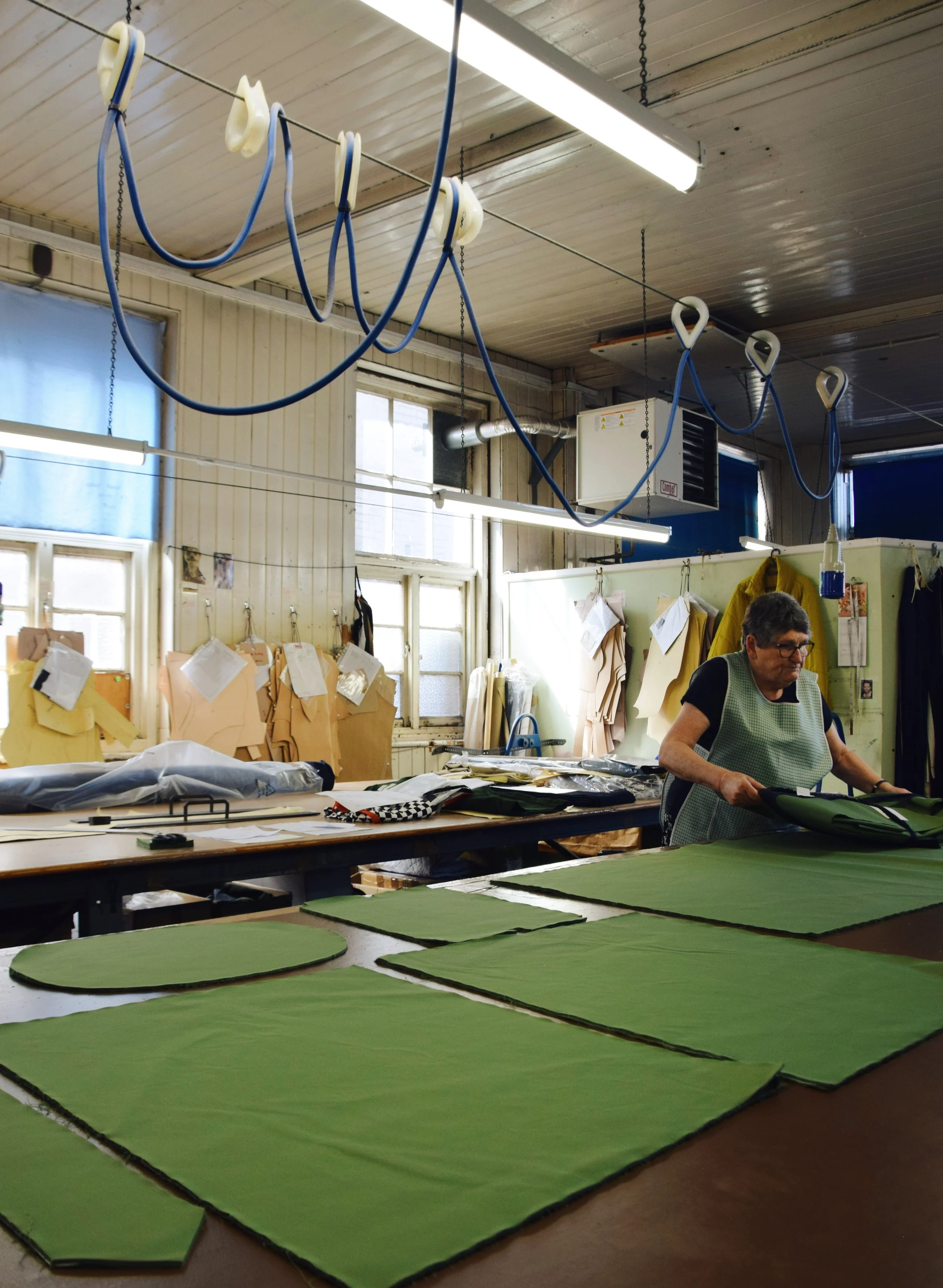
‘She’s been here the longest, Sue’, says Sharon Bowles, the factory manager.’ Then Joey’s not far behind on 42 years I think, and I’m on 34…’ she continues, noticing my amazement. These are impressive tenures in an industry that has largely turned away from British-made in the hunt for cheap labour overseas.
The ship is now steered by Miller, who worked for Max Mara Group, Adidas, and M&S before returning to Yarmouth, ‘I wasn’t aware there was a factory here,’ she laughs, ‘through a project for someone else I saw it and ended up asking if I could join!’
She approached the factory’s owner with an idea: modernise the brand’s approach while championing its history. They’d reintroduce details, like the use of French seams, that had been shorn away to cut costs, and buy high-quality hardware from British producers. With workwear and British-made garments in vogue, many brands were exaggerating their heritage for promotional purposes, but Yarmouth Oilskins had all the history a brand could need.
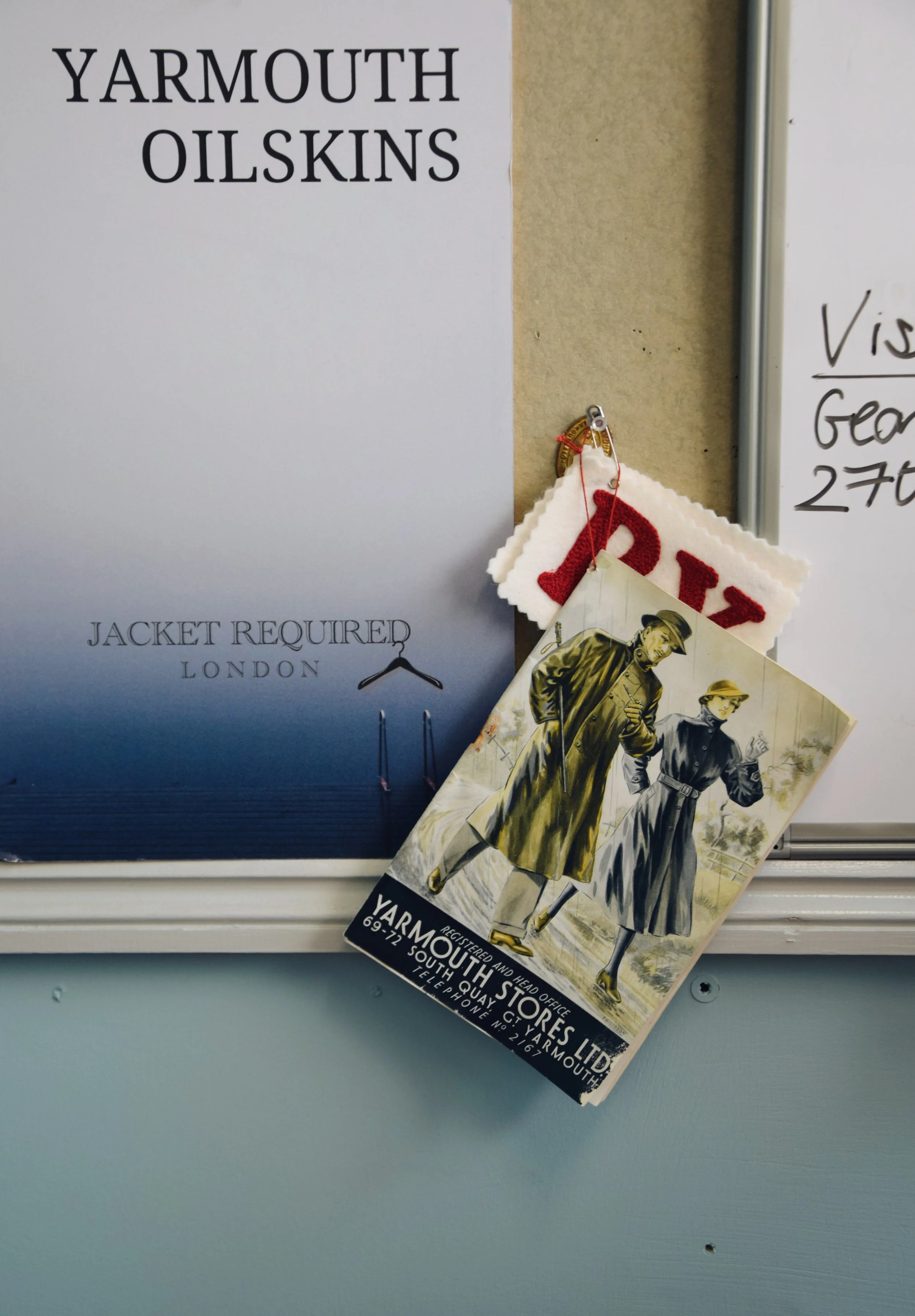
The history of Yarmouth Stores (as the factory is called) is the history of Great Yarmouth. In the late-nineteenth century some 1200+ employees made baskets, sails, and boots and aprons to support the herring trade. Most importantly, they also produced oilskins, waterproof oil-treated garments used by seafarers.
Some say founder John Johnson discovered the use of paraffin wax for waterproofing and began producing waxed jackets before a certain Mr John Barbour… and while this rumour is unverifiable, what’s clear is that at its peak, Yarmouth Stores was the clothier of choice for British fishermen. But around the Second World War much of the company closed, and the factory pivoted to producing protective clothing in the Sixties following the discovery of oil and gas offshore.
‘If we've designed something beautiful, that’s your jacket for the next 10 years.’
After seeing Miller’s proposal, the factory owner asked her to develop a small collection in a few weeks. She’s been on a mission to grow the brand ever since. ‘In my previous jobs, things were mass-produced in Turkey, Asia and the Far East,’ she explains. ‘With that comes a lengthy process, whereas here I can design something and work on the pattern, then we can make it and refine it and remake it.’
The workforce now consists of eighteen machinists and factory staff, Will, who takes care of the business’ commercial side, and Miller, the twentieth member of the team, who forgoes a title, instead saying she ‘takes care of the fluffy, creative parts.’ The lack of strict job roles allows them to deal with ‘lots of spinning plates’.
A unique production process allows them to create exceptional work. In place of the ubiquitous seasonal approach, Yarmouth Oilskins has a core collection. ‘We can’t do crazy deadlines’, says Miller, ‘Because we make for other brands too, having a core collection means we can dip in and out if there’s a quiet time in the factory.’
There is another reason for this approach: ‘I think it’s the way people should be shopping,’ Miller continues. ‘If we've designed something beautiful, that’s your jacket for the next 10 years. I won’t advocate you getting a new one for the sake of it. We talk a lot about companion clothing and owning something for a long time, so it shows all the marks and the patina and every part of the journey you've been on together.’
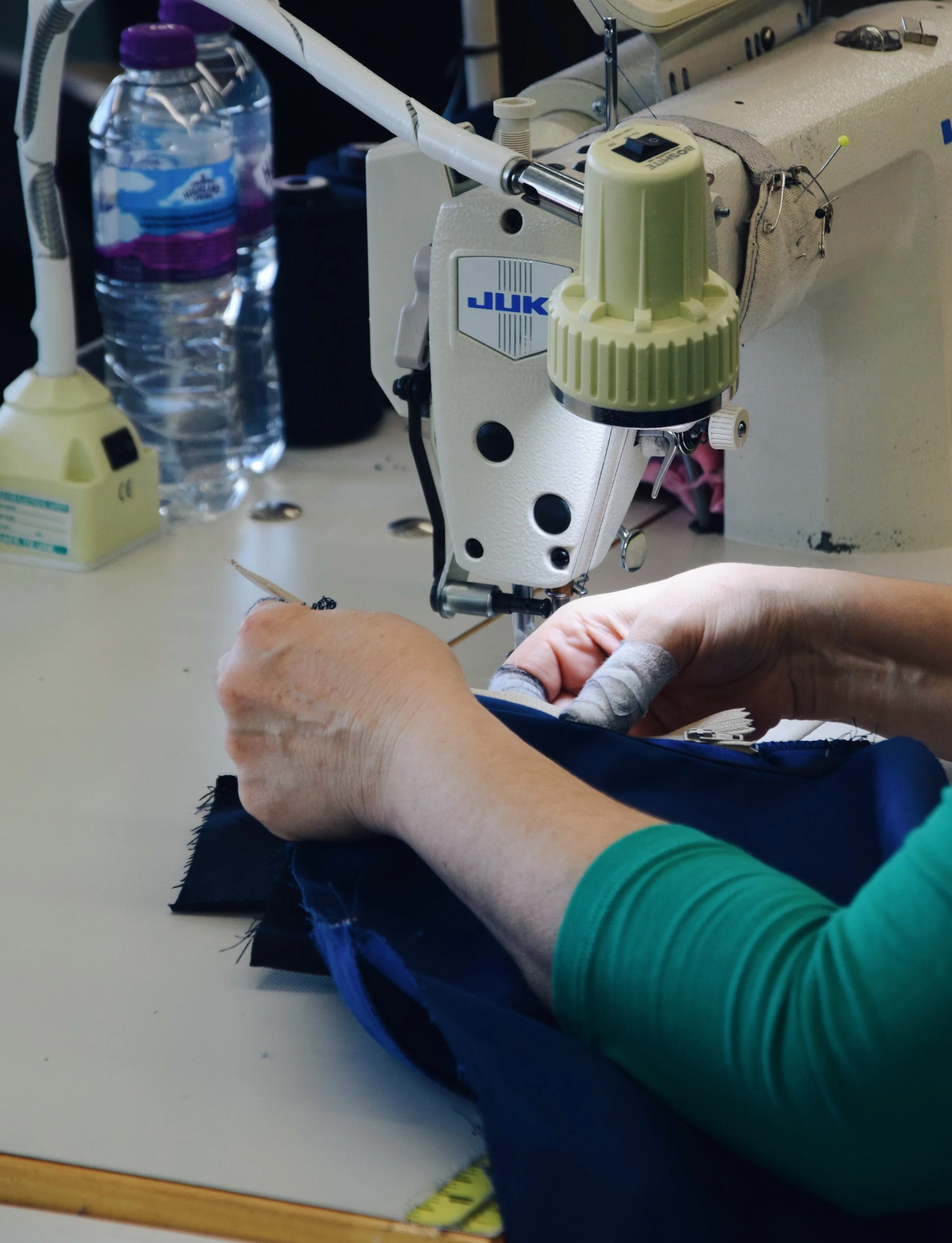
They avoid assembly lines. Instead, a Yarmouth Oilskins garment is made by hand, by one person.
They avoid assembly lines. Instead, a Yarmouth Oilskins garment is made by hand, by one person. With the exception of buttonholes and overlocking, ‘more or less one person makes something from beginning to end’, explains Miller. ‘It fosters a sense of real ownership for staff.’
This is clothing that communicates its provenance, of place as well as people. The brand is firmly rooted in the history and character of Great Yarmouth. The town suffers from high unemployment, and as with many deprived industrial towns, many voters have shifted to the political right. The MP for Great Yarmouth, Rupert Lowe, is a divisive voice in British politics. Lowe, who founded the Restore Britain party after he left Reform UK, has called for mass deportations, stating, ‘If you are here illegally, you should be deported…If that results in 1 million+ deportations being the eventual aim? Then so be it.’ He has been publicly endorsed by Elon Musk during a spat with Reform party and its leader Nigel Farage. ‘Rupert Lowe is a local hero. Everyone absolutely loves him, which I’m not too sure what I think of’, says Miller. Nonetheless, she continues to champion her hometown.
‘I’m fiercely protective of Yarmouth.’
‘I’m fiercely protective of Yarmouth,’ she says. Locals are hoping to follow the example of Margate, another deprived seaside town that is now recovering economically, and they’ve seen a wave of investments, including the regeneration of The Winter Gardens, a former roller-skating hotspot, where Miller and Bowles probably bumped into each other as teenagers.
‘Who’d have thought, forty years later...!’ Bowles calls from across the room.
There’s real unity on the factory floor. ‘Everybody knows everybody, inside and out, good and bad’, says Miller. Here’s an example: two staff members had children a similar age. One would look after both kids in the morning, then go to work and hand them off to the other mother, who’d take them for the afternoon.
The factory’s output is impressive. As well as producing their own line of clothes under the Oilskins brand, the factory also makes clothing for labels like Aubin that understand the value of a tag reading Made in Great Britain.
‘Every machinist has their own handwriting!’
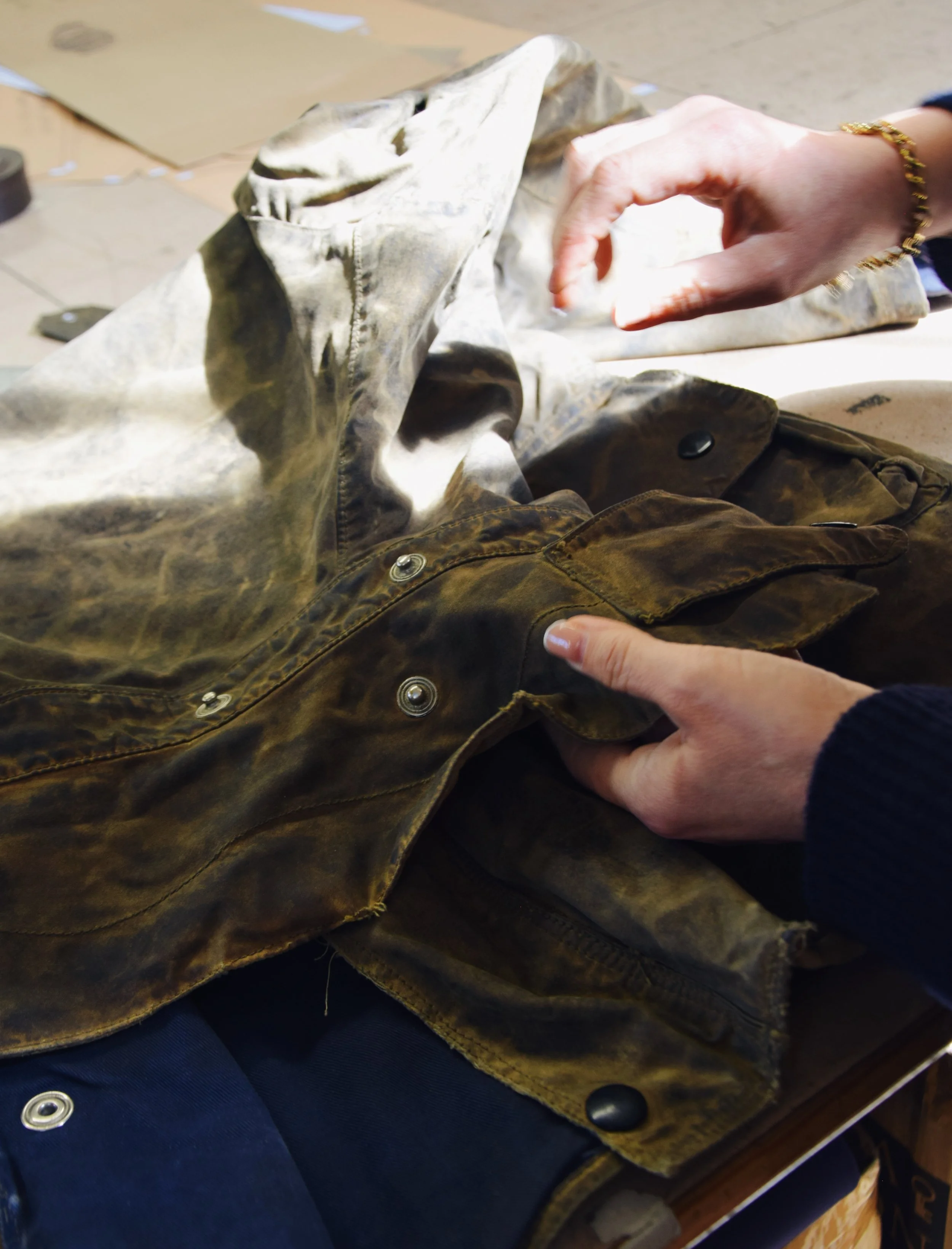
Miller demonstrates her point by showing us a workwear jacket made by hand, with overlock seams and simple snap closures. The jacket was £60, a price that high-street brands struggle to match. And products with similar price tags will likely have been made with plastic-derived textiles on a different continent. In contrast, Miller doesn’t believe that plastic equals innovation. All their clothes are biodegradable, and local partnerships help them develop low-impact ways of making. They work with Dundee-based wax company Halley Stevensons, which uses natural waxes for water protection, and have teamed up with the Coastal Exploration Company, a Norfolk sailing outfit that trials their clothes at sea.
Yarmouth Oilskins prove that high-quality clothes can be produced locally at a reasonable cost, but Miller knows that survival needs innovation. ‘We’re really conscious of looking forward so that we don't become fancy dress,’ she says. ‘We don’t want to become so heritage that it's costume.’
Miller believes we lose something integral when manufacturing leaves our shores: we lose part of our country’s identity. ‘It matters because it harks back to Britain’s history as a great manufacturing country. So many industries have gone offshore to make production cheaper. I don't think cheaper is necessarily the right driver; there's so much more to it.’
She shares that a well-known fashion brand reached out to work with the factory, but demanded that everything be done, without exception, to the nearest half of a millimetre. Therein lies the tug-of-war between mass-production and hand-made clothing: what’s made by hand will always have slight variations. ‘That's where there’s a bit of a learning curve’, Miller explains. ‘Appreciating something made by hand is always going to be somewhat unique. Unique doesn’t mean wrong. But it [the experience] made us doubt ourselves.’ At this point, Bowles chips in, ‘You have to appreciate that every machinist has their own handwriting!’
Yarmouth Stores has taken a big risk to try and do things right. Whether it takes off or not might just be a good temperature check for where our loyalties lie and how we want to buy, whether we are really drawn to craft and quality, or just paying lip service to these ideas. ‘That’s the decision the customer makes, isn’t it?’ says Miller, shrugging.
All photography by Nazli Adiguzel for LOST ART MEDIA