
Inviting Everyone In: Is Your Home Really Private, and Does it Matter?
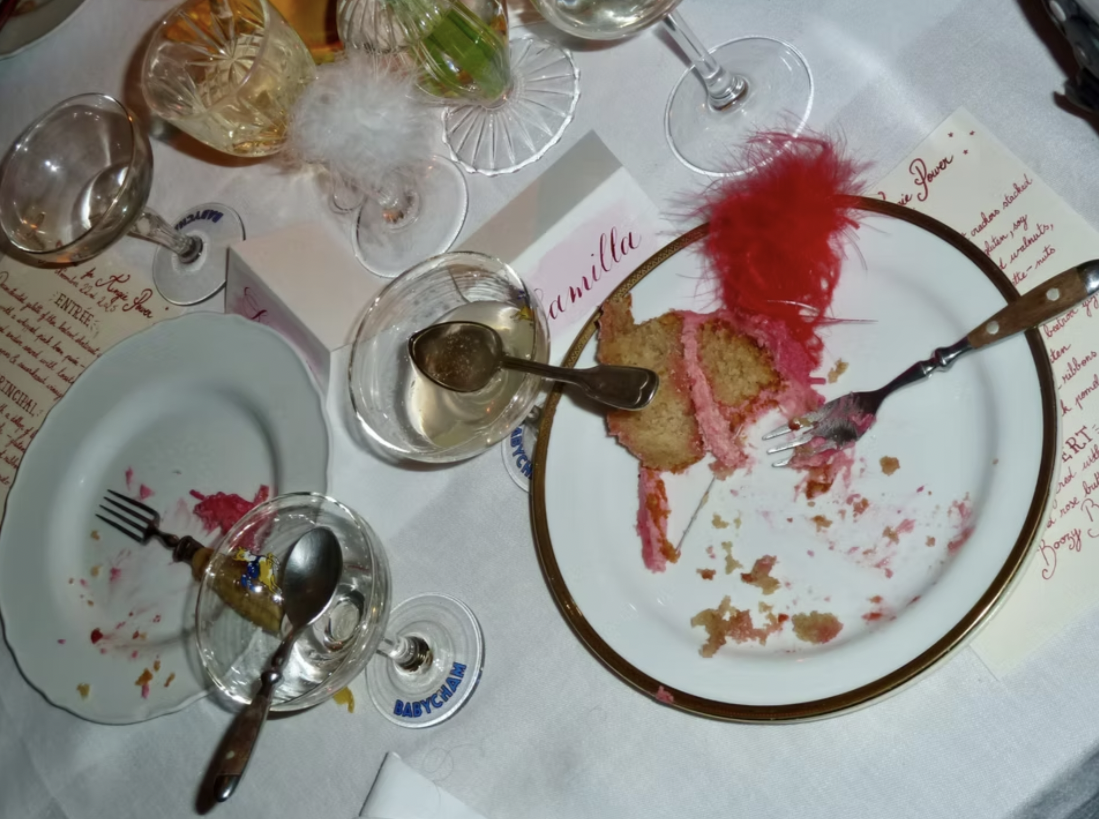
We’re taught that vampires need to be invited in to gain access to our homes… but then, so do ordinary guests. How do you know what, exactly, you’re opening yourself up to when you open the front door? For there are occasions - house parties, birthdays, wakes - when someone you don’t know or like will use your toilet paper, judge the colour of your walls, and try to befriend your pet.
For food artist and writer Barney Pau, an unfamiliar presence at his kitchen table is not unusual. But if you’re thinking of seances, you’ve gone in the wrong direction: Pau’s supper club, hosted in his Dalston abode, welcomes diners who are looking for human connection rather than a spiritual one. Unlike a restaurant, a supper club encourages conversation between strangers. It’s an experience that’s curated but relaxed, offering both home comforts and the rush of chance encounters.

‘A supper club is the whole [hospitality] package. It's the personality that comes with it, the person behind the food,’ says Pau. ‘It offers [early-career chefs] a chance to bring their flavours, their ideas, their personality into the menu, giving guests an insight into who they are.’
‘A supper club is the whole [hospitality] package. It's the personality that comes with it.’
Supper clubs have flourished, in part, due to a post-pandemic thirst for ‘third spaces’ (locations that aren’t primarily workplaces or homes). They also answer Gen Z’s desire for experiences that involve socialising face-to-face, while remaining Instagrammable. And by virtue of being small, they can be more experimental: diners with unique tastes will find themselves catered to, whether they’re after a Motown theme or Swedish-Filipino fusion.
As restaurant rents and running costs continue to skyrocket, there’s also an economic appeal for hosts. The set is ready-made and guests cover the price of ingredients.
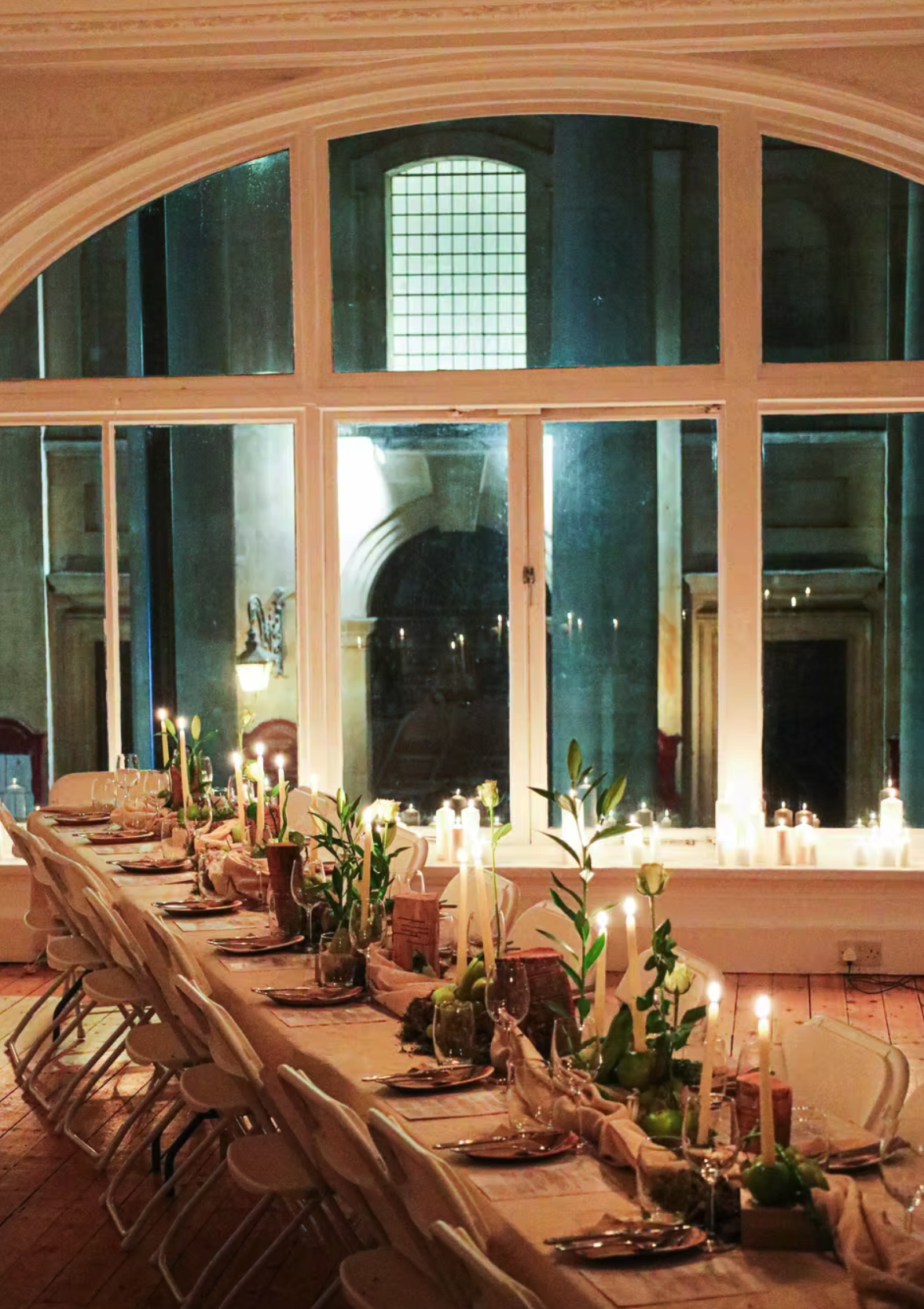
These factors explain the sudden boom of other events in private homes, from poetry nights to gigs to tiny art exhibitions. All across London, folks are flinging open their doors.
While these gatherings seem trendy and ‘of the moment’, they’re tapping into something more timeless: curiosity. Part of a supper club’s appeal, and part of what hosts are implicitly asked to sell, is access to their private life.
Part of what hosts are implicitly asked to sell is access to their private life.
Gen Z are uniquely disinterested in privacy: a whopping 1/3 support the government installing surveillance cameras in every household. If digital natives are comfortable with politicians seeing into our digs, they’re hardly likely to balk at inviting followers into their kitchen. Nonetheless, if the home become another extension of their ‘brand’, hosts come one step closer to living on permanent display, both on and off line.
And as our Instagram or TikTok reels prove, we naturally tend towards showcasing the ‘best’ parts of our lives. This creates a temptation to curate one’s living space and distort the perception of who we are, whether that involves displaying a sophisticated art print or hiding an old copy of Fifty Shades of Grey. Pau warns against doing this, ‘If you're opening up your home, you should see it as a reflection of yourself,’ he says. ‘It doesn’t need to be changed.’
For Pau, his events have revealed a tension between social expectations of what a ‘good home’ looks like and who he really is. ‘I struggled with this,’ he shares. ‘The reality is that I'm a little bit garish and messy and that’s something that I want to channel into the food that I create.’
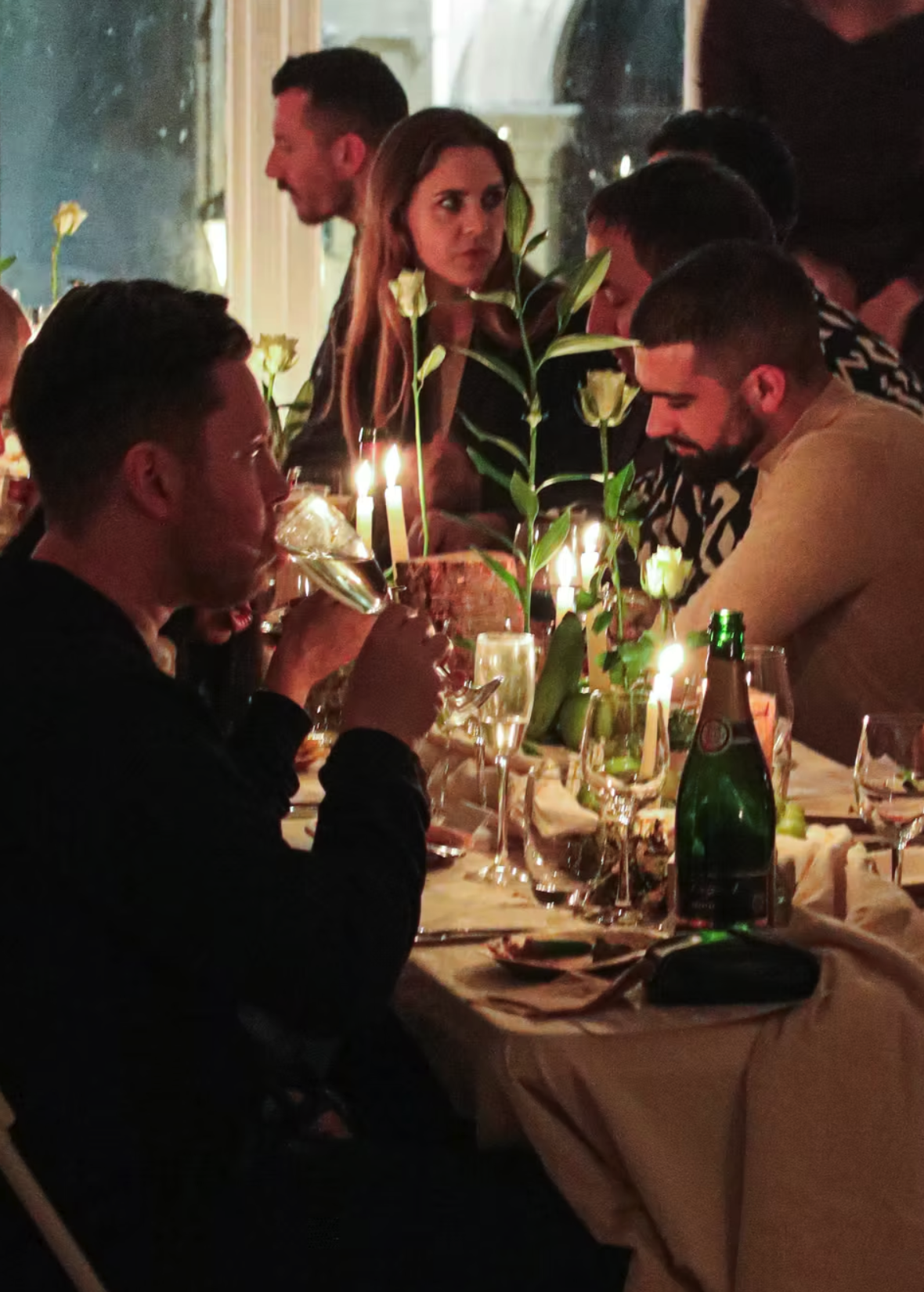
‘If you're opening up your home to host a supper club, you should see it as a reflection of yourself.’
However, one can argue the domestic space is perfectly suited to entertainment. It provides an ‘in-built’ sense of friendship according to James Massiah, founder of Adult Entertainment, a poetry club. ‘It all started with me and my friends reading poems in a room… that’s the DNA of it.’
‘At our events, people are literally shoulder to shoulder,’ he adds, ‘To be in the room, to have respect for space and intimacy with the words that are being read, that’s where the magic is,’ Massiah continues. ‘People are talking about their bodies and their experiences in life and childbirth and abortion, it's all there. It's all very real and physical.’
The events are bonding, and new communities spring out of them. ‘After our last event, there were about ten afterparties,’ Massiah explains. ‘People went off and did their own thing, new friendships are made.’
Despite the positives, Massiah says he’s developed a ‘certain cynicism’ from the experience of setting up small communities in homes. ‘[Some] things that are labeled as communities… [are] packaged and intended to be sold.’
‘After our last event, there were about ten afterparties … friendships are made.’
Unsurprisingly, brands have started capitalising on the movement, planning events hosted by influencers and featuring expensive PR packages.
‘If we're talking about high-end concept dinners, I have a bone to pick,’ Pau says. ‘There’s a difference between using food to inspire people and using food to instil awe. It's inspiring in the sense that it's beautiful, the thought that goes into the decor, the food... But people aren't there for you. They’re there to show themselves.’
One wonders how cosy these events feel if everyone is trying to network. Furthermore, if there’s a ticket price involved, are guests being duped into spending money under the guise of nurturing new friendships?
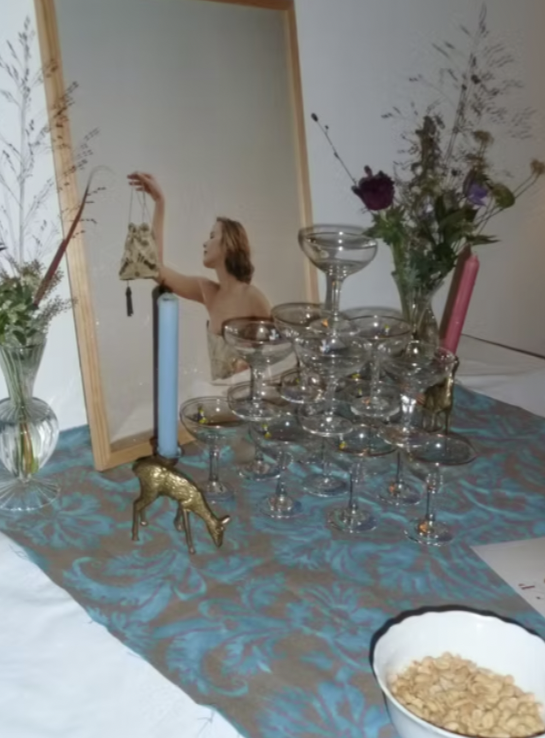
Pau does not charge for his supper clubs: ‘As soon as money’s involved, it makes it transactional. A lot of food culture today is showing people how incredible you are at creating an eating experience. People take a hundred photos, post it on social media, and hope it'll become a viral moment. But there's not really anything [meaningful] there.’
‘As soon as money’s involved, it makes it transactional.’
That’s another challenge inherent in organising events at home, particularly ones involving food: how to balance the intangible value of hosting a free event with the material need for money to set up these evenings?
The decline of free third spaces such as parks and libraries means that a big city like London can be isolating for anyone who doesn’t have a pre-existing friend group or a large enough disposable income to buy into such circles. At their best, domestic events can inspire friendships untethered to a membership fee. But even though hosting at home offers respite from the impersonality of digital life, the dilemmas are universal to an era defined by social media.
All photographs by Barney Pau