
Sound Garden: Riding Sonic Waves Through Kew’s DNA With Daisy Elektra
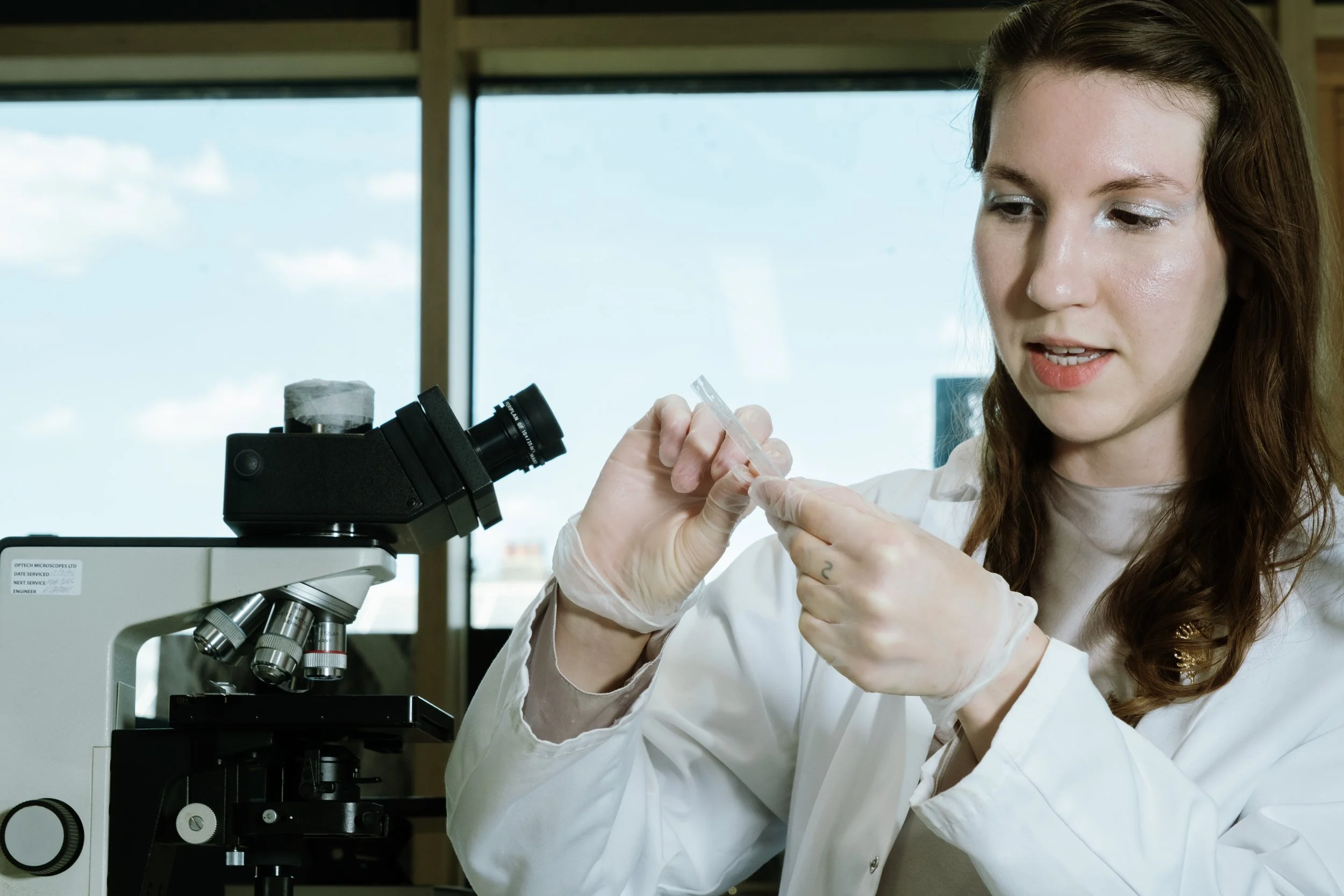
Daisy Elektra at the Kew Gardens laboratory
Sex! Drugs! Experimental electronic music!
A few of my favourite things (allegedly) are ripe for dissection as I am led towards Jodrell Laboratory - home of the restricted-access Molecular Biology lab at one of the world’s most celebrated gardens, the Royal Botanic Gardens, Kew (AKA Kew Gardens).
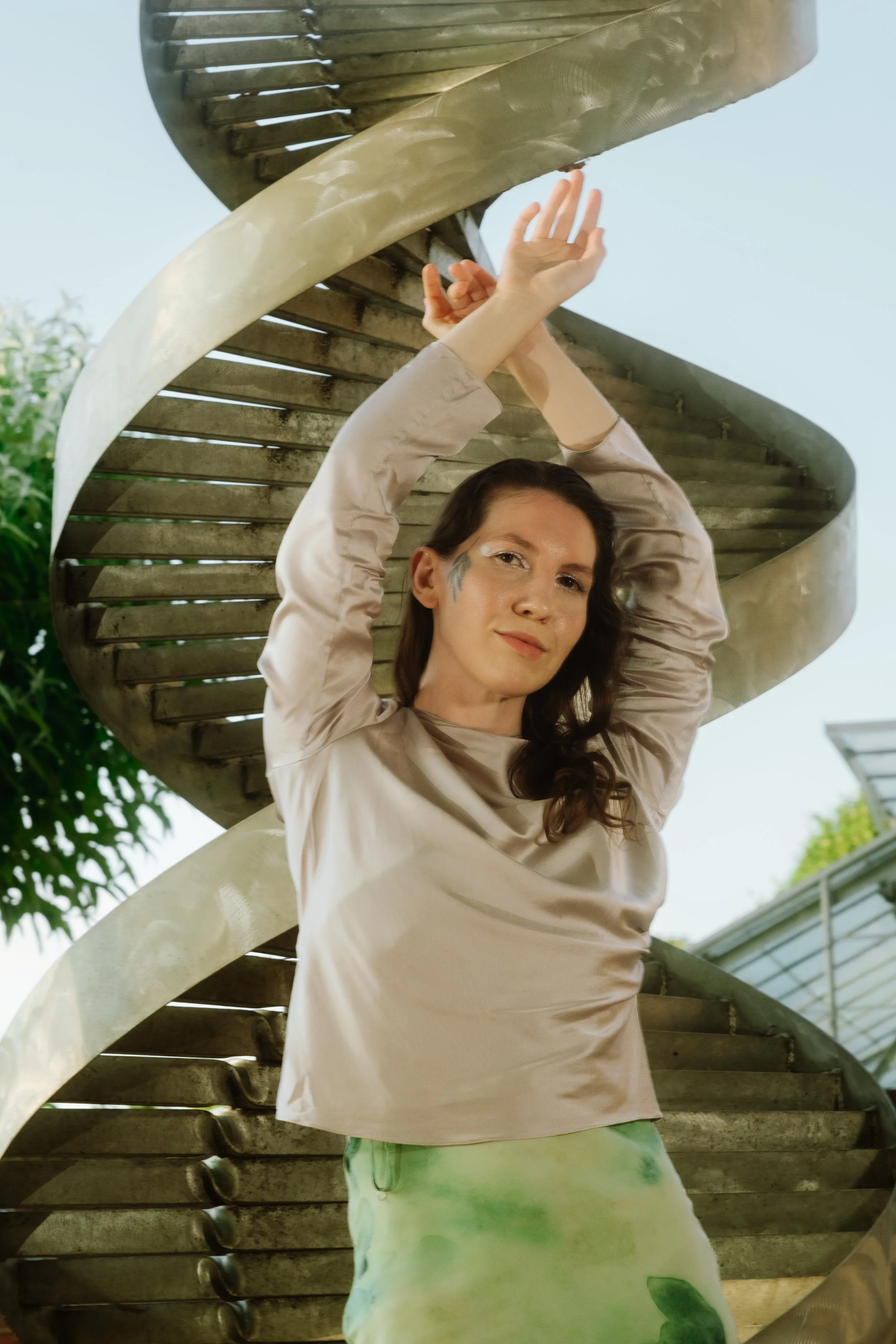
It’s a gorgeous Friday afternoon during the sunniest August in living memory, and the evidence is all around us. The sun beats down on a modern Garden of Babylon pushed too far, with parched plants – in every shade of wilting brown – creating an off-colour rainbow of warning. But this is the place where humanity prepares for all ecological possibilities, so my host – a petite brunette with a lab coat over one arm, a shy smile, and a leafy face tattoo curling around one eye and down her cheekbone – seems unconcerned. The real biodiversity is inside. She’s working on it.
I ask my host, Daisy Elektra, about her face tattoo. What plant is it? ‘Oh,’ she says, in a pleasantly purring Eastern European accent and swipes her security pass at the DNA lab. Donning her lab coat and snapping on a pair of fresh nitrile gloves, she answers, ‘It’s a stick-and-poke my friend did when I was sixteen. It was my first tattoo. I don’t think they were going off a specific reference. I liked nature, and I liked it.’
‘The inner world of the daisy, reacting to the sound...’
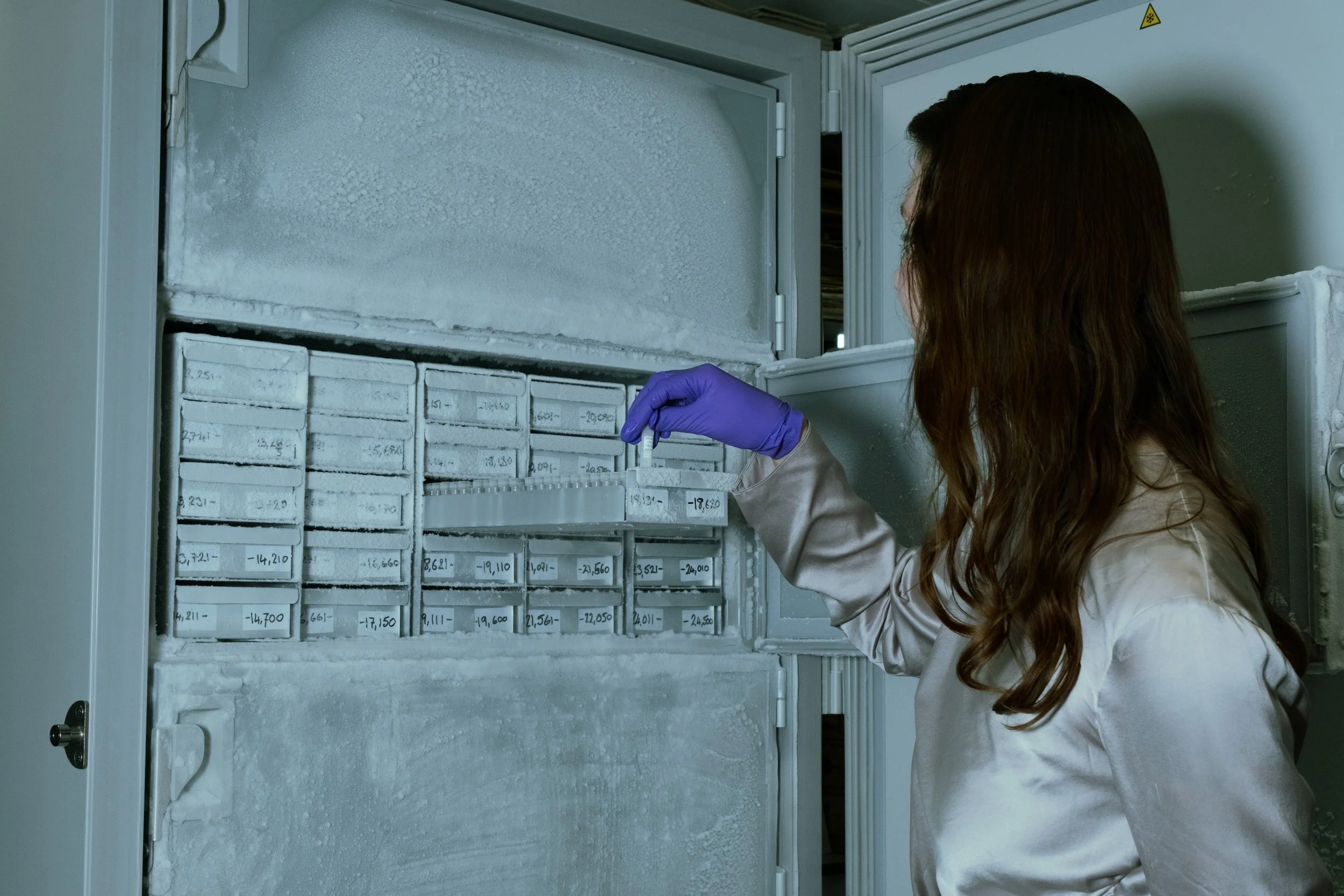
We’ve swapped sweltering sunshine for the cold, clear light of the Molecular Biology lab. Rustling leaves are replaced by the low hum of machinery. Daisy points towards two freezers. ‘Those freezers hold DNA representing around 15% of the world’s known plant species.’
Daisy Elektra is a pseudonym; the name she uses for her multidisciplinary art and experimental electronic music. Her muse? The electric daisy - also known as paracress, or jambu in its native Brazil. We’re about to get up close with it.
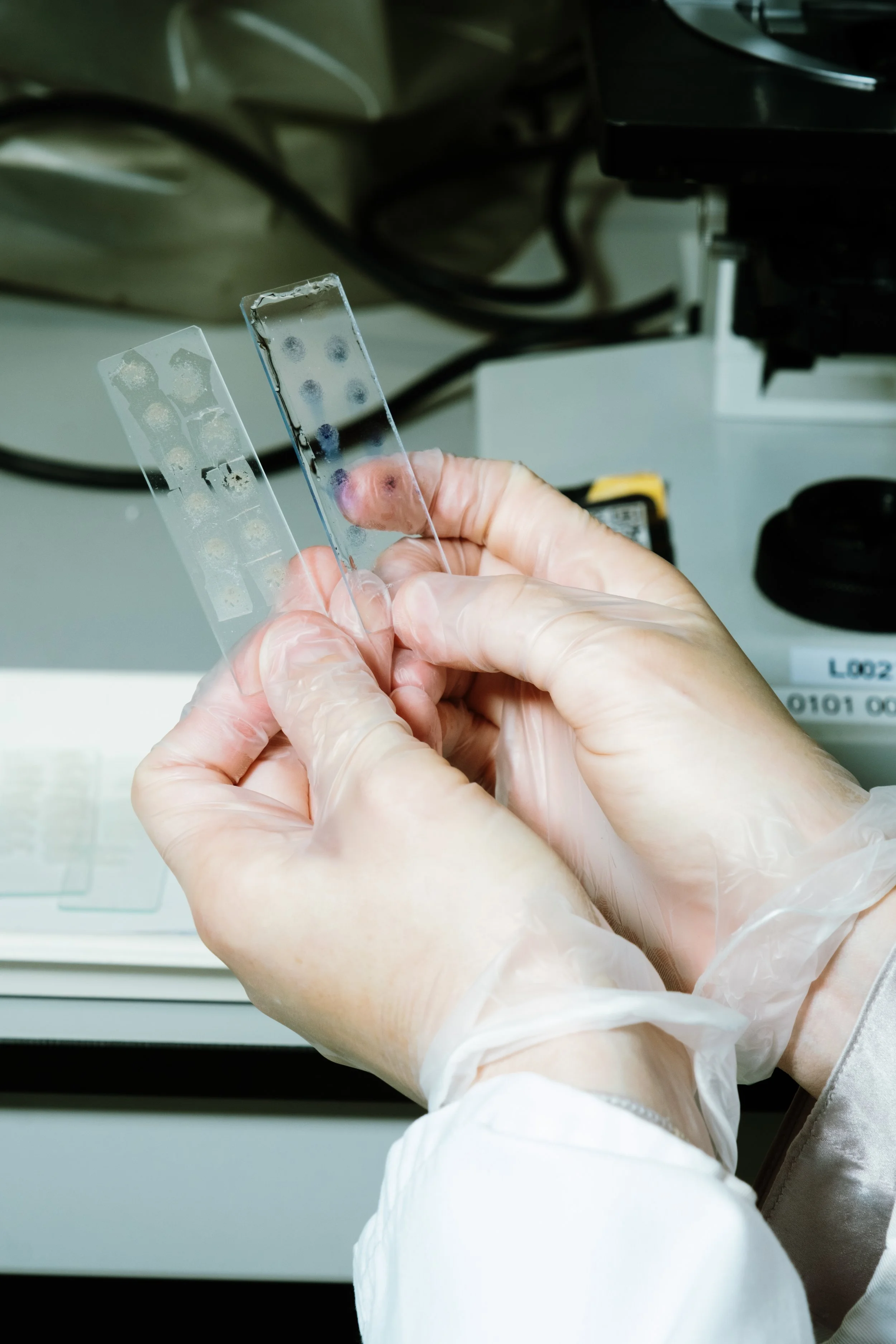
Through the microscope, I gaze at delicate glass slides holding neat rows of micron-thin slices of the daisy. Dyed for visibility in methylene blue, this secret, sub-sensory world is beautiful. ‘Yes,’ agrees Daisy. ‘I’m going to get high-resolution pictures of each slide, which I’ll use to create an immersive visual experience to combine with music performance. The inner world of the daisy, reacting to the sound.’
So, why the electric daisy? She has a presentation prepared. She suggests we move to a classroom.
Daisy seems lost in thought as she sets up her laptop, so – me being a Montréaler – I ask her about her tattoos. ‘Most are very bad black work – stick-and-poke. We used to just stick-and-poke each other as friends.’ Stick-and-poke-tattooing-your-friends is a proud Montréal tradition, so I ask her if she’s been. ‘No, never. My first time out of Ukraine is this, the UK.’
‘Before I came here, I didn’t know careers like the ones at Kew existed. I didn’t know you could become a botanist.’
‘Would you still have come to Kew if the war hadn’t happened?’ I ask.
‘No. Before I came here, I didn’t know careers like the ones at Kew existed. I didn’t know you could become a botanist. I always envisioned myself connected to nature but – it’s a long story – basically in Ukraine I was working on this organic farm which was low-key a bit crazy – a magic mushroom cult.
‘...And I didn’t like that. I was there because I liked the idea of living in nature. I didn’t like the idea of magic mushrooms, uncontrolled consumption of drugs, or any kind of cult. When the war began, I came here and lived in Belfast for a few months, where I met the charity Beyond Skin. Darren Ferguson, the founder, supported me with guitar lessons and learning English through music. He told me to visit the Eden Project.’ This eye-opening trip sealed Daisy’s plans: she became determined to study in the UK and soak up its environmental expertise. ‘I came to Kew on an internship,’ she explained. A pretty competitive internship, I would think. What gave you an edge?
‘My edge was – my overall plan for being in the UK is – to learn something practical so I can come back to Ukraine and support restoration in post-conflict territories. My manager in the Kew DNA lab is sympathetic to this. I’ve already found an institution with an empty DNA lab where I can apply everything I’ve learnt.’ This is the power of DNA labs like Kew’s: they preserve DNA as a genetic resource for biodiversity and research, while genetic resources like seed collections and living plant material can potentially be used to conserve and restore native plants and habitats.
So there’s already a DNA lab in Ukraine, but it’s empty?
‘Basically, last December I started to think about how I can be part of restoration in Ukraine. I voiced my ideas – literally right here, standing here.’ She goes on to explain that during a conference discussing future projects at Kew, she suggested they look at Ukraine.
‘I always envisioned myself connected to nature…’
Her pitch is compelling: there’s going to be plenty of nature to restore, there’ll be funding coming into the country post-conflict, and an entire nation in dire need of hope. Giving them something hands-on and positive to focus on – particularly vulnerable women and children – would be a powerful contribution Kew could make. While Kew remains an apolitical institution, she’s able to help develop relationships and training opportunities between specialists in the UK and Ukraine. ‘The Director of Science [at Kew] really liked the idea,’ she says. ‘So I became a volunteer, finding partnerships between Kew Gardens, the UK and Ukraine.’
Last year, Daisy returned to her homeland and brought four important organisations together in one room. They included the HALO Trust, which is demining territories and clearing them of explosives, the WWF [World Wide Fund for Nature], the Food and Agriculture Organisation of the United Nations, and representatives from the National Academy of Agrarian Sciences of Ukraine. ‘Part of this trip was visiting a duplicate of the genetic resources which has been moved from the East, where it’s been bombed, to the West in a safe territory. Fifty thousand samples of agriculturally important seeds have been moved.’ Crucially, this new building has rooms for a DNA bank, where Daisy and others like her could build from scratch.
So… Am I allowed to ask about the electric daisy now?
She laughs. ‘Yes, that’s coming!’
We turn our attention to her laptop at the front of the classroom.
‘So, there’s Daisy Elektra. And electric daisies. Why? How?’
‘The sensation was so interesting, it created a whole ecosystem in my mind…It reminded me of sound waves and guitar pedals.’
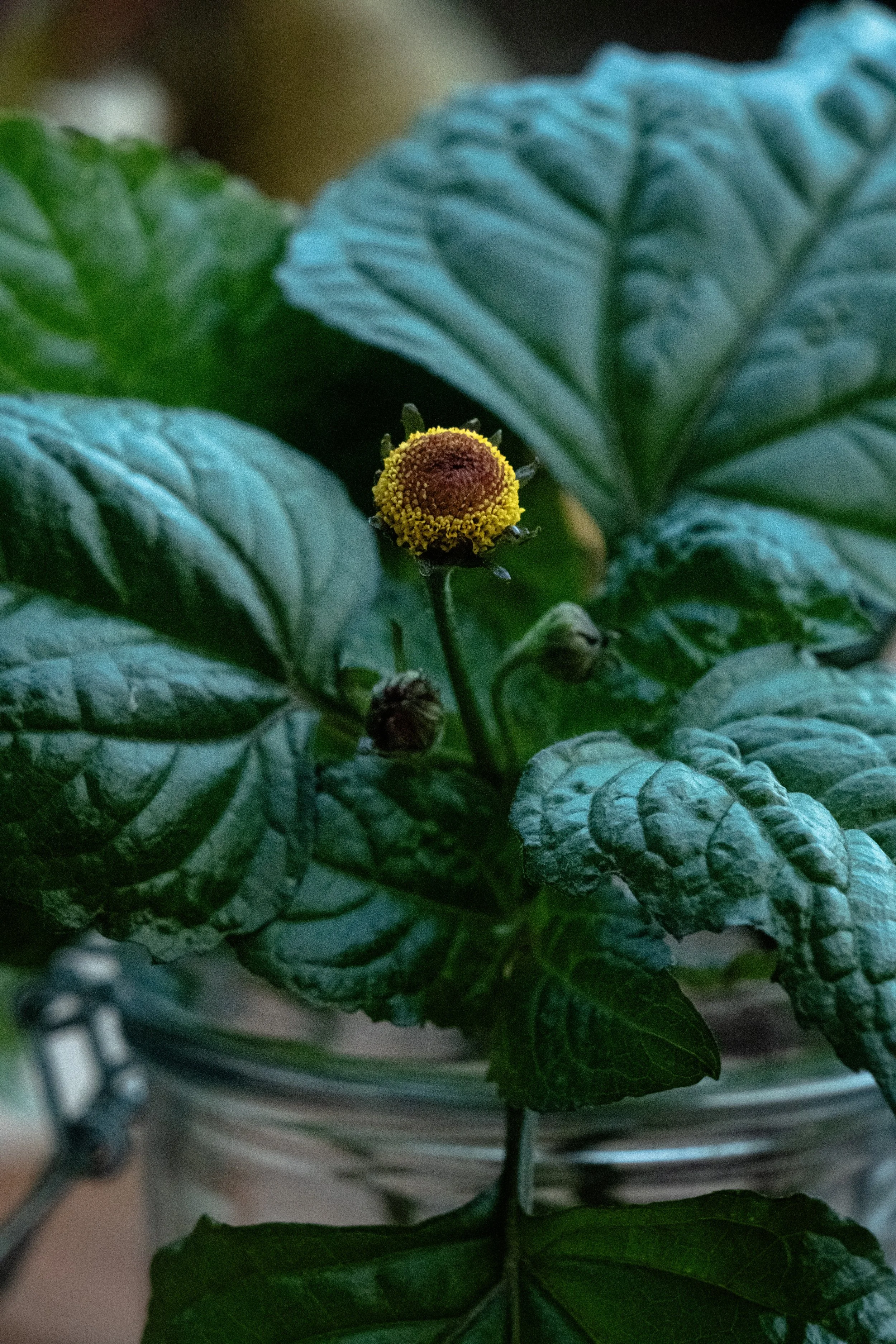
‘When I went to the Eden Project’, Daisy explains, ‘I studied plant sciences. I went to Tropical Biome. One day, someone called me over and said, Try this.’ They’d proffered a funny-looking yellow plant with a kind of red button on top. Daisy put it in her mouth.
‘It was the most extraordinary sensation I’d experienced, like a warmth spreading in your mouth. And with time, tingling. It would kind of… hijack your mouth. This also reminded me of electricity. The sensation was so interesting, it created a whole ecosystem in my mind…It reminded me of sound waves and guitar pedals. I connected the physical sensation from the plant to sound. It was like feeling the swelling of a sound wave, then having it fade away.’
Like her love of nature, music has always been crucial to Daisy’s world; her joys and pleasures. Her teenage years were spent hanging out with musicians, and she reminisces about screaming lyrics at the front of gigs and hitting raves solo to ‘dance it out’. Eventually she sought out a vocals teacher who gave her a strong foundation, but again, these interests only coalesced into her own creative practice in the UK.
Here she met Ali, her music partner. He’d been playing synthesiser and exploring sound waves, so it was a perfect match. For the past two years they’ve been evolving their sound, inspired by the electric daisy, and borrowing from many genres, including psychedelic rock, dream pop, electronica, and even cabaret.
‘I want to bring people together, with music and sensation.’
Mind you, music isn’t the only result of Daisy’s passion for the electric daisy. She says its tingle is uniquely suited to homemade lube, and she’s even made gin out of it (I’ll be trying some after this interview). But if you’d like to hear Daisy’s music, you’ll have to try and catch her live – she’s interested mainly in IRL performance. ‘I don’t want to be in this race of convention. I will do music my own way without, like, Spotify. Though we’re planning to release two tracks on Bandcamp. This music is very much inspired by my work in the DNA bank. I hope you understand the dimension of this project.’
Dimension indeed. There’s a whole world here. In fact, this is the whole world. In connecting Kew and war-torn Ukraine, in using sound waves to mimic the sensory feeling the flower creates in our bodies, Daisy Elektra keeps showing us the interconnectedness, the very oneness, of life.
‘The whole story is here,’ she shrugs. ‘I want to bring people together, with music and sensation.’ Then she picks a daisy and pops the funny-looking yellow plant in my mouth.
‘How do you feel?’
It’s zingy. It’s numbing. It fills my whole mouth. It changes the flavour of the water I drink right after. Truly, more people should experience this.
I ask Daisy Elektra again about the tattoo on her face. Do you think you would have built your life around plants if you didn’t have it?
Her answer is quick: ‘No. I think it was destiny.’
Photography by Charles Mackenzie
You can listen to Daisy Elektra’s music here and watch a documentary about one of her musical tracks here. Learn more about Kew’s State of the World’s Plants and Fungi project here.