
East Meets West: The Wet-Plate Photographer Reviving Polish Folklore in Earls’ Court
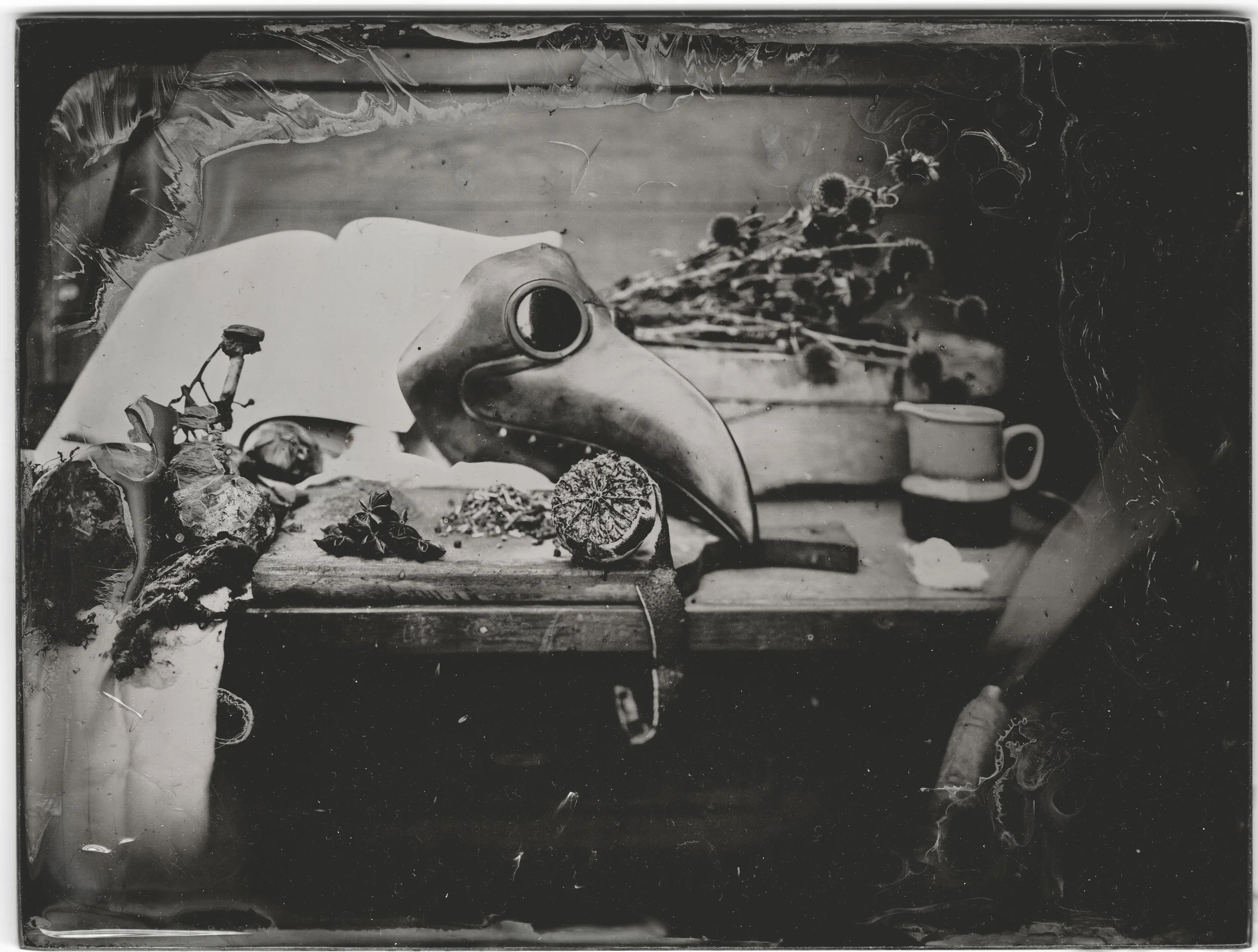
Like a witchy lair in a fairytale, this artist’s studio is underground, secluded at the end of a quiet road, down a narrow flight of metal stairs. An old superstition holds that photographs can snatch your soul and drain your beauty, and while admittedly this is Earl’s Court during the Instagram Age, a visit to Magda Kuca will remind you that this art form can be more than thoughtless snapping. Sometimes it feels like haunting communion with the past.
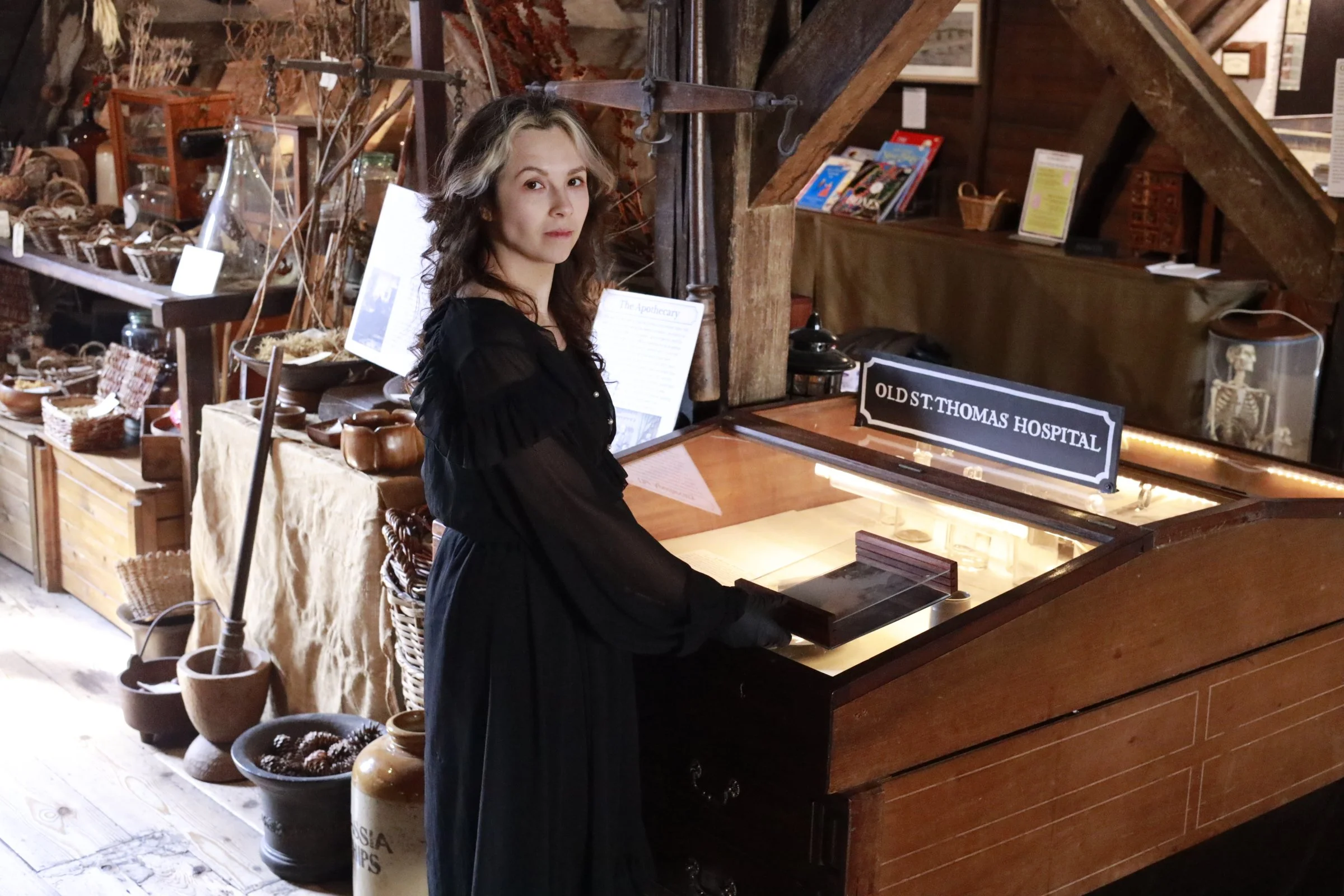
Magda Kuca at the Old Operating Theatre
Kuca works with wet-plate photography, also called the collodion process. It’s a labour- intensive technique that requires coating, sensitising, exposing and developing a plate in a darkroom. The image slowly solidifies, as though floating to the surface from another dimension. Portraits feel as though the sitter is frosted in silver, thrust back into the mists of time.
‘The wet-plate process is like having a partner in every project…’
Originally from Poland, Kuca studied photography in her native country before completing an MA at the University of Arts London, where she eventually became a visiting lecturer. ‘In exploring the craft I kept wanting to go earlier and earlier, and I landed in the 19th century,’ she says. ‘Once I tried the wet-plate process in 2014, that was it. It’s like having a partner in every project, because there’s so much history to build on and I can use that language in my work.’
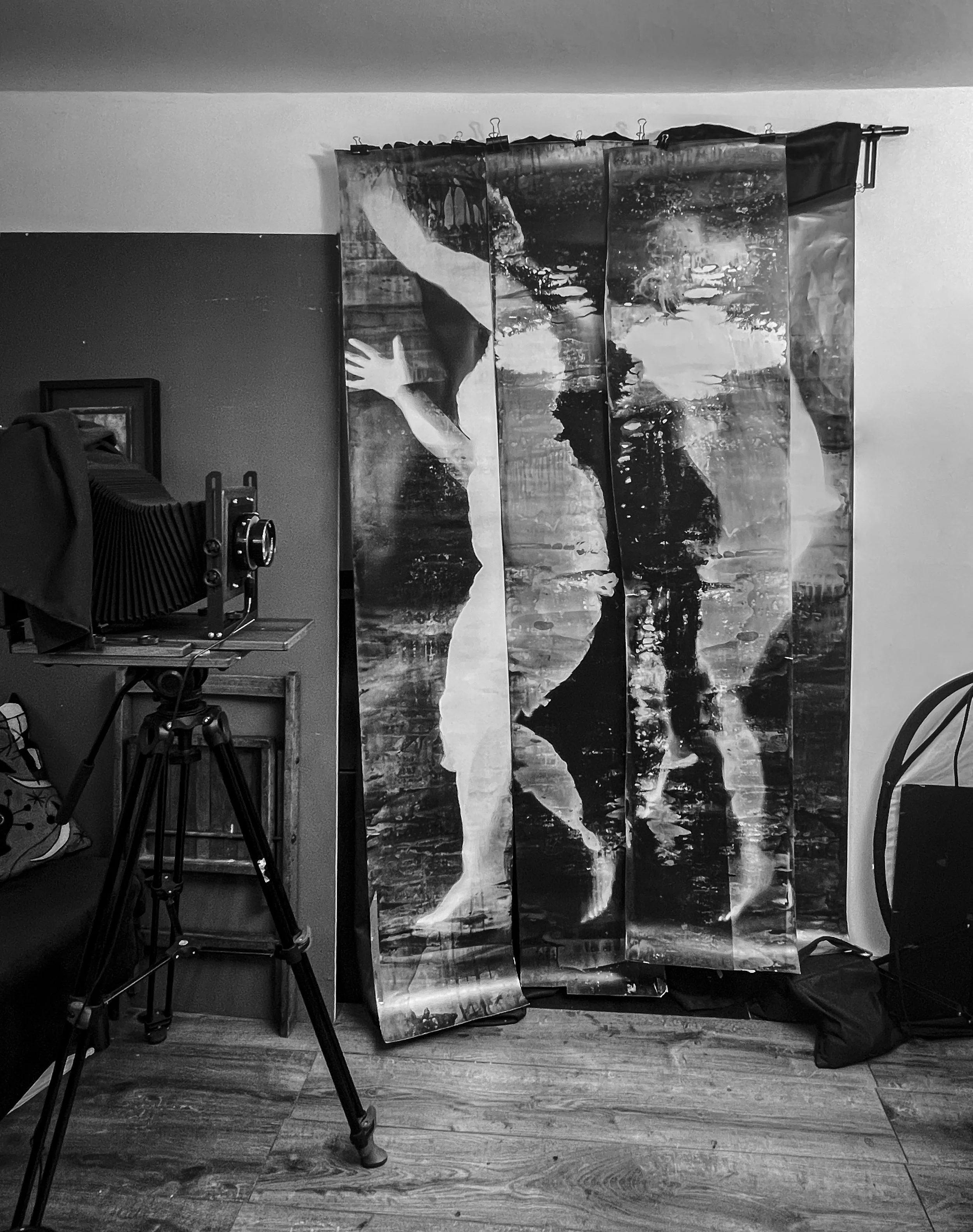
Kuca’s studio is kitted out with a custom mahogany view camera and blinding lights, positioned in the corner where she prepares her sitters before donning her goggles and dousing the tin plates in silver nitrate. ‘Tin really democratised the art form,’ she explains. ‘Before that, they used glass, which was much more expensive, but tin emerged as a less costly option.’ It’s fascinating to think that despite photography’s accessibility today, these historic techniques still can’t be replicated digitally. They demand meticulous, meditative focus, what Kuca calls ‘slow photography’.
‘I’m interested in photography’s role in storytelling, filtered through Polish folklore’
Although she’s open for private commissions, these only scratch the surface of what she achieves. If a run-of-the-mill portrait feels like an echo of the past, what happens in her more experimental projects? And if she can catapult someone through time with a little chemical coating and the click of a camera, could she also retrieve half-forgotten histories?
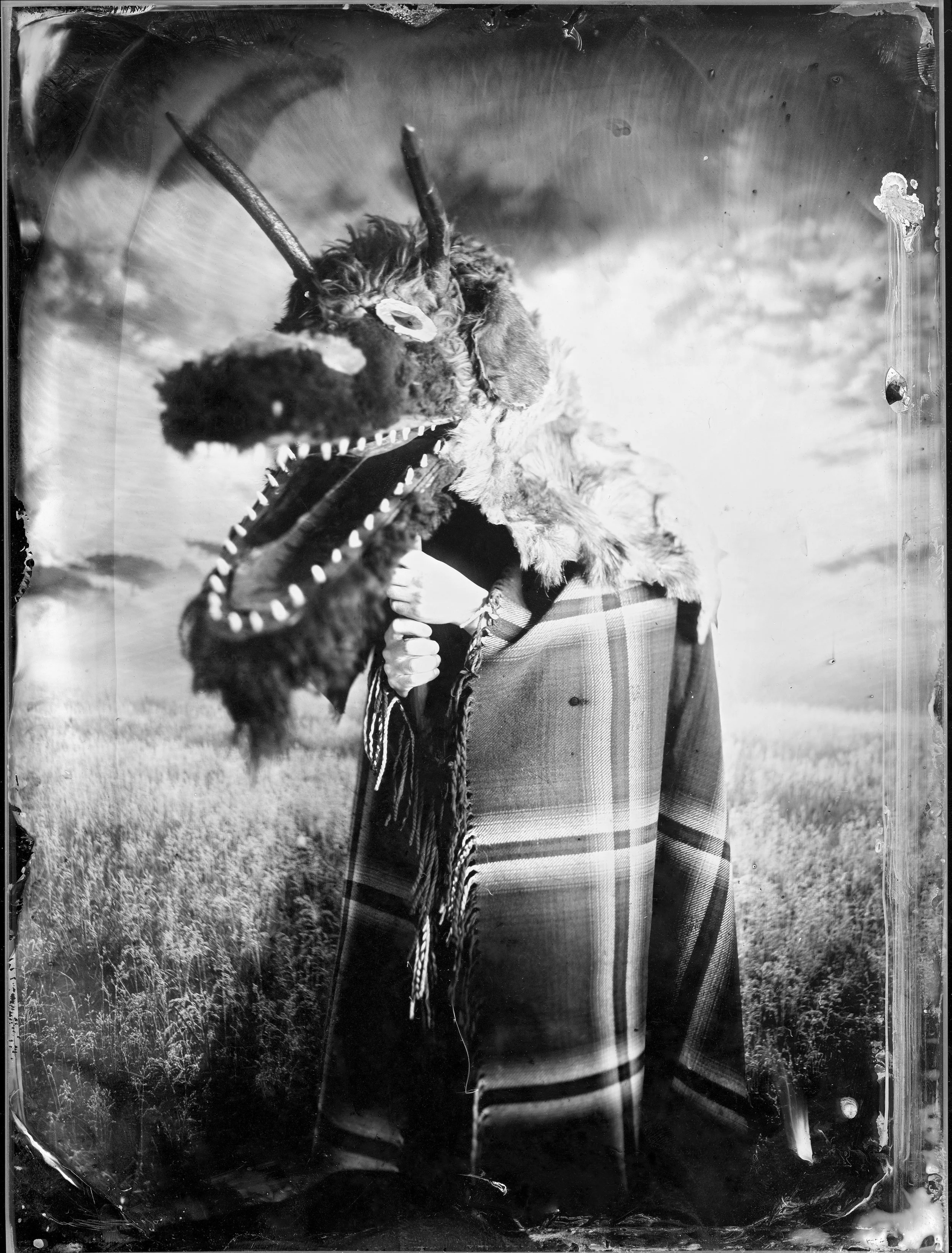
A photograph from Kuca’s Slavic Bestiary series
Such themes infuse Kuca’s work, the most fantastical of which is Slavic Bestiary. ‘I’m interested in photography’s role in storytelling, filtered through Polish folklore,’ she explains. In a bid to explore her roots and the vanishing parts of Polish history, Kuca travelled around remote parts of her native country performing photoshoots with original folk costumes loaned from rural museums.
‘In Poland we’re only just starting to appreciate our heritage. We’re used to looking to the West rather than appreciating our own culture,’ she says. ‘Although,’ she adds, ‘I see a lot of work about Poland made by people who have left the country. That’s when you appreciate it more, I think.’
‘I like the idea of dressing up monsters and looking a bit crazy’
The results of her more playful images include a mythical creature composed of former carolling costumes, a traditional tunic ‘worn’ by a bunch of twigs, or Kuca’s grandmother – a frequent model – blurred by sheaves of wheat. ‘I like the idea of dressing up monsters and looking a bit crazy, as well as exploring beliefs we had in the past.’ To Kuca, this is an exercise in reviving visually distinctive local myths and what’s left of old rituals. ‘I tried to bring those costumes back to life to get people excited about their own heritage.’
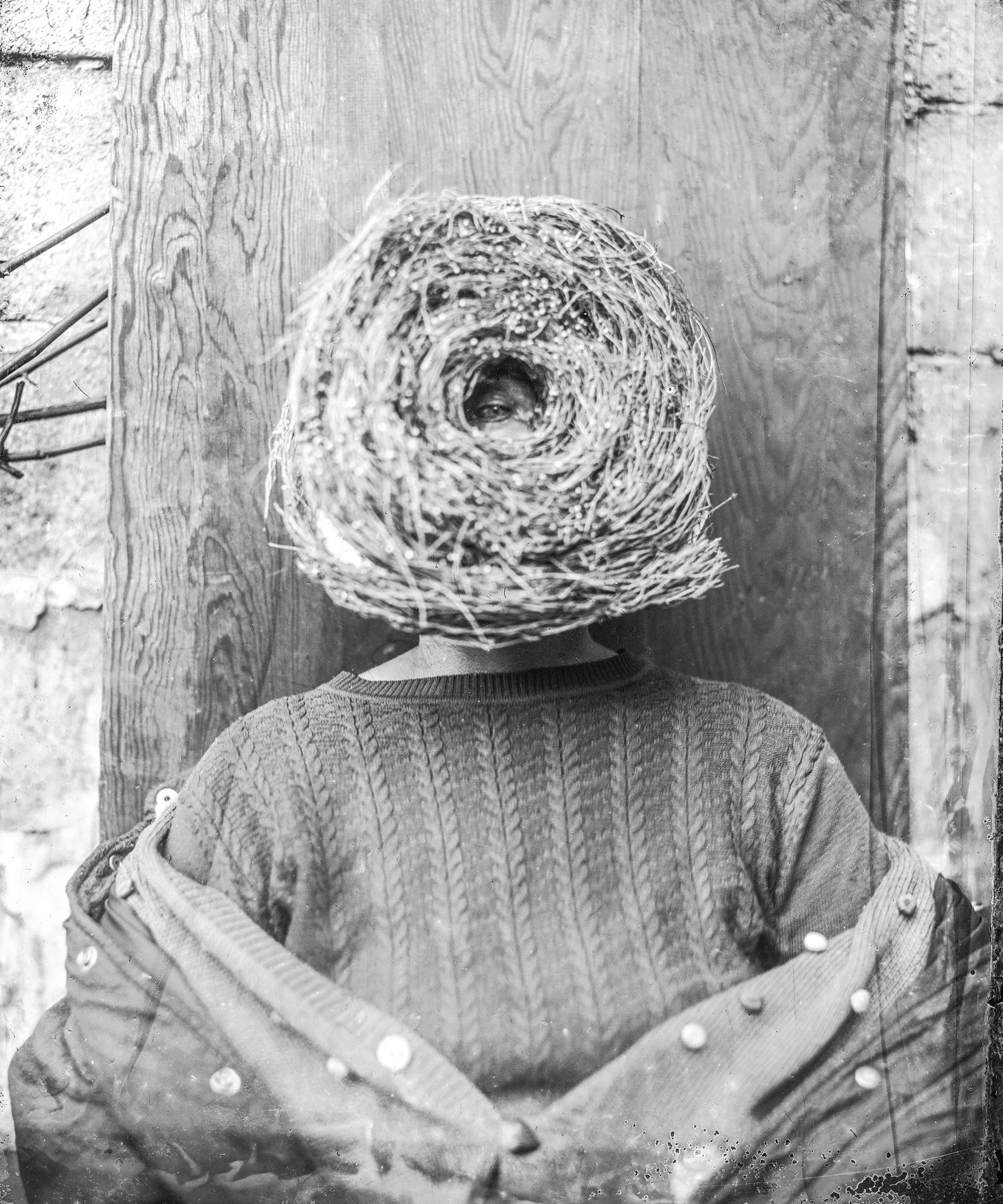
‘This wasn’t always intuitive,’ she continues. ‘Connecting to my culture wasn’t something I always practised, and to get here I spent time looking at other indigenous communities around the world who preserved traditional practices. This helped me re-examine my own roots and look to the elderly for wisdom.’
‘There’s often something beyond logic’
We spend a lot of time trying to understand folklore and ritual through the lens of reason, Kuca points out. The modern brain wants to ask, why do we do that? ‘There’s often something beyond logic,’ Kuca argues. She recalls participating in rituals during her childhood, such as marking the end of winter by making Marzanna, an effigy doll that was burnt and sent down the river. ‘I find the sphere of ritual attractive to creating my own worlds in the camera.’
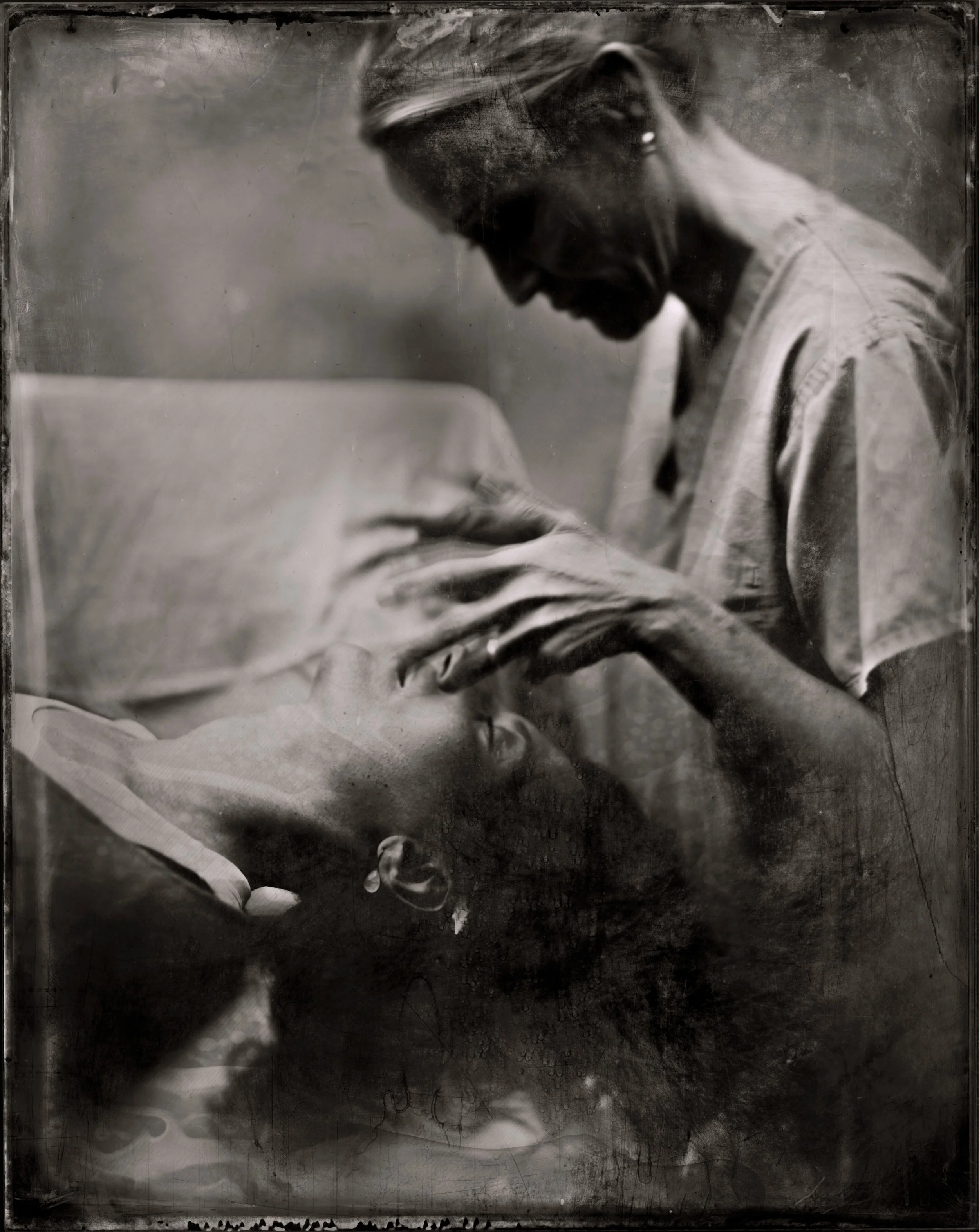
While real archival footage may not always excite the modern viewer – its aesthetic notions can feel outdated – Kuca’s ultra-tactile, sensuous renditions feel curiously fashionable. Suspended in almost-reality, her arresting imagery allows the onlooker to slow down and ponder the narrative she’s built in the shot.
‘Suddenly, I have people’s attention in this fast-paced world’
Those who come to her workshops are increasingly seeking that same sensory outlet, and a chance to connect with the materiality of photography. She notes that a lot of attendees at her classes work IT jobs and are desperate to do something with their hands. ‘Suddenly, I have people’s attention in this fast-paced world,’ she laughs.
Like signposts in an enchanted forest, each branch of Kuca’s practice can take you down a new path, whether that’s by learning the collodion process with her, visiting an exhibition or poring over her book. If one can live between several time zones – like one of Kuca’s misted wet-plate portraits – than why are we rushing anyway?
If you’re curious about seeing Magda’s work in person—it is object-based, after all—you’ll find her at the Discovery section exhibiting with Rethinking Eastern Europe during Photo London, from May 14th-17th. Her next solo show at the curious Victorian site of the Old Operating Theatre in London Bridge will run from mid-May through June
All photos courtesy of Magda Kuca