
The Rebirth of the Kitchen Witch
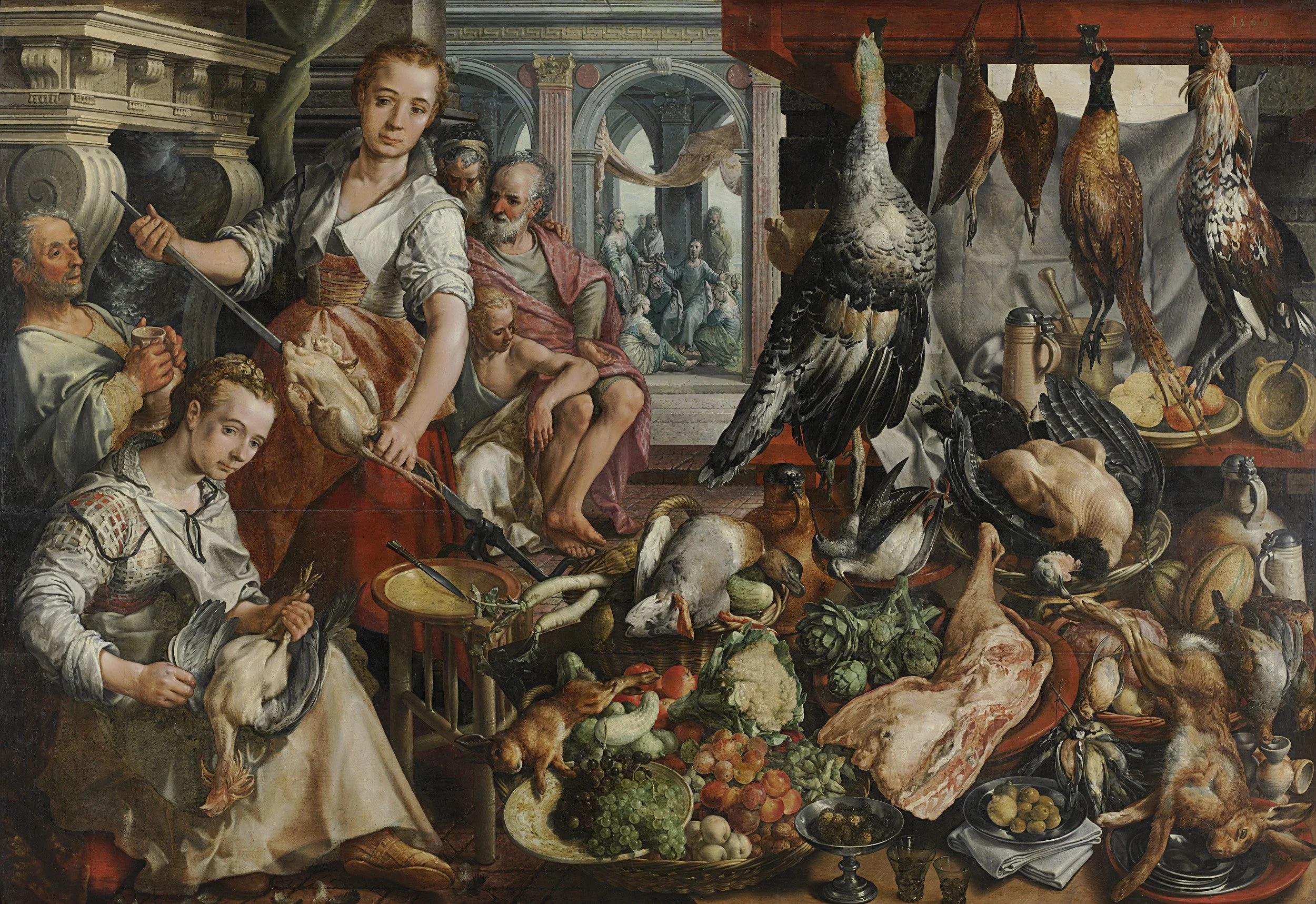
The Well-Stocked Kitchen, Joachim Beuckelaer
Food equals magic.
I suffered a ten-year battle with an eating disorder. Coming out the other side of it, food became my medicine, and in it I found magic. Once a space synonymous with restriction and control, the kitchen became my workshop, where I could reunite with intuitive creativity.

Vertumnus, Giuseppe Arcimboldo
Kitchen Witchery is, in its most simple form, cooking, baking, or potion-making with intention. This can be anything from thinking positive thoughts while you stir your morning brew, concocting an elaborate feast for loved ones, or welcoming wellness into your evening stew after a long day at work.
Food became my medicine, and in it I found magic.
For centuries cooking has been, quite literally, a chore. Every step of the cooking process, from plucking chickens to washing pots, was historically a burdensome one; even with the invention of the dishwasher and the ready meal, it can sometimes just be easier to order something on Uber Eats. But being a Kitchen Witch means permeating the cooking process with a sprinkle of occultism, experimentation, and fun.
Kitchen Witchcraft is considered a low form of magic, meaning that it doesn’t involve elaborate evocations, intricate rituals or circle casting. It’s wholly accessible, and concentrates on charging everyday items and activities with potent energy. It’s seen a notable rise in popularity in recent years, as all witchcraft-adjacent activities go through a resurgence.
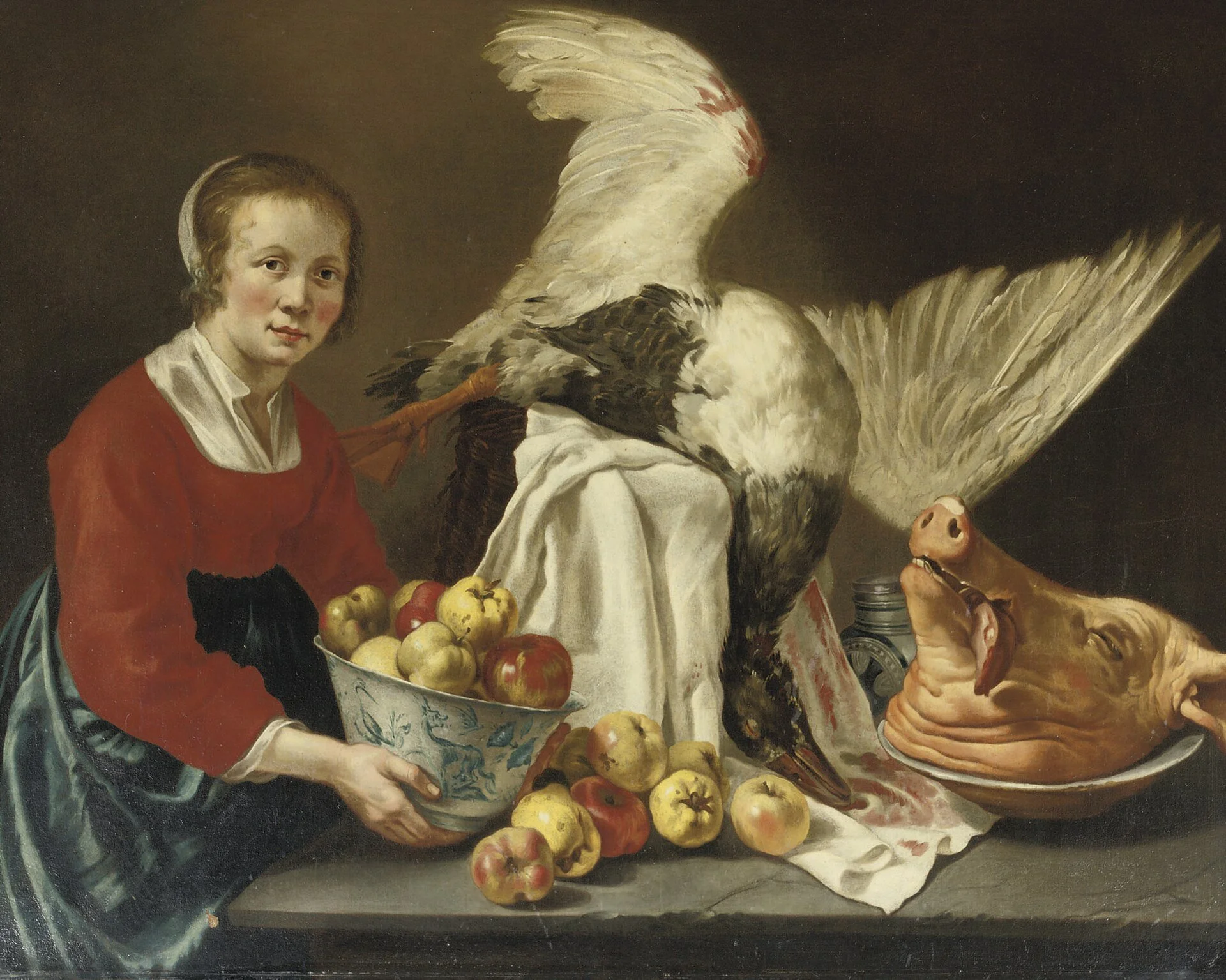
Kitchen maid holding a porcelain bowl, Willem van Odekercken
The term ‘Kitchen Witch’ is also used in Northern Europe to refer to a poppet, or magical doll, kept in the kitchen. Her presence is intended to stave off bad luck, and encourage the use of common kitchen tools as magical implements, all effects that contribute to the intentional preparation of dishes and the vitality of nourishment.
For centuries cooking has been, quite literally, a chore.
Whilst the title ‘Kitchen Witch’ is often directed towards the specific preparation of food, I like to use the phrase interchangeably to mean any sort of magical practice in or around the hearth and home. It’s an injection of magic into everyday life. After all, this ancient branch of folk craft allowed me to embark on a quest of reclamation.
I grew up on a diet of fairytales and folklore, lapping up literature as a way to contextualise the world around me. My research led me to join dots around themes of food control and the suppression of the feminine appetite in these childhood stories. The way food was portrayed seemed to reinforce cultural norms of ‘appropriate’ female behaviour, while punishing indulgence.

Larder with a draped table, Frans Snyders
Snow White’s poison apple, Hans Christian Andersen’s tale of the princess and the pea and Little Red Riding Hood being eaten by the Wolf in the forest… these are all fairytale examples of women penalised with food. Rather than being nourishing or comforting, these stories taught me that food was to be feared.
Rather than being nourishing or comforting, these stories taught me that food was to be feared.
But then I found a different character: the Russian wood-witch Baba Yaga, one of the most ambiguous and interesting fairytale archetypes. A figure who crosses the barriers of life and death, she’s a multifaceted witch and master of the kitchen, a concoction of domestic and fantastical. With iron teeth and sharpened claws, she can be a ferocious monster, but is also depicted in some folk stories as a helper to the protagonist.
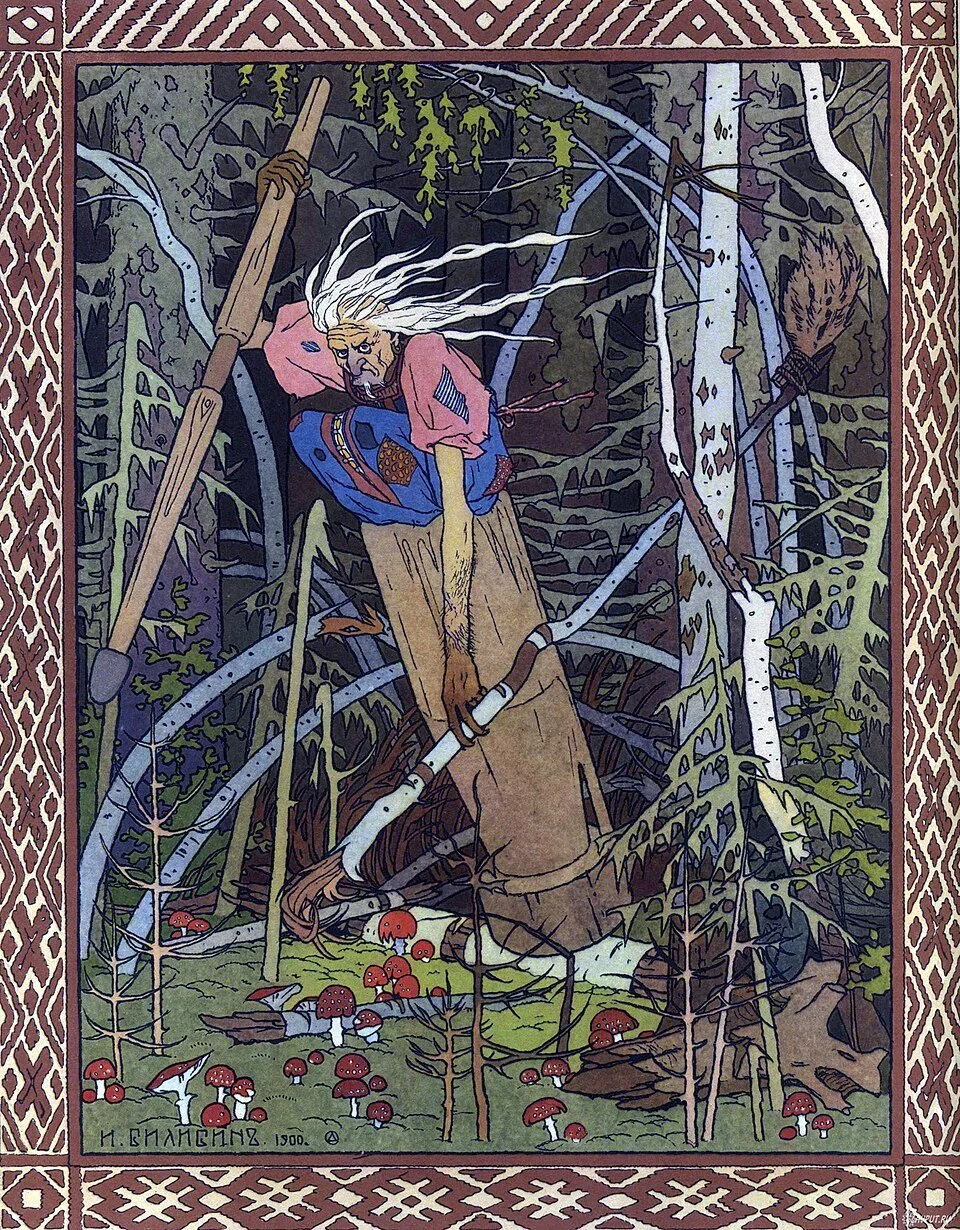
Baba Yaga, Ivan Bilibin
Rather than inhabiting a tempting gingerbread cottage, her house is a graveyard of her previous meals, hung with skull lanterns and fenced with human bones. Her home stands on chicken legs that carry the building to different locations, reinforcing her transient nature—the mundane combined with the dangerous, the tame with the wild.
I became determined to find other stories that didn’t use food as a menacing force; fairytales to propel one into womanhood.
She utilises her kitchen tools for alternative forms of transport; a mortar for flying and a pestle acting as an oar. Her choice of weapon is her oven. She’s appears in myriad Slavic myths, and her tasks for female characters act as a test, preparing them for transformation into womanhood.
I became determined to find other stories that didn’t use food as a menacing force; fairytales to propel one into womanhood. Then, I decided to make my own. I began a Kitchen Grimoire; a notebook where I collect my most treasured recipes. A divine journey of cooking and spell work.
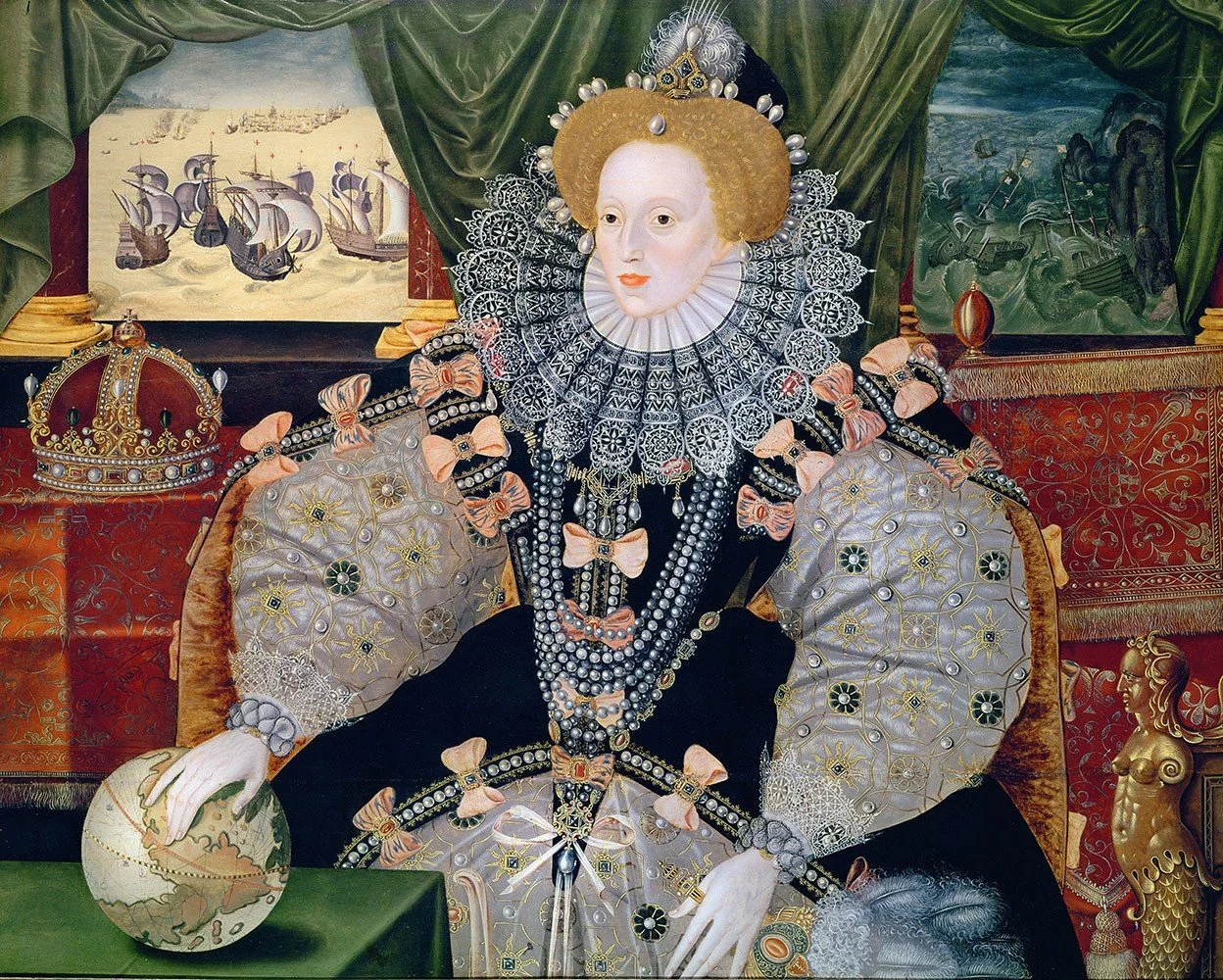
The ‘Armada Portrait’ of Elizabeth I
My quest, in both my personal and professional life, has been to cultivate inner feminine transformation, exploring the messy relationship of women, our bodies, our historical food wound and our crooked connection with abundance.
My utensils are weapons and my mission is to reclaim my palate.
When Elizabeth I rallied her troops against the Spanish Armada at Tilbury, she declared, ‘I have the heart and stomach of a king.’ It’s an iconic quote that connects courage to appetite, and I often affirm it when entering my kitchen, a space that’s been a battleground for women throughout herstory.
It’s acted as a prison of traditional feminine expectations and a space of patriarchal entrapment. My utensils are weapons and my mission is to reclaim my palate.
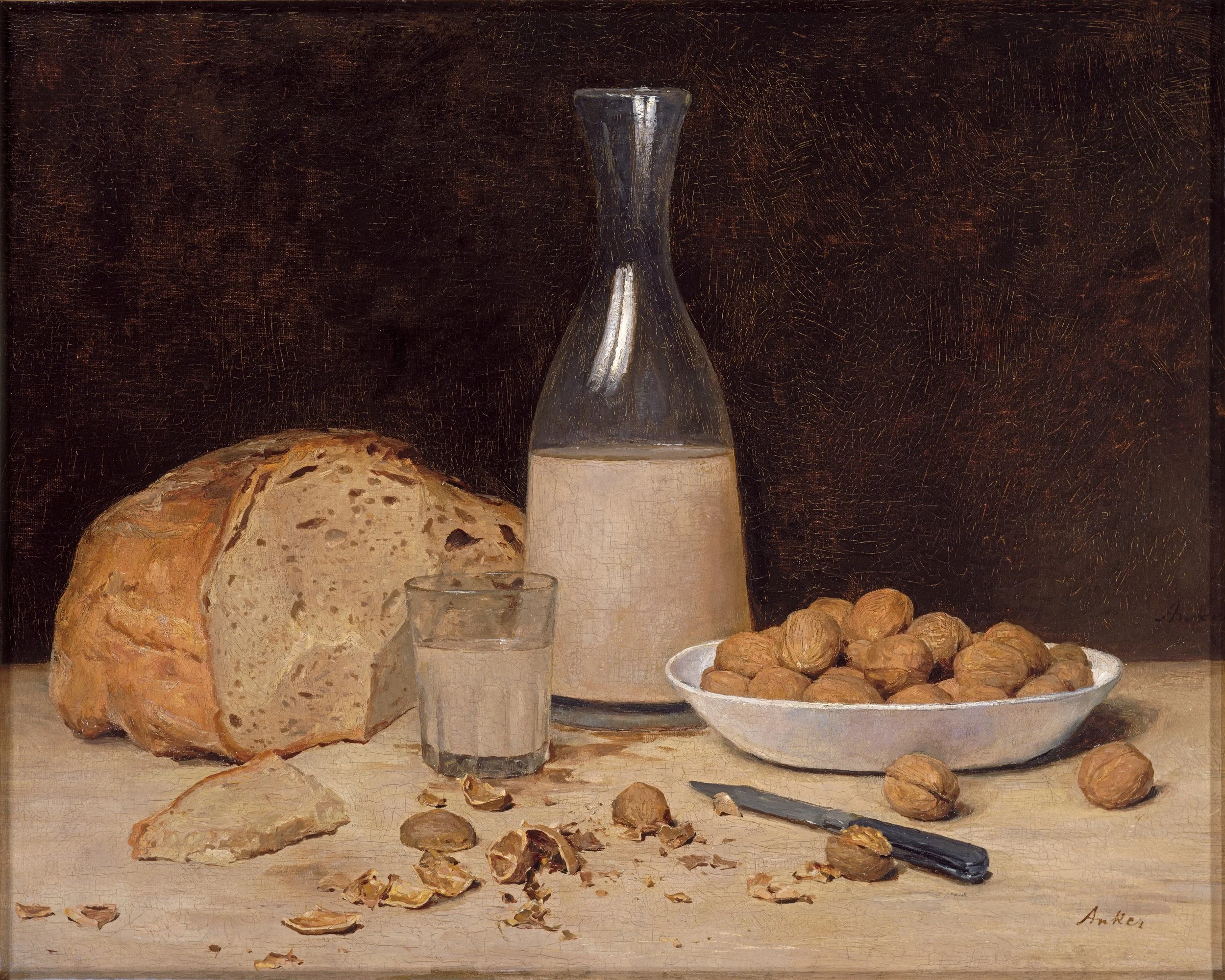
Stillleben: Neuer Wein, Albert Anker
The spoils of battle aren’t violent ones. They’re experiences of healing and pleasure; a reclamation of culinary desire and curation of sensory experience. It’s a portal to the past, a grounding in the present and preservation for the future. This sacred marriage to my gut is the key to feminine agency and a gateway to rehabilitation.
The spoils of battle aren’t violent ones. They’re experiences of healing and pleasure…
A subculture in Kitchen Witchery is elemental craft, and cooking is the place where all four elements are at our fingertips: Earth, Air, Fire and Water. Connecting with these can align vibration and link one to their inner landscape.
As I open my own Kitchen Grimoire, I’m struck by how the full cycle of creation to gestation also encompasses all five senses.
My humble bread recipe can easily be treated as a sensory form of reconnection with oneself and a space to meditate alongside cosy food preparation. Here’s how it goes:
Ingredients:
500g flour (I use whole meal)
1 tsp instant yeast
350ml tepid water
1 tsp salt
Recipe:
1. I first soak my yeast in tepid water until it activates; Sight
2. I use my wooden spoon to mix the salt and the flour together, then create a well in the centre of the flour. I love the way that the grain feels in my hands. Touch
3. When the yeast concoction has activated, I pour it into the well and mix with my hands until I form a a ball of dough. Touch.
4. I let the dough prove for 2 hours with a wet tea towel on top of the bowl (can prove overnight depending on schedule). Then I shape the dough into whatever form of bread I desire (usually baguettes, but sometimes rolls or a loaf) Touch
5. I slice down the body thrice to create a visual effect, and then let further prove for 25 minutes with a wet tea towel on top- They should double in size. Sight
6. I preheat the oven at 185℃, and then pop the loaves in for around 25 minutes and watch them rise through the transparent window. Sight
7. When the alarm sounds. Hearing. I open the oven and ritualistically pick up a piece of bread and squeeze it, waiting to hear that the crust has formed and crackles as my pressure increases. Touch & Smell
8. And then lastly, I eat. Taste
Food has two life cycles of magic; the culinary apothecary (preparation) and consumption (the medicine taking). As Kitchen Witches, we can be both the healers and the healed, food is our instrument and our collaboration with it can bestow a medicinal attitude towards sustenance, and a deeper connection with our internal universes.