
Beyond the Wicker Man: the Reality of Britain’s Folk Revival
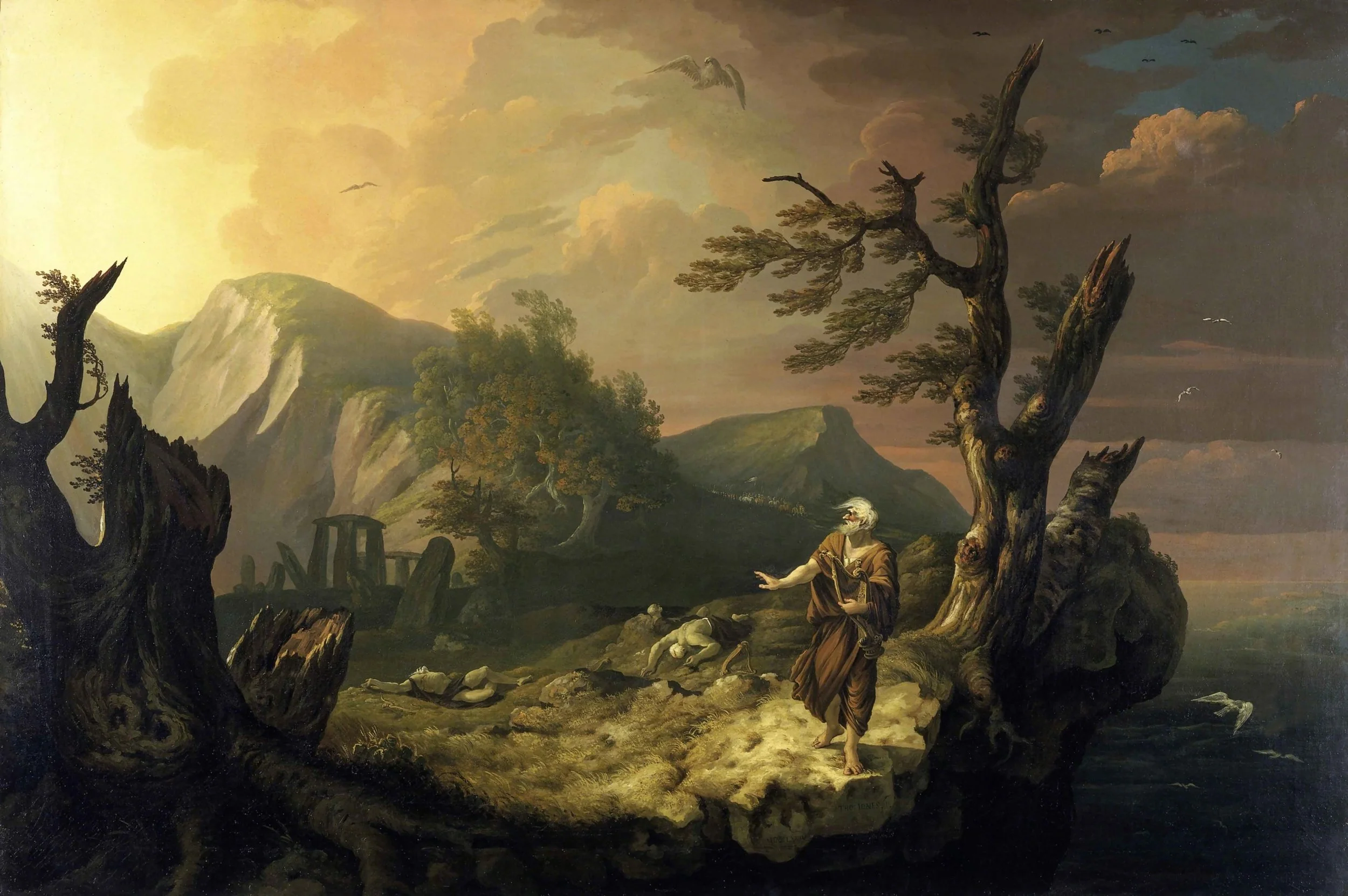
The Bard, Thomas Jones (1774). Public domain via Wikimedia Commons
The flames creep higher, devouring goats, doves, and human flesh. The creatures are trapped in a wicker statue that’s crumbling to ash while villagers sing in delight, heralding the rebirth of fertility that only living sacrifice can provide.
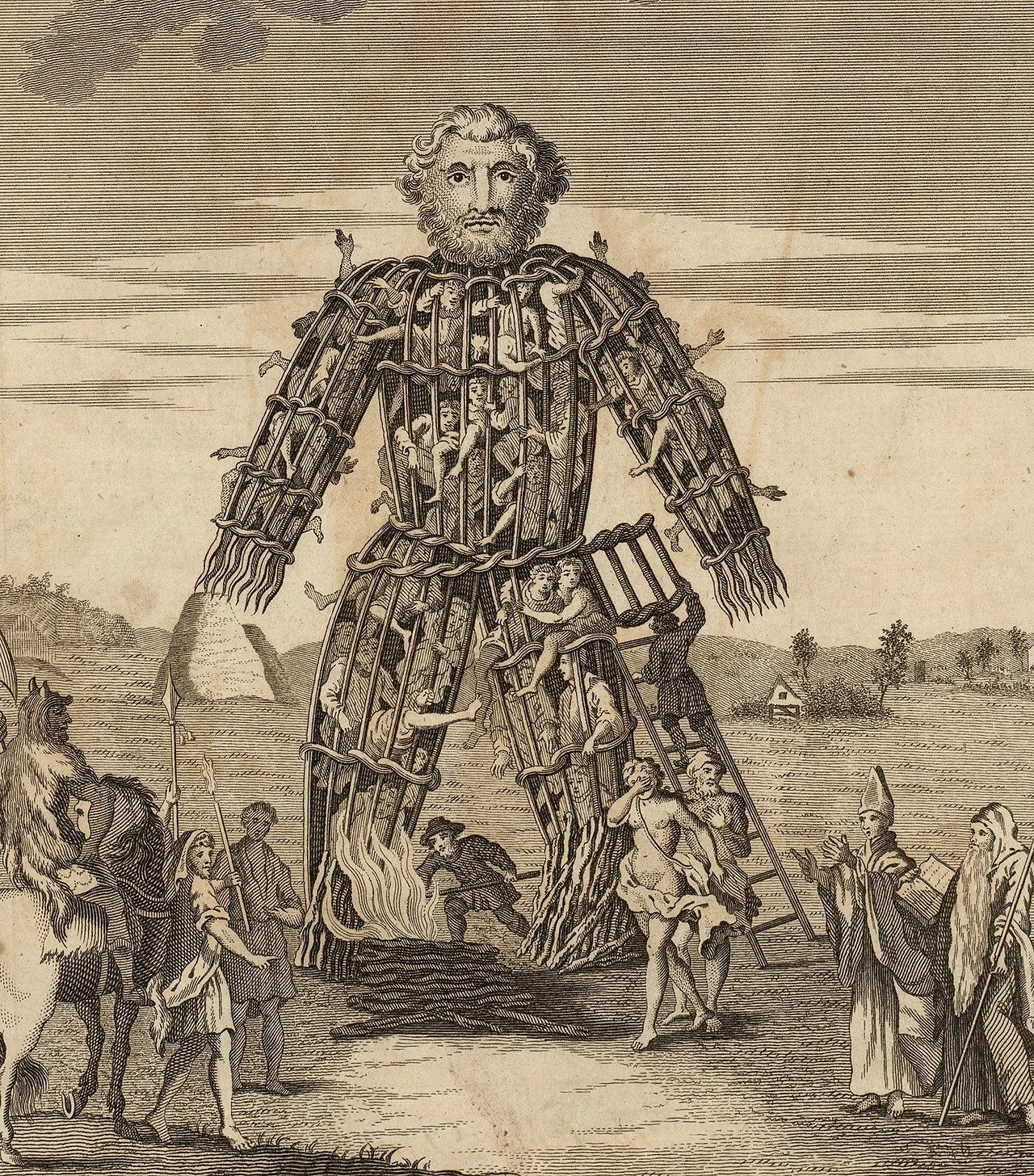
An 18th-century engraving of human sacrifice in the wicker man. Public domain via Wikimedia Commons
So ends the 1973 folk-horror classic The Wicker Man, its titular method of human sacrifice drawn from Roman accounts of Celtic paganism. But Ronald Hutton, a professor at Bristol University specialising in the history of witchcraft and paganism, points out that the evidence for such rituals is at best uncertain, and may have been invented for pure sensationalism.
The Wicker Man is only one of many films depicting paganism and folklore in an unflattering—and factually questionable—light. ‘Folk horror keeps driving home the basic message that inbred local communities who secretly preserve pagan customs are likely to kill you,’ Hutton says, ‘or that if you get involved with witchcraft, people are likely to die or be hurt.’
Modern Britain is obsessed with its history and folklore. A record-breaking 25,000 people visited Stonehenge for the 2025 summer solstice, while 74,000 people in England and Wales identified as pagan as of 2021. That makes it all the more urgent for us to understand the past we’re revisiting. What are the pagan beliefs and traditional tales that our modern folk revival celebrates? And what do they offer us in the 21st century?
‘Folk horror keeps driving home the basic message that if you get involved with witchcraft, people are likely to die or be hurt.’
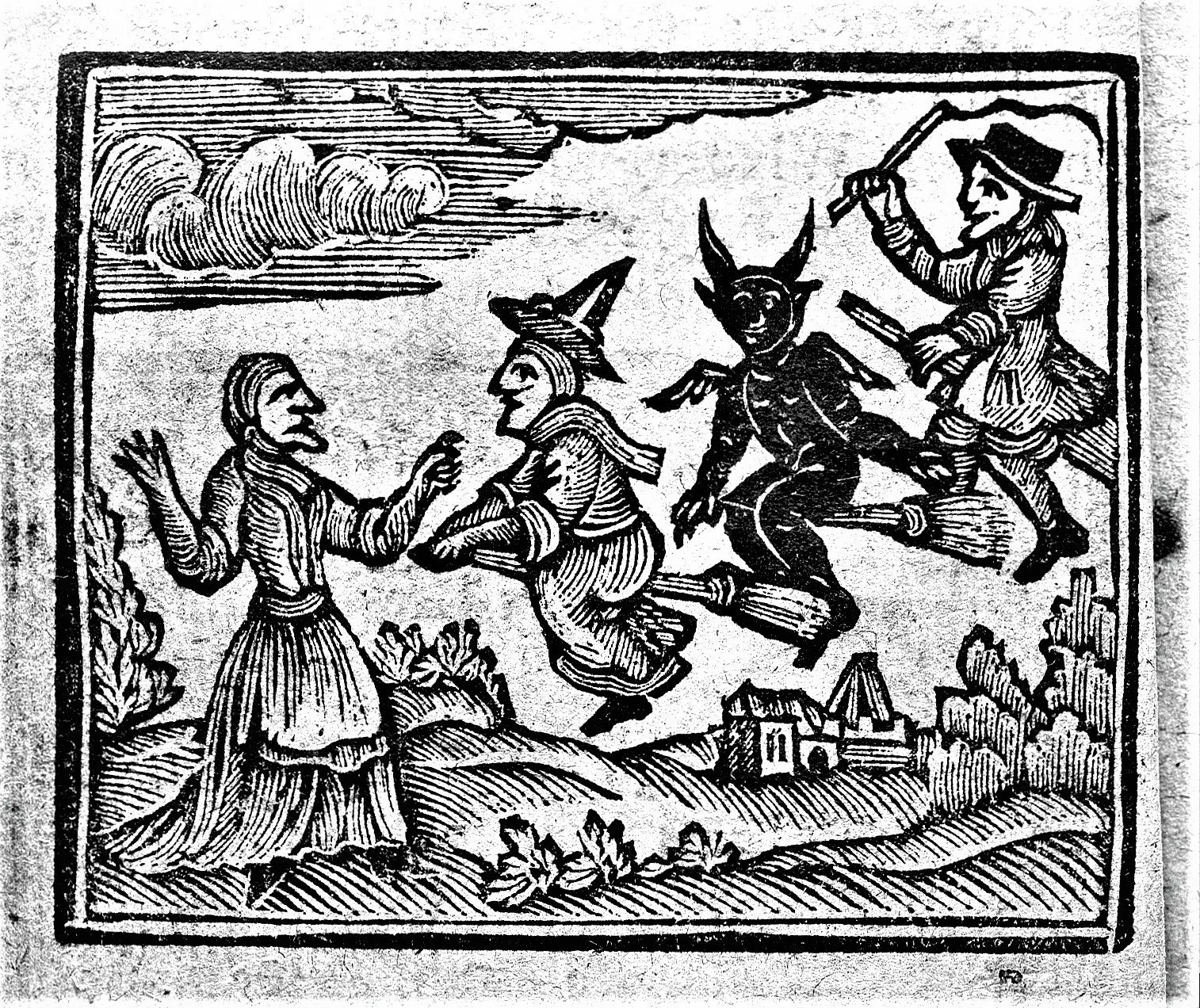
The History of Witches and Wizards (1720). CC BY 4.0 via Wikimedia Commons
First, a history lesson. In the early 20th century, anthropologist Margaret Murray claimed that medieval witch-hunts had been an attempt to stamp out an ancient pagan faith. Following in her footsteps, Gerald Gardner claimed to have been initiated into a coven of the witch-cult that Murray described, using its practices as the foundation of early Wiccan traditions.
However, academics now reject the theory of a preserved and intact pagan faith as historically groundless. Part of the confusion is that unusual historical beliefs are often misattributed to a pagan past. According to medievalist and author Amy Jeffs, many medieval Christians would’ve seen no contradiction between their faith and a belief in fairies, or celebrating the feast of Saint John by jumping over bonfires, all examples of practices that may have evolved independently of paganism.
‘If people in the past were performing rituals involving fairies, nature, or the seasons, they weren’t necessarily subversive, edgy members of society who saw themselves as being against “the Church”,’ Jeffs says, stressing the diversity of beliefs within medieval Christianity. ‘Folk beliefs existed within that framework and could affect the highest echelons.’

The interior of Treadwell’s Books. Image provided by Treadwells
‘The best way to understand modern paganism’s relationship to the past isn’t to look for a direct historical line, because there isn’t one,’ says Christina Oakley-Harrington, founder of Treadwell’s Books and a practicing pagan. ‘Rather, it comes from a human need to connect with nature and others.’ Modern pagan practices don’t claim to perfectly represent or descend from ancient customs, but simply fulfil the same needs for connecting with nature and instinct.
‘The best way to understand modern paganism’s relationship to the past isn’t to look for a direct historical line, because there isn’t one.’
Centuries ago, Britain’s heritage of folklore and myth was used to justify conquest. Jeffs explains that King Edward I justified his plans to conquer Scotland and Wales by appealing to the legend that England’s kings descended from the Trojan warrior Brutus, who’d invaded and ruled over all of Britain. Scots in turn claimed that their nation’s founder was the Egyptian princess Scota, purported daughter of the Pharaoh of Exodus, giving them an even more prestigious bloodline. But though ‘a very small proportion of paganism gets tied to nationalism,’ Oakley-Harrington explains that the vast majority of pagans see their beliefs as reaffirming the kinship of all humans and non-human life.

Treadwell’s Books’ exterior. Image provided by Treadwells
Pagan practices can be as simple as waking up early on Midsummer’s Day to watch the sun rise, or decorating your house with hawthorn on May Day, Oakley-Harrington shares. ‘It’s a life-affirming spiritual path,’ she says, ‘centred around attunement to nature, including human nature.’
Amidst the crisis of climate change, Oakley-Harrington argues, ‘a whole sense of the beauty and consciousness of the earth is being highlighted.’ Ronald Hutton adds that there are three pillars of pagan belief: feminism, an environmentalist belief that nature is imbued with spirituality and sanctity, and a right to personal growth and expression.
‘It’s a life-affirming spiritual path, centred around attunement to nature, including human nature.’
These qualities, Hutton argues, make it unlikely for any real-life pagan community to resemble the deranged cults of fiction. ‘Paganism attracts people who’re individualistic, rebellious, self-reliant,’ he says. ‘They don’t like gurus. They do a lot of reading and a lot of thinking.’
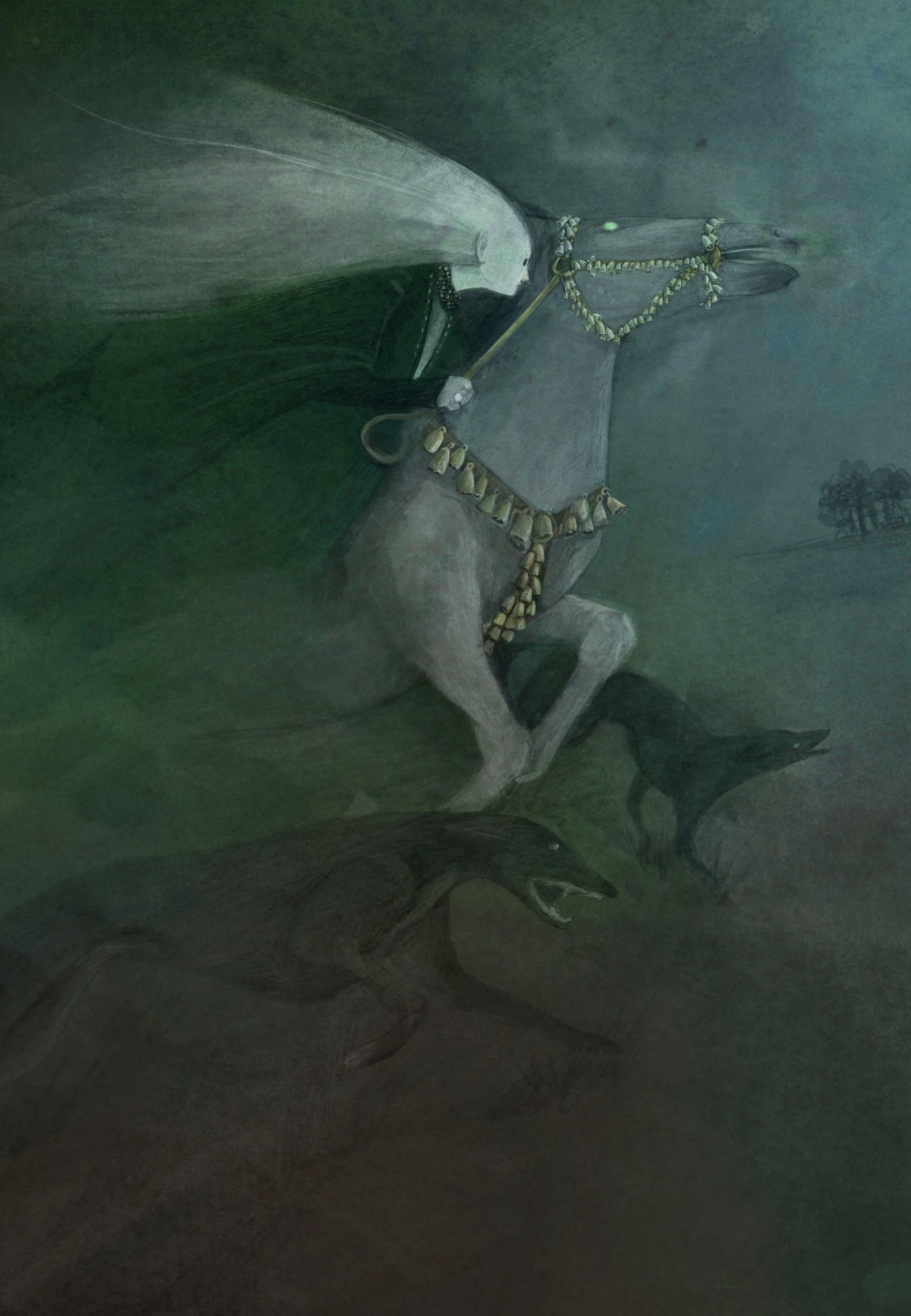
The Fairy Queen riding out of Elfland. Image credit: Gwen Burns
Even if you’re not planning to join your local coven, there are many other ways to engage with Britain’s folklore and history. In 2025 Amy Jeffs collaborated with illustrator Gwen Burns on Old Songs, a book about British folk ballads, which they promoted with a tour of performances alongside musician Natalie Brice. ‘I’ve sensed a feeling of recognition,’ she says. The stories of Brutus and Scota are grandiose tales that are alien to most of us—‘you probably won’t think, “I remember that time I was exiled and founded a kingdom”’—but the ballads she’s featured resonate because of their personal stories.
‘Paganism attracts people who’re individualistic, rebellious, self-reliant. They don’t like gurus. They do a lot of reading and a lot of thinking.’
It may feature a magical twist, but a song about a woman suffering in labour because her mother-in-law has put spells on her is rooted in anxieties that remain very real. Like the values of environmentalism, self-expression, and equality that Hutton and Oakley-Harrington celebrate in paganism, the concerns these ballads address remain relevant no matter the century. ‘The situations in the ballads are quite personal and private,’ Jeffs explains, ‘and audiences respond to it with personal anecdotes of their own. Very movingly, a woman blessed us at one signing!’
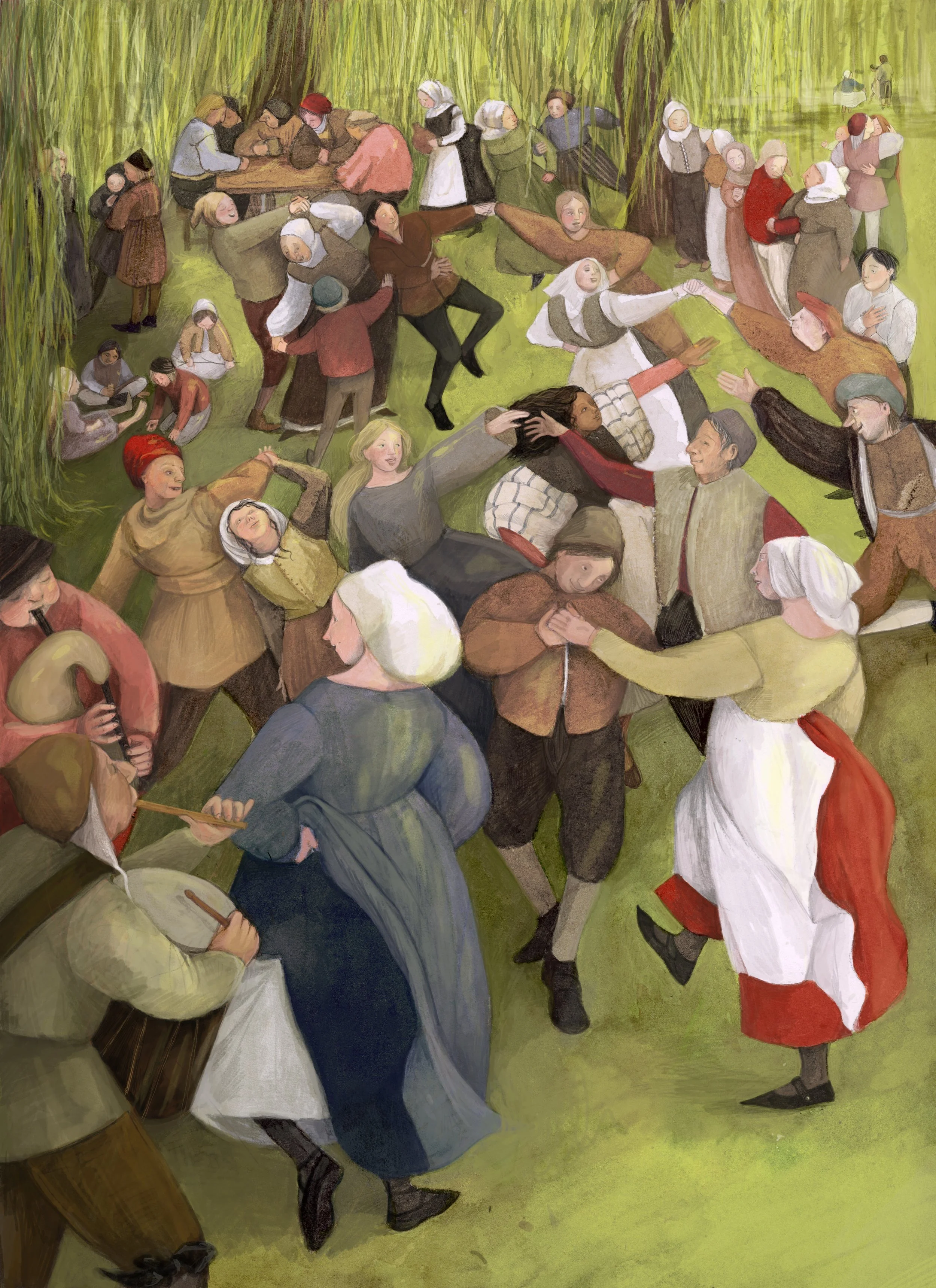
A village dance. Image credit: Gwen Burns
But is the folk revival headed in the right direction? Oakley-Harrington worries that social media is distorting what paganism and occultism means, turning a serious faith into an online trend. This takes two primary forms: one is the attitude that witchcraft is just ‘dressed-up wellness’, with actions like lighting candles or taking bubble baths being packaged as spells. The other involves scammers who tells you that you’ve been cursed and that they can remove the curse, or promising training or extreme power—as long as you pay large sums of money.
‘Paganism is an ethical and interior life.’
‘Paganism is an ethical and interior life,’ she explains. ‘It stands outside of the capitalist world of purchase and selling.’ Unlike these TikTokified versions of her faith, she describes organisations like the Children of Artemis and the Order of Bards, Ovates and Druids as safe and reputable groups to learn about paganism from; she similarly mandates that anyone teaching at her own bookshop Treadwell’s must be an experienced practitioner who passes their ethical checks.
Even though paganism is now regarded as a legitimate personal choice, Ronald Hutton argues that it’s still depicted as ‘a rather silly and countercultural one’. Pop-cultural depictions of paganism, folklore, and witchcraft typically depict these practices as silly trends or demonise them, as with recent works such as Midsommar’s murderous pagan cult.
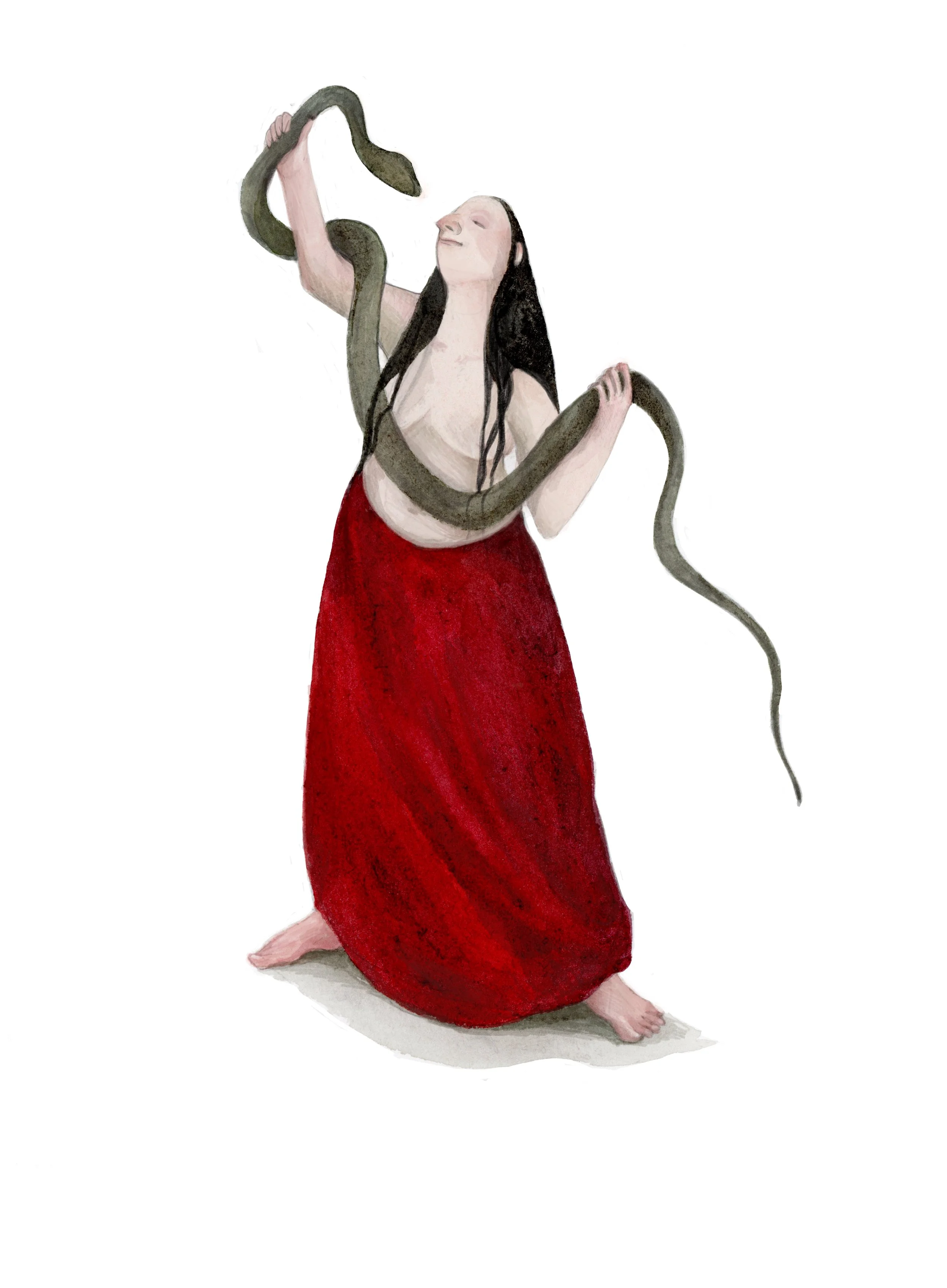
The ‘witch’ Alison Gross, a character in the ballad of the same name. Image credit: Gwen Burns
While Hutton does enjoy these classic depictions of paganism—he has a particular fondness for Buffy the Vampire Slayer—he’s also hoping for change. ‘What I’d like to see is for paganism to claim more top-rank, A-List members,’ Hutton says. ‘There isn’t a single top sports personality, movie star, or politician who’s a public pagan.’
‘What I’d like to see is for paganism to claim more top-rank, A-List members.’
Unusual as Hutton’s wish may sound, it gets to the heart of how these traditions relate to the present. Whereas earlier pagan revivals claimed a dubious link to historical traditions, this contemporary folk revival emphasises how the 21st century shares commonalities, not necessarily direct connections, with the experiences of people throughout centuries. Whether you’re a devoted pagan or simply have a fondness for folk ballads, the values that the folk revival celebrates—feminism, environmentalism, a realisation that people in the past went through the same things you did—are eternal ones.
As Amy Jeffs puts it, it’s ‘the shock of realising that our ancestors were as funny, imaginative, worried, and rebellious as we are. It’s a shock and a relief, and I find it a consolation.’