
Why Norfolk? Inside the Coolest Place for Art Right Now
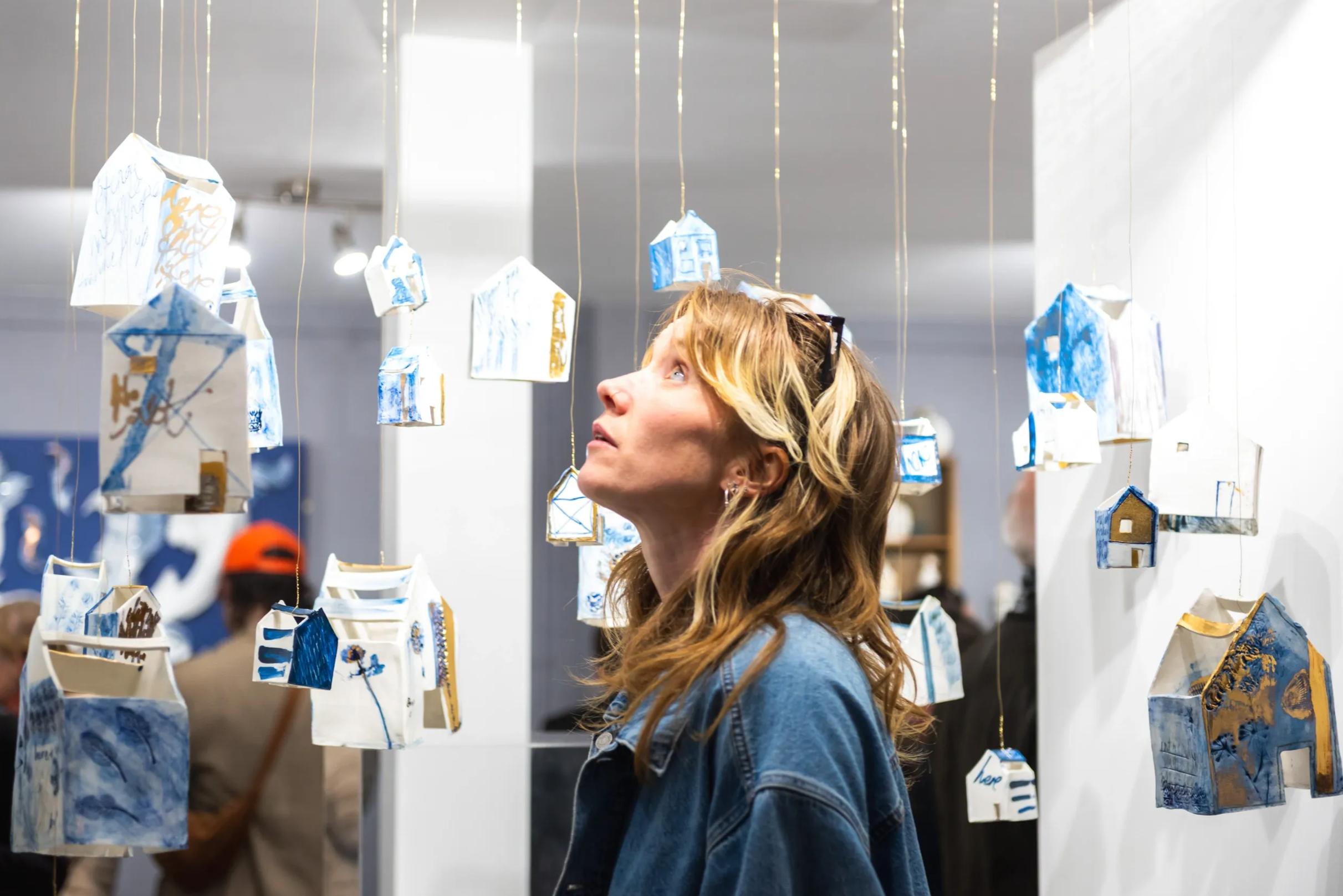
Gray Area’s exhibition ‘Cursive’, featuring works by artist Marion Stewart
Tucked away in a residential neighbourhood on the periphery of Norwich, near a primary school and opposite a pain management centre, Gray Area lives up to its name—at first glance.
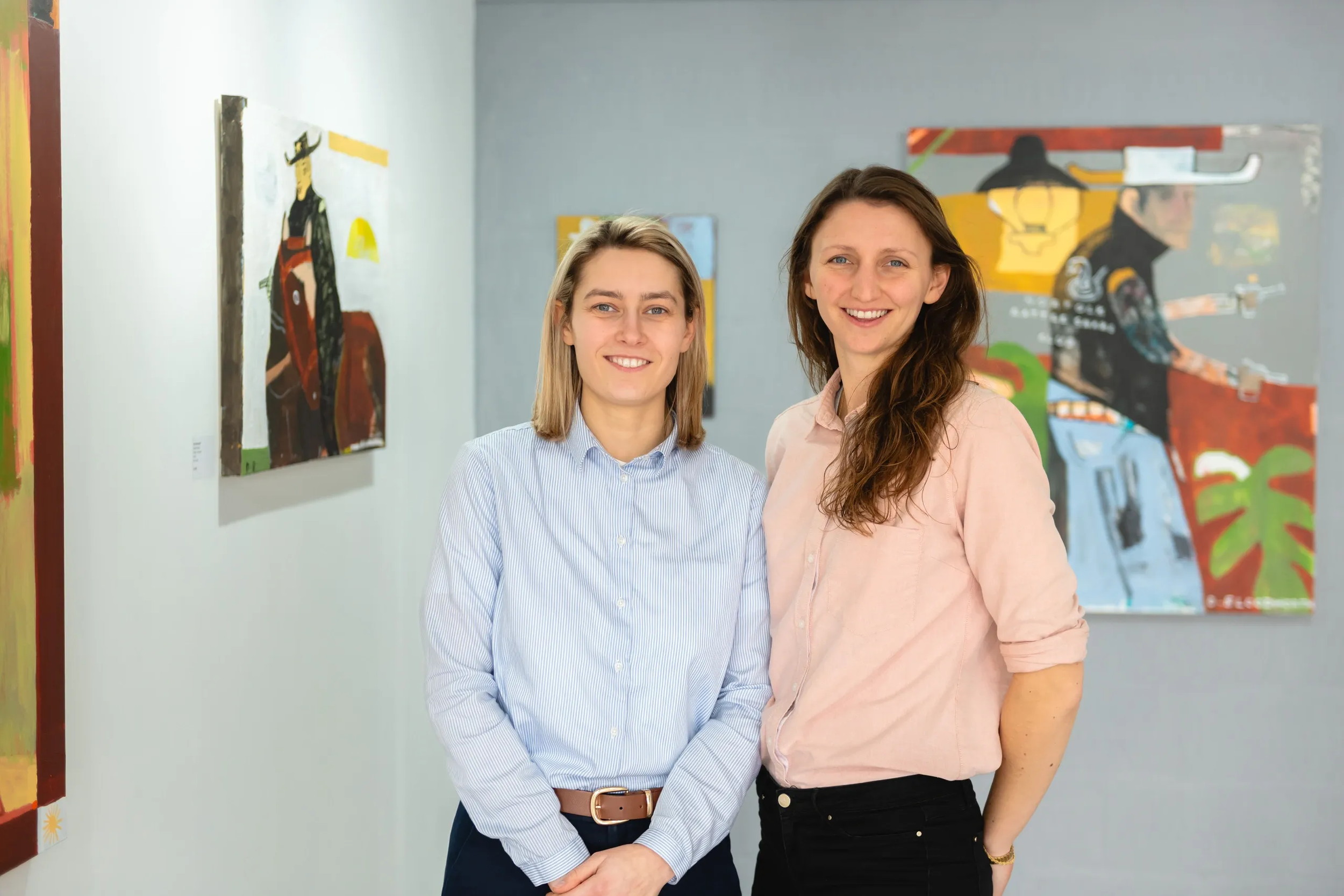
Kenza Gray (L) and Marie-Laurence Boisvert (R)
Opened in 2023 by ceramicist and art dealer Kenza Gray and her partner, photographer Marie-Laurence Boisvert, the gallery aims to champion what Gray calls ‘the in-between of the art world.’ I spoke to them after their exhibition Slow Season, which showcased artwork by local tattoo artists: ‘We wanted to have someone tattooing during the exhibition,’ Gray shares, ‘but health and safety would have had a hooley [a Norfolk colloquialism for stormy weather].’
Live tattooing or not, Gray Area’s opening nights are a key part of Norwich’s arts calendar, and the community is all-in on the gallery’s growth. ‘The city is so supportive,’ says Boisvert. ‘People want places that open up to succeed.’
Rachel Allen, joint-director of Mandell’s Gallery, a venerable institution of the city’s art scene, agrees. ‘There’s a good base of people who go to everything,’ says Allen. ‘They’ll make sure they’re visiting all the exhibitions that are going on…which can be difficult, especially if you’re running a gallery!’
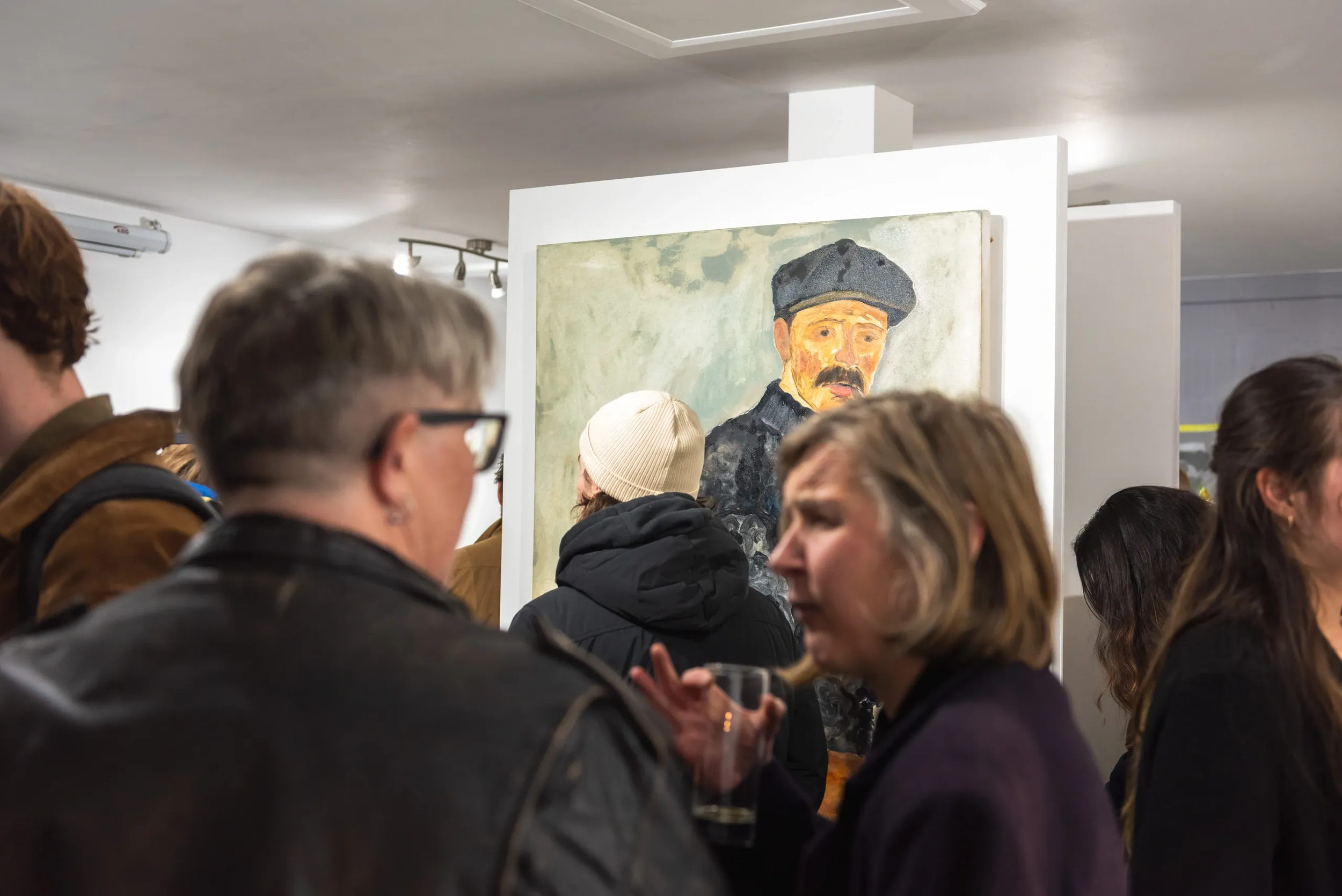
An opening evening at Gray Area
‘People want places that open up to succeed.’
The community element is particularly important to Gray Area’s mission. ‘Commercial viability comes into play sometimes, but we’ve found a great balance where that never dictates who we work with,’ Gray shares. ‘If the work isn’t sellable, but strong or impactful in some way, it’s still going in the exhibition.’
This artistic vibrancy may come as a surprise if you’re only acquainted with Norfolk through Alan Partridge, Delia Smith, and rumours about webbed feet. I grew up in this region, and spent my first days at university pointing out ‘that lump on the east’ and politely chuckling at accusations of inbreeding. But a recent survey declared Norwich the happiest place in the UK, while Compare the Market puts it in the top ten cities people want to move to. If you want more space at lower cost, you might end up joining the many Londoners migrating towards the East of England.
It’s why the county has a burgeoning art scene that rivals the capital in quality, with far less of the competition and classism found in the worst of London’s gallery world. As Rachel Allen puts it, ‘When people move out of London, one of their worries is that they won’t have amazing culture. The vibe I get is that they’re pleasantly surprised with what’s on offer in Norwich.’ Similarly, Gray Area’s team describes meeting young professionals from London who’ve moved to Norwich to start families and found a cultural buzz they weren’t expecting.
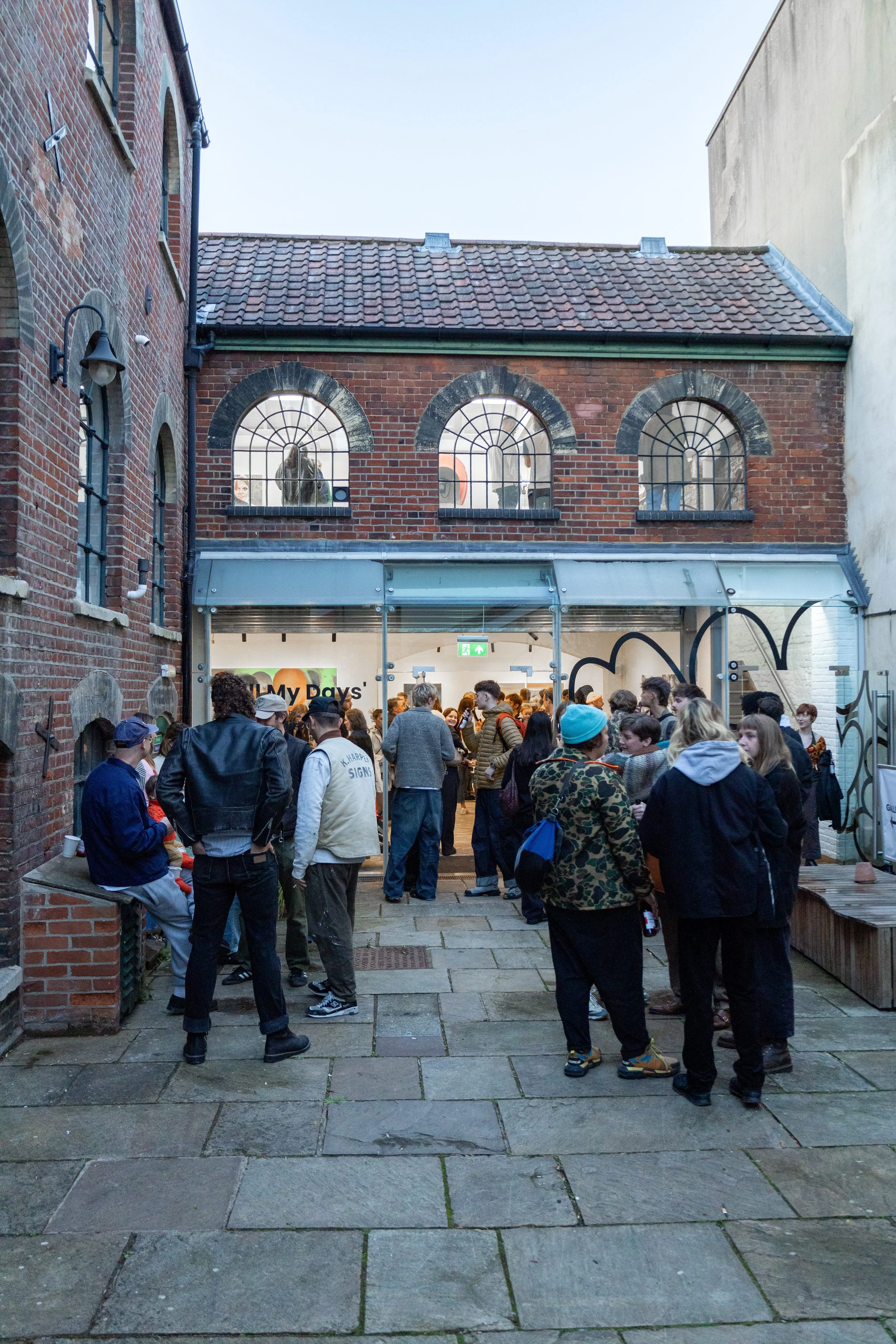
Moosey’s exterior
‘Usually the second they graduate they go to London—but in the last couple of years, we’ve noticed more are staying.’
‘I’ve always said that Norwich is the sort of place that students come to,’ Gray says. ‘It’s amazing and it’s thriving. Usually the second they graduate they go to London—but in the last couple of years, we’ve noticed more are staying.’ Unusually, Gray Area gives solo shows to students and other emerging artists: ‘It’s rare to give people that bit of hope that they can have opportunities outside London.’
It also helps that, compared to London, rent and overheads are much lower in this city. Frazer Bailey has operated two spaces in London, as well as founding Moosey, a gallery which centres on emerging and young artists. ‘You get more for your money,’ he says about Norwich. ‘We’ve got a big, two-storey gallery right in the city centre for a fraction of what we paid in London.’
That doesn’t mean financial challenges go away. As well as supporting new artists, Gray Area also relies on its impressive secondary market collection, including prints by artists like Marina Abramovic and Keith Haring, to boost their legitimacy and profits. Gray Area’s had months where these sales carry their profit margins—but also ones where the opposite happened. Their philosophy is that secondary market sales don’t exist to balance risk, but rather sit alongside sales by new artists, with both parts of the business working towards the same goal.
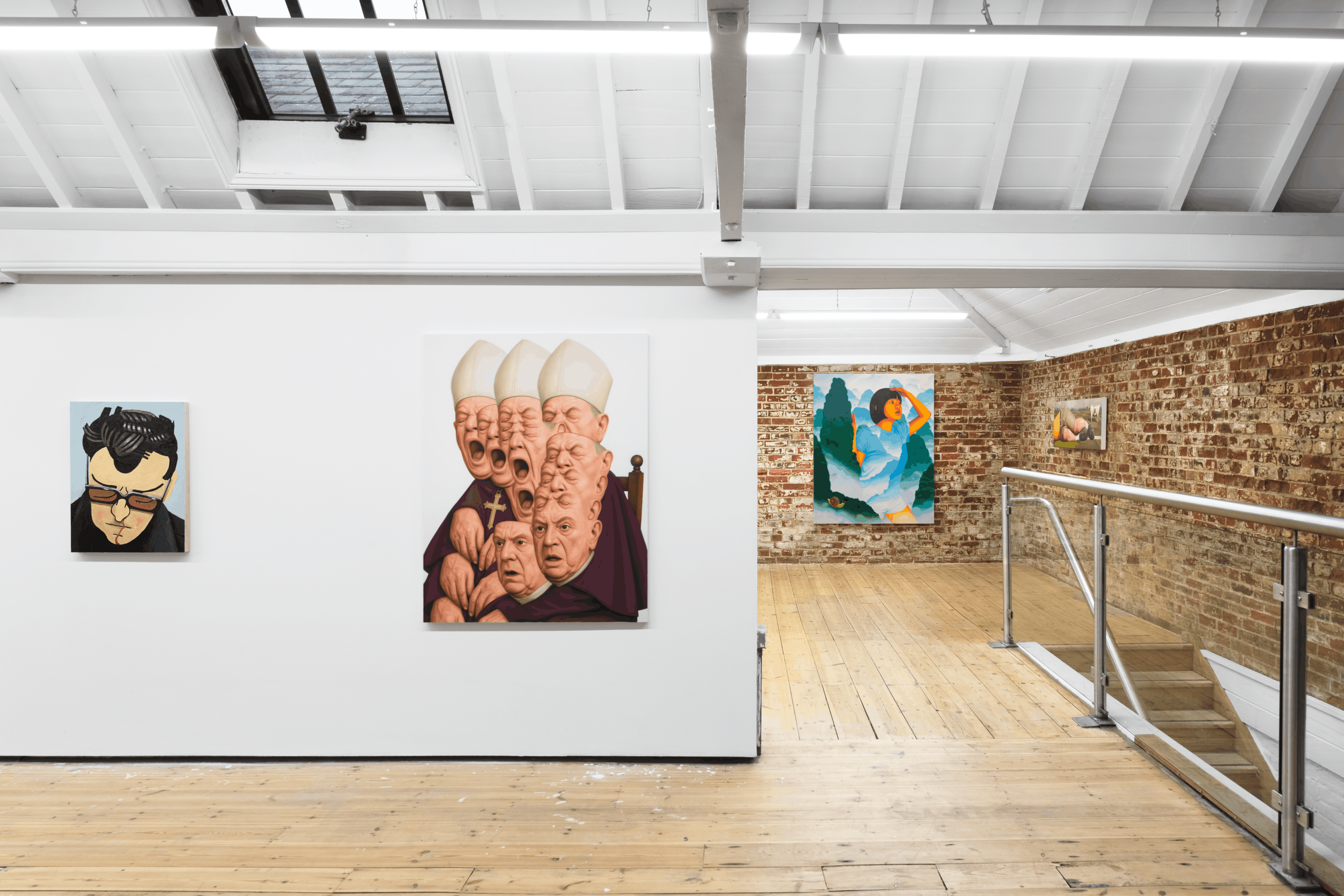
Moosey gallery
‘We like to think of ourselves as being like talent scouts for a football club.’
Frazer Bailey is equally enthusiastic about the new artists who are the backbone of his business. ‘We like to think of ourselves as being like talent scouts for a football club,’ he shares. ‘We’re a really good stepping stone—we want artists who leave us to be prepared, happy, and move on to bigger galleries.’ The more opportunities there are for the new generation, the more growth and potential buyers there are for everyone.
‘I’d welcome loads of galleries opening in Norwich because it’ll become more attractive. We’re here to help,’ Bailey says.
Even in a sleepier town like Holt, about twenty miles from Norwich, locations like Bircham Gallery are attracting young people. ‘When I grew up here there was very little going on—now there’s cool little shops and pop-ups,’ says Peter Bending, the gallery’s marketing manager. ‘Norfolk is not the same Norfolk it was in the Nineties.’
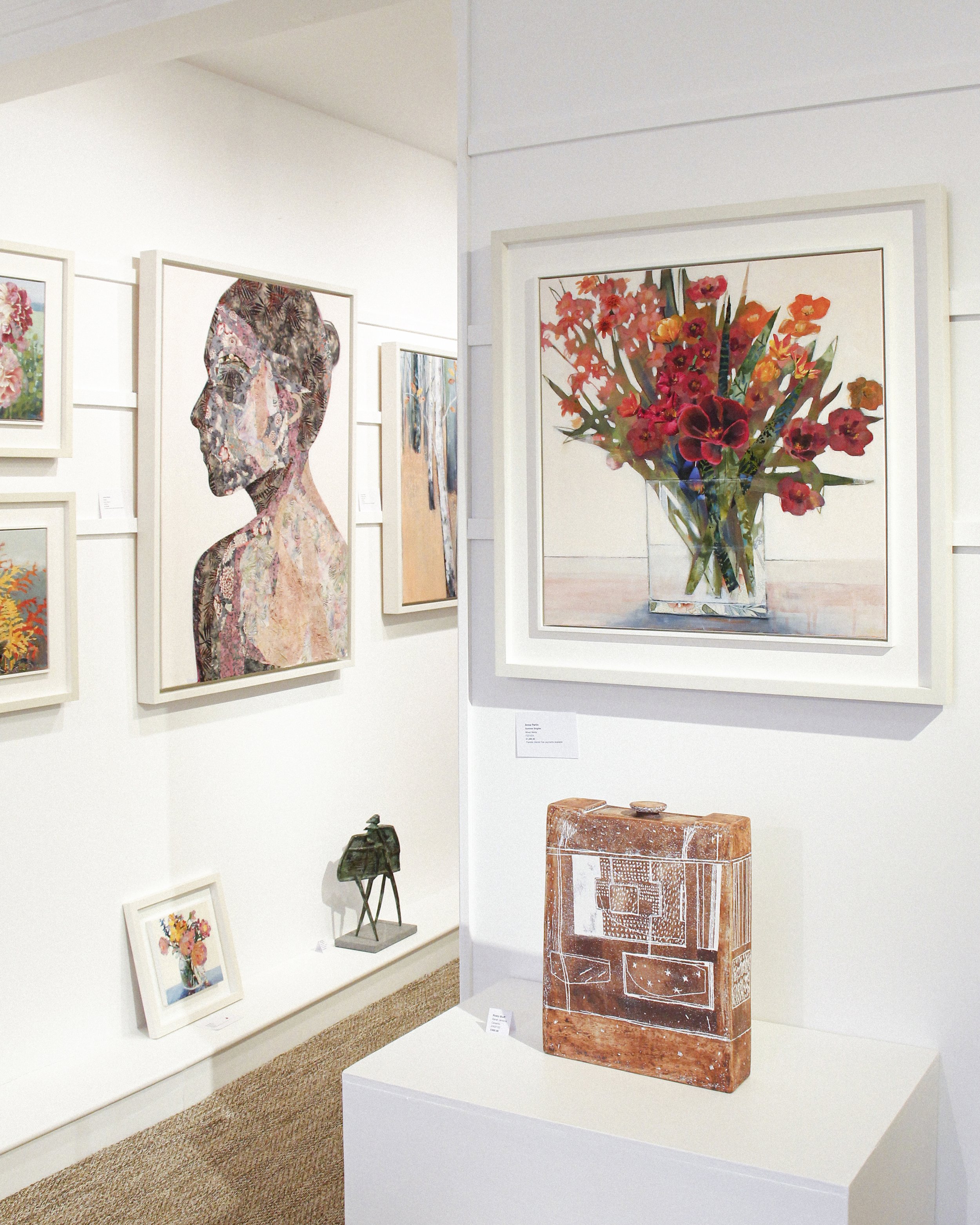
Bircham Gallery
It helps that Bircham Gallery, like many of the Norfolk galleries I spoke to, has a well-curated digital presence. In order to bring in clients across the UK and beyond, these venues don’t just put on exciting shows or display at art fairs, but rely on well-designed websites and social media to engage customers. ‘Even on days when Holt is quiet, we can sell work for artists,’ Bending says.
‘Norfolk is not the same Norfolk it was in the Nineties.’
The presence of these galleries energises an interest in the arts, supports new creatives, and challenges the stereotype that culture is exclusively found in the capital. But perhaps the most important thing they contribute is that sense of community they’re built on. Artists, customers and curators are there for much more than a quick sale.
As Gray puts it, ‘After our exhibitions we all go to the pub and the barman’s there waiting for us with a drink. Everyone’s involved, you know? He’s invested in the fact that someone down the road from him is doing well and he’ll tell people they have to visit us. One of the artists we represent lives down the road. We could throw a rock and hit him.’
All images supplied by Gray Area, Bircham Gallery, and Moosey. We do not hold copyright for these images.