
Return To Sender: How BUZIGAHILL’s Slow Fashion Builds Community In Uganda
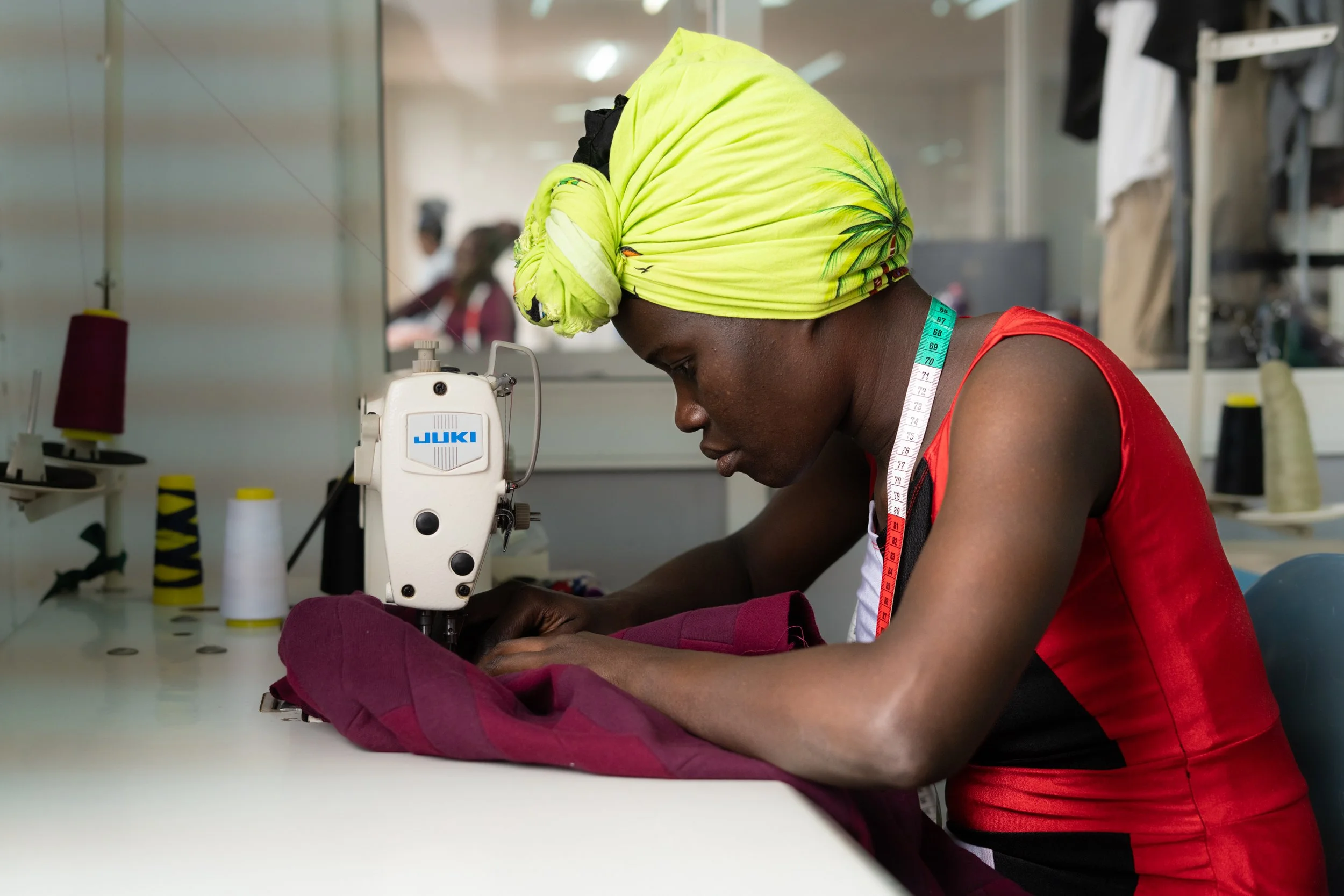
There’s rarely a quiet day—literally or metaphorically—in the BUZIGAHILL production-design fashion studio. If the windows are open, the clamour of traffic across downtown Kampala, Uganda’s capital, wafts into the offices. Bales of clothing from Owino Market, the country’s biggest second-hand clothing thrift hub, arrive by the kilo, while the swift clicking of sewing machines is echoed by the cheerful chatter amongst the workers upcycling these clothes.
BUZIGAHILL is riding the high of its third successful feature at Berlin Fashion Week, where its admirers included German-Ugandan actress Florence Kasumba (whom superhero fans may know from her role in the Black Panther franchise). For an African-owned luxury designer brand that recently celebrated its fourth anniversary, this is no mean feat.
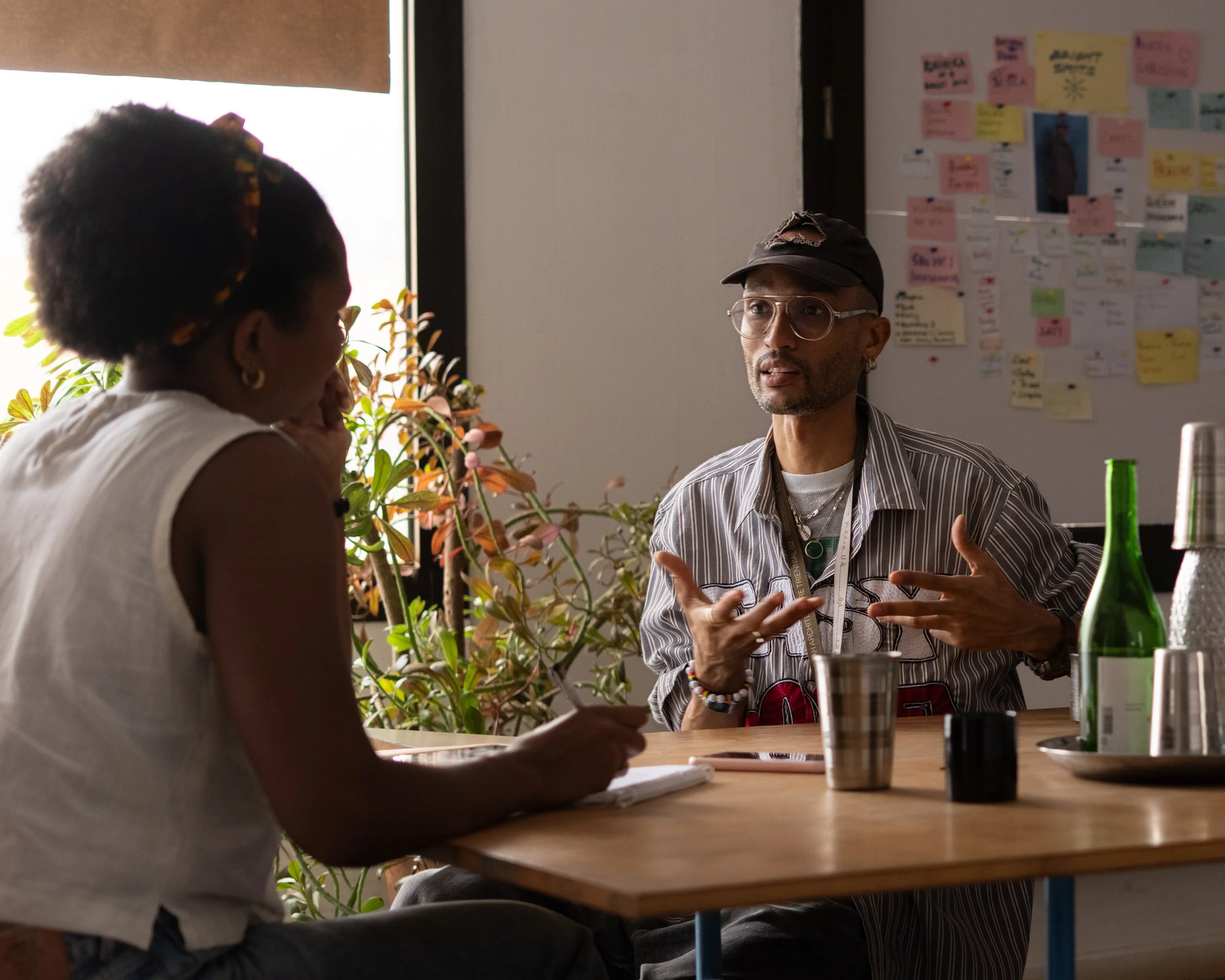
Bobby Kolade, founder of BUZIGAHILL
‘The idea of design isn’t the way I learned it in Berlin or in Paris.’
‘The idea of design isn’t the way I learned it in Berlin or in Paris,’ says Bobby Kolade, the brand’s Ugandan-German founder and Creative Director. Like the one-of-a-kind pieces it manufactures, Kolade’s slow fashion label is an unusual one. Operating with sustainability as its design philosophy, the brand sources second-hand clothing sent to Uganda from the Global North, takes them apart, and transforms them into unique pieces that are then sold to a global, mostly non-African, market. Hence the label that adorns all its clothing: Return to Sender.
In many ways, BUZIGAHILL – named after the hilly Kampala suburb Buziga that is home to some of its artist community – is a love letter to both the brand and Kolade’s home, Kampala. The brand draws on its urban origins in its design, bringing together an oversized silhouette with a patchwork design of different individual clothing items to create unpretentiously stylish pieces.
‘They don’t know it – but they’re doing something highly creative and extremely stylish.’
Kolade makes no secret of his unexpected fashion inspiration: the riders of Kampala’s boda bodas, the infamous motorcycle taxis that have become the city’s landmark. ‘They’re doing something – they don’t know it – but they’re doing something highly creative and extremely stylish,’ Kolade says.
Since it was established BUZIGAHILL has racked up accolades steadily. Several pieces were displayed in a 2025 exhibit at London’s Barbican Centre, while the same year, custom-made BUZIGAHILL totes were given to attendees of a New York Climate Week event at the Frick Collection. BUZIGAHILL has stockists in Japan, and Kolade has become a regular speaker at fashion events in Amsterdam, London, Lagos, and Sharjah.
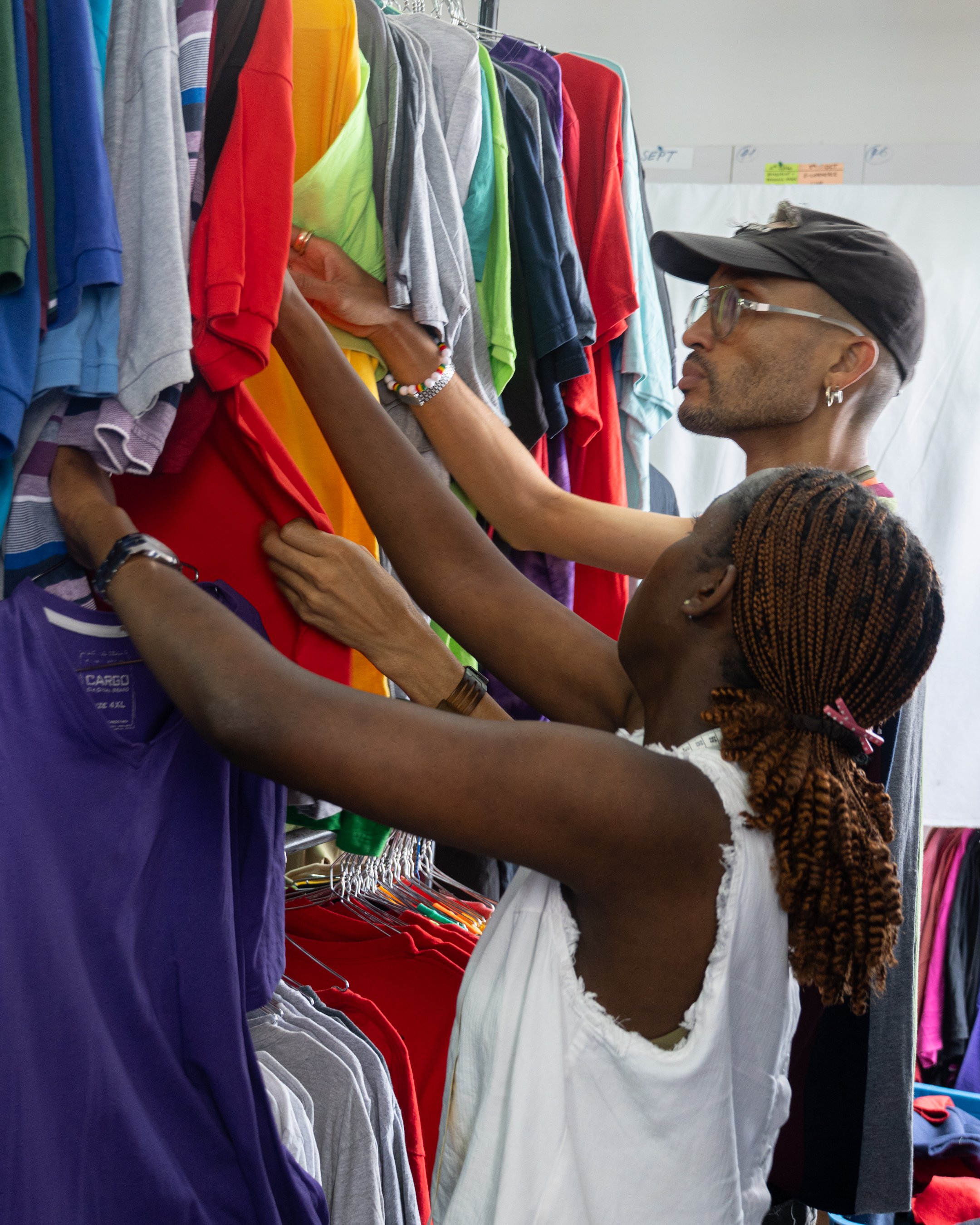
But BUZIGAHILL’s biggest achievement might be how the firm incorporates its community into the design process. Rather than having a designated design team, everyone involved in producing an item also helps shape it creatively. From selecting second-hand clothing at Owino Market and pairing different colours and pieces, to complete redesigning, each person’s unique perspective plays a part, and Kolade takes everyone’s suggestions seriously.
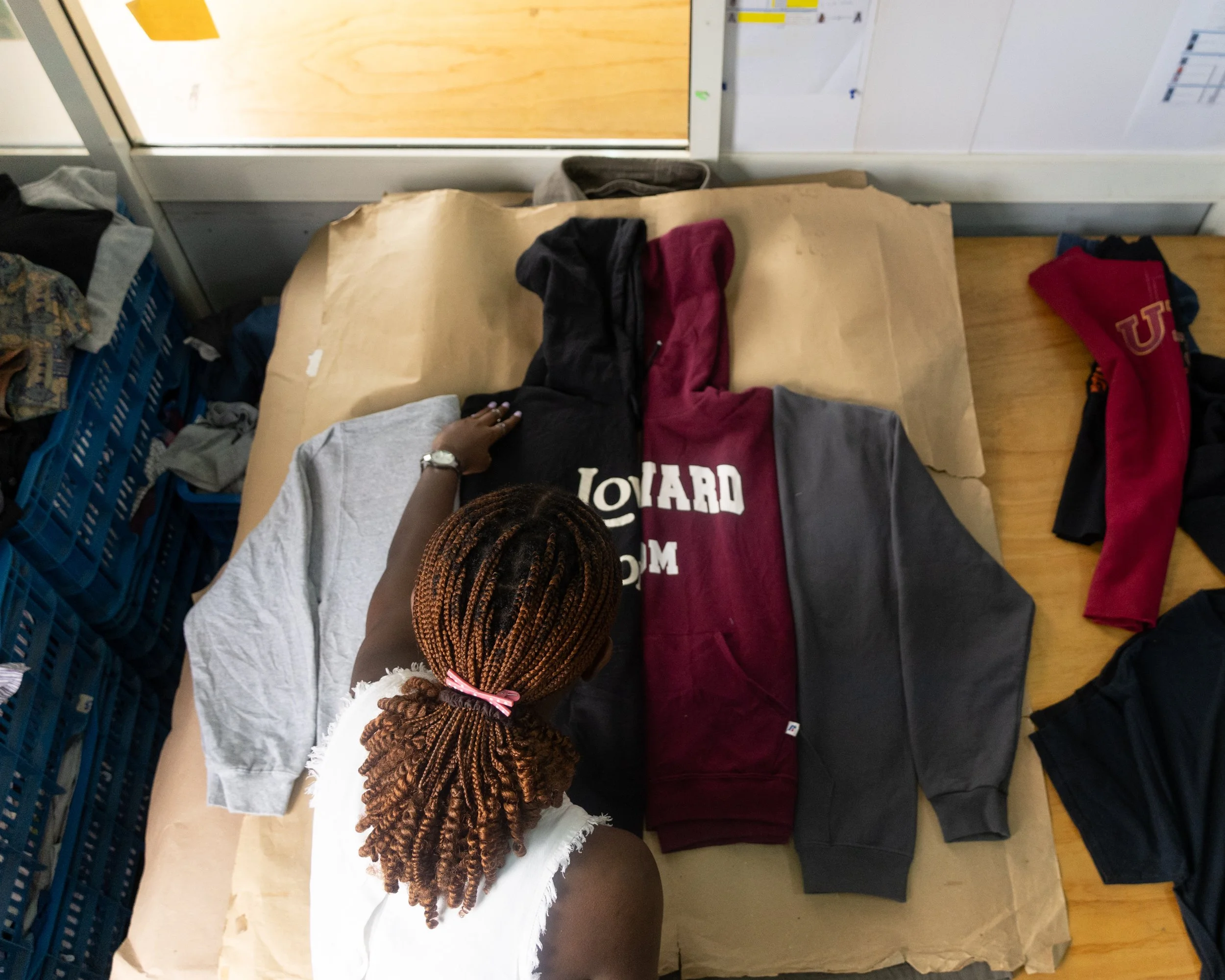
It is a learning curve, and at each stage the team gets together to discuss what can be improved. ‘We’re kaizen-ing this,’ quips Praise Mugisha, BUZIGAHILL’s Press and Image Manager, referencing the Japanese business philosophy that focusses on slow, continuous improvements.
92% of the company’s employees are women, and a number of the models are refugees from the Democratic Republic of Congo.
Inclusivity and openness lie at the heart of BUZIGAHILL’s community in a way that goes far beyond corporate buzzwords. 92% of the company’s employees are women, something Kolade is determined to maintain, and a number of the models are refugees from the neighbouring Democratic Republic of Congo. It’s important to Kolade that their hiring process is carefully considered, and that everyone feels comfortable and safe in the studio. ‘I’m very protective of the team and our space,’ he says.
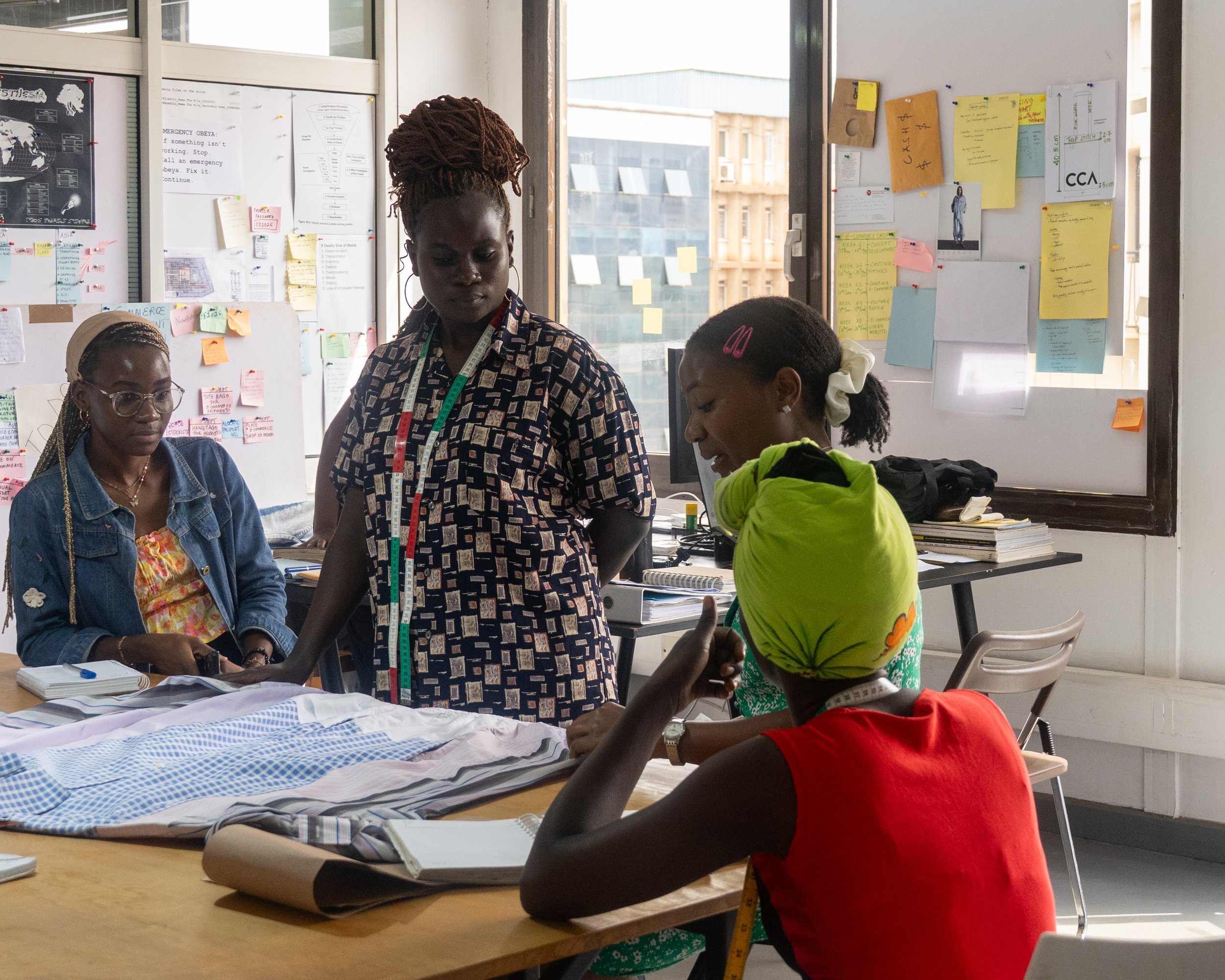
The results are evident throughout the workplace. The studio dining hall, affectionately called DH, is the company relaxation area. The entire team eats together everyday, assembled on mismatched industrial-style furniture, surrounded by plants and exhibition posters. Laughter and conversation are shared over savoury meals prepared by the in-house cook, Auntie Christine.
‘I’m very protective of the team and our space.’
One of Kolade’s favourite aspects of being a manager is seeing his colleagues growing in confidence, and his approach to creating a comfortable work environment for women is especially noteworthy considering Uganda’s heavily patriarchal society. In most Ugandan offices, there are rigid rules for how women are expected to dress and look, but BUZIGAHILL’s offices have none of these requirements. ‘You can literally watch them just release and become free,’ Kolade states. ‘The hairstyles have evolved and it’s no longer the traditional twists or braids. It’s now something completely funky.’
Managing a sustainable business in Africa comes with immeasurable challenges. Simply operating in Uganda presents bureaucratic hurdles: for instance, antiquated colonial-era trade laws that do not recognise BUZIGAHILL as a manufacturing business, as they do not work with raw materials. Nor is BUZIGAHILL eligible for tax incentives that larger and foreign-owned firms operating in Uganda might receive. It frustrates Kolade immensely: ‘Where is the incentive for Ugandans who have lived abroad? Give us an incentive to come back home. Does it always have to be the large foreign manufacturer that benefits?’
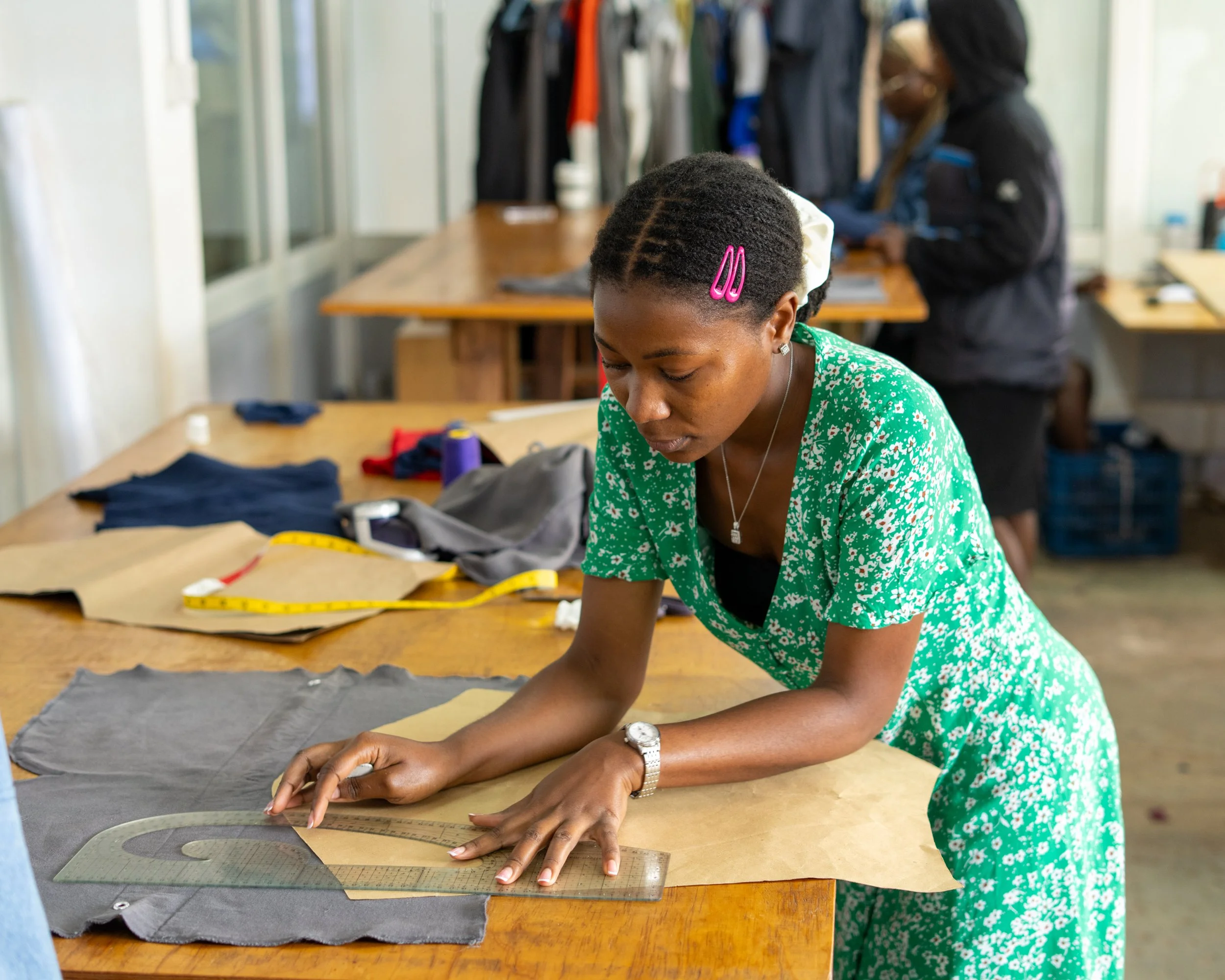
‘Give us an incentive to come back home. Does it always have to be the large foreign manufacturer that benefits?’
But as a global business, BUZIGAHILL also has to contend with cryptic travel and immigration policies. As the company grows, the more international business opportunities present themselves, and the more visa applications are required for its Ugandan staff. However, they’ve also struggled with cases where team members had visas denied by various Global North countries. ‘The museums will send us invitations and budgets to make an exhibition piece, but the people who made the piece can’t travel to see it and engage with the audience,’ says Kolade, expressing his frustration at these undignified and dehumanising processes.
BUZIGAHILL, however, continues to thrive, in spite of the hurdles it faces, and this is largely because of its emphasis on community and interpersonal relationships. The company enjoys a special place in the heart of Kampala’s creative community, something Kolade calls ‘a love affair’. It is not unusual for artists to drop into the studio and use it as a co-working space.
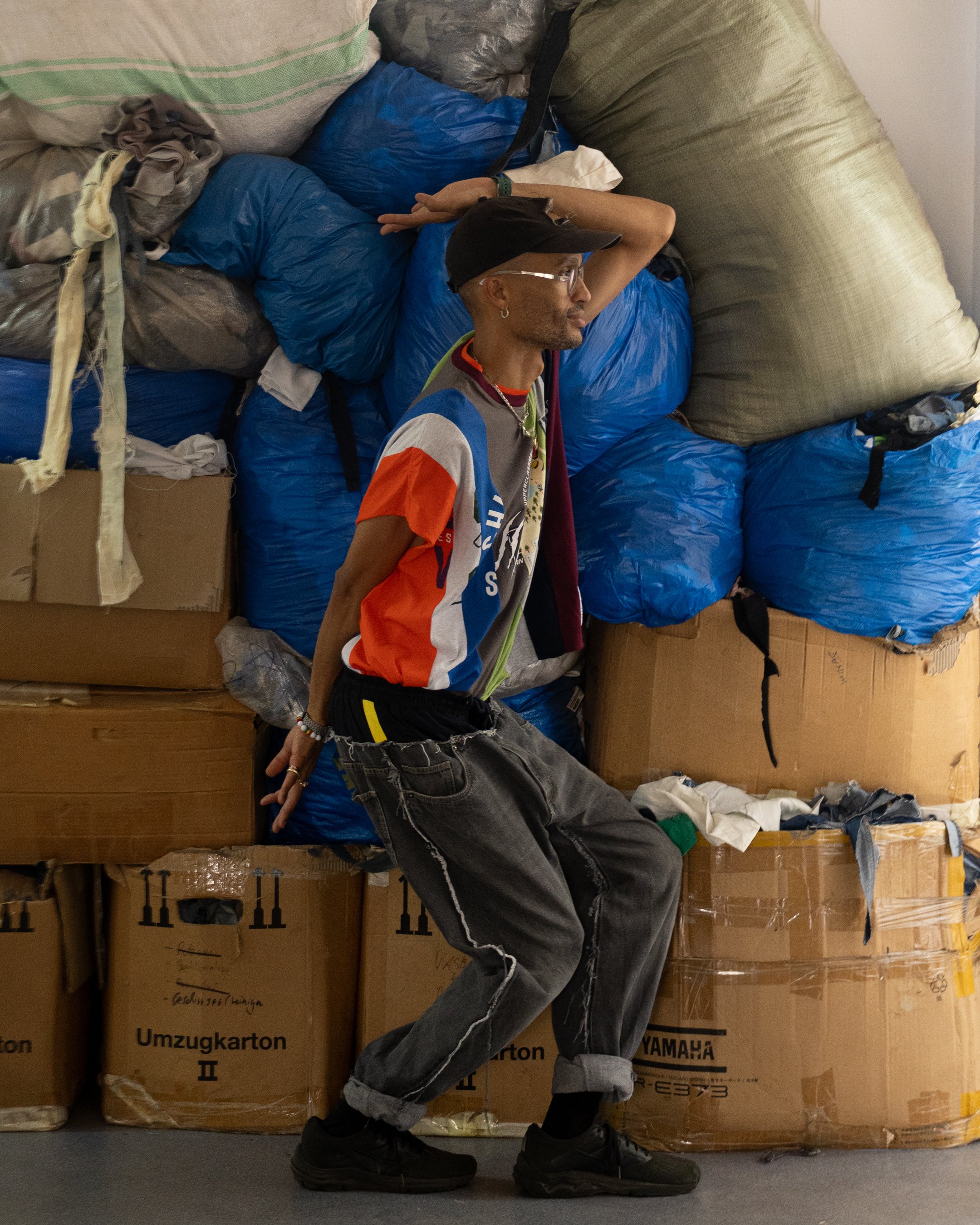
The environment is popular with artists for the same reasons that it’s comfortable for employees. In an overwhelmingly conservative Ugandan culture, where appearance and behaviour are policed according to values that are relics of colonial rule, BUZIGAHILL offers a haven for more alternative and liberal-minded creatives.
‘Are we in a space that allows everyone to be the best version of themselves?’
The company collaborates with local artists, photographers, and DJs for photoshoots and its highly popular launch parties. Amongst Kampala’s and Uganda’s diaspora art crowd, a BUZIGAHILL piece has long since become a status symbol, and the outfits have been seen in places as far flung as Amsterdam, Nairobi, London, Berlin and Kingston.
The idea of success has changed for Kolade. Initially, he admits that it was about the brand’s international growth. ‘Is Return to Sender actually being returned to the sender?’ he wonders. But now, he acknowledges that it is about his team and community. ‘Are we in a space that allows everyone to be the best version of themselves?’ Kolade says. Perhaps, more so than the environmental benefits of their business, that is what makes their fashion sustainable.
Photographs courtesy of Henry Robinson.