
‘I Chose Defiance’: How Charlie Cauchi Brings Malta To The Venice Biennale
When I moved from London to Malta as a kid, I was plucked from the grey concrete of East End high rises and teleported amidst yellow sandstone houses and sun-bleached signs for ice cream. I like to think that, at the same time my eyes were adjusting to the gleam of the Mediterranean, there was someone else watching the cascading waves too. Or maybe I’m just looking for a commonality with the first woman to represent Malta at the Venice Art Biennale, hoping that her startling vision of Malta reflects something of my own.
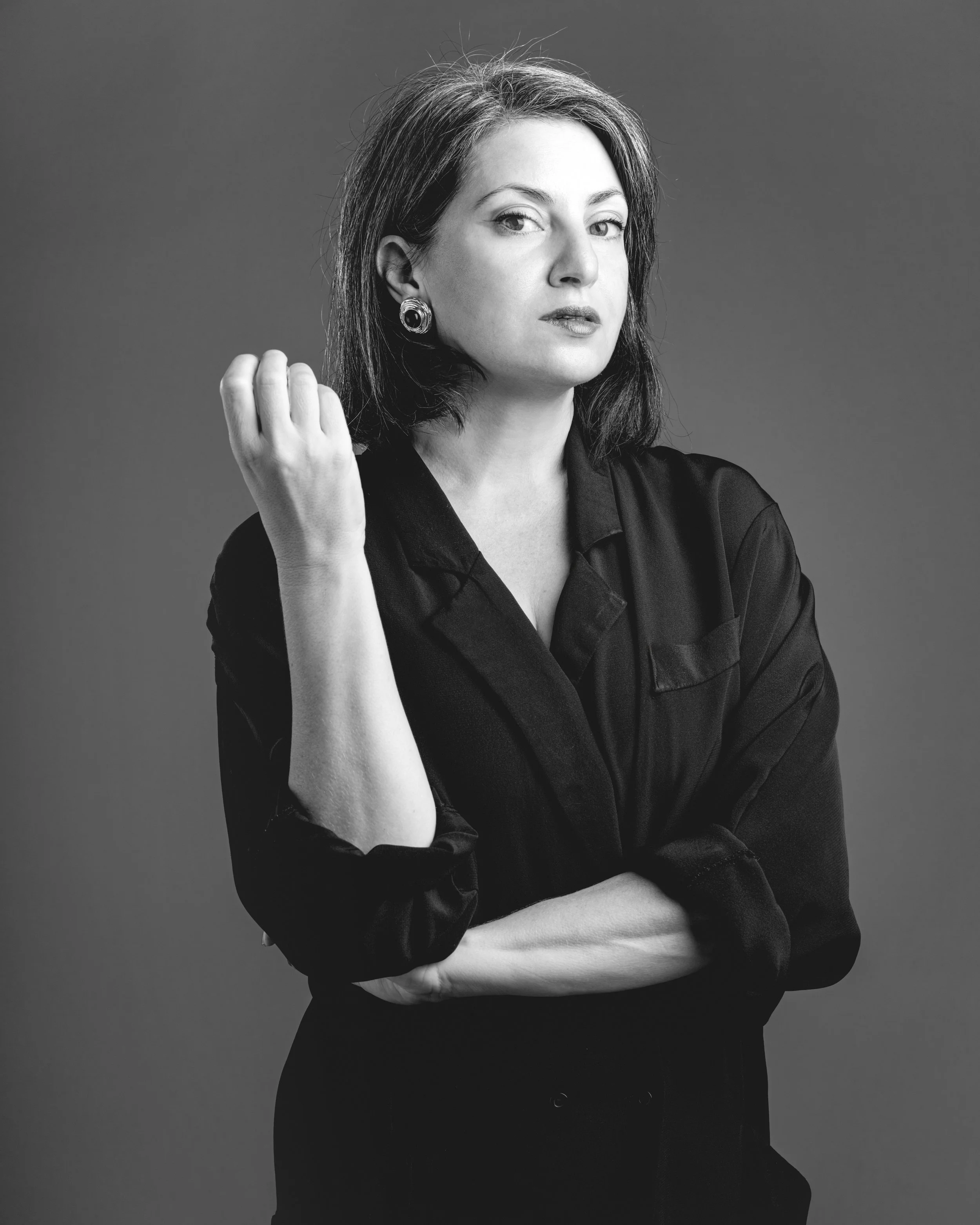
Charlie Cauchi. Photo credit: Alexandra Pace
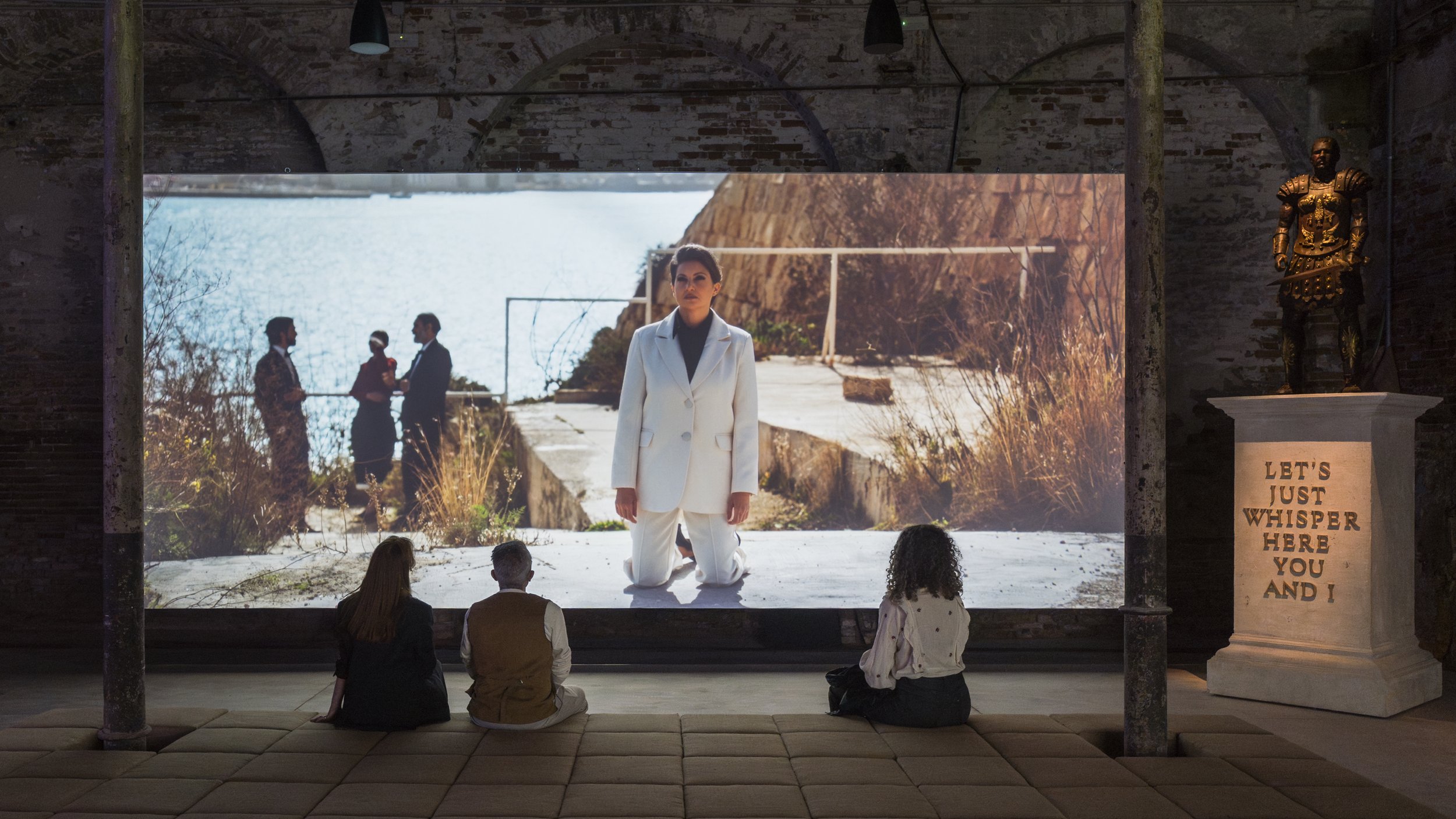
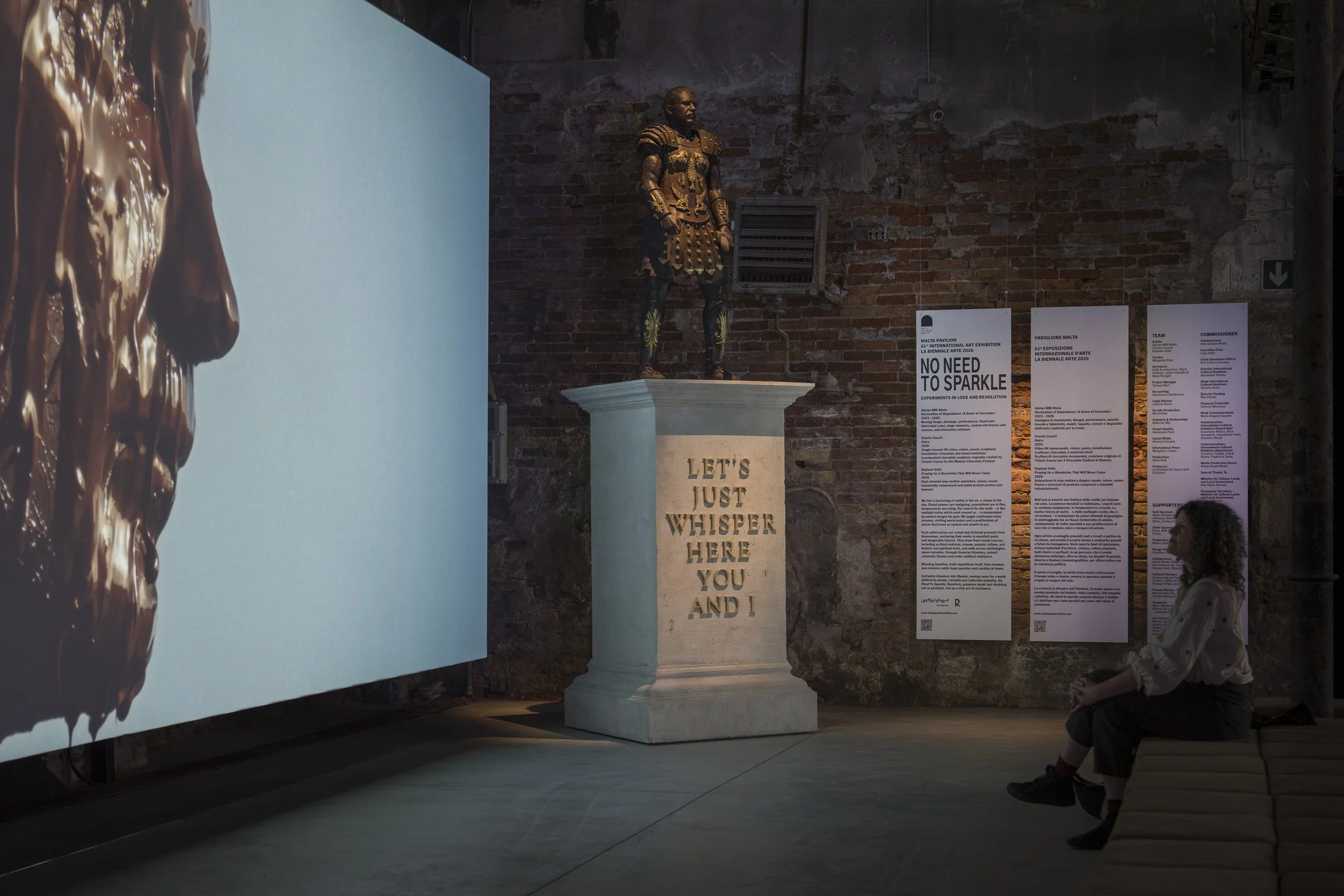
Charlie Cauchi is as familiar as I am with how poorly recognised Malta is. ‘Malta? But where is it? Near Spain, right? Or Turkey? Like Cyprus? So you speak Spanish?’ Even as she prepares the Malta Pavilion’s show ‘No Need to Sparkle’, she finds a moment to laugh about these questions that we’ve heard countless times before. A life-sized chocolate sculpture of Russell Crowe dressed as his character in Gladiator stands on a plinth beside her 23-minute film Dolce, a restaging of Fellini’s La Dolce Vita. ‘He’s potentially going to melt, it’s much hotter in here than we’d expected,’ she says of Crowe’s chocolatey counterpart.
‘It’s like living on a film set. I can't remove myself from the cinematic space.’
Fellini’s masterpiece offers Cauchi cues to explore Malta’s status as a high-profile filming location. She lives in Malta’s ethereally beautiful capital Valletta, a layer-cake of architectural styles that’s popular with Hollywood directors. ‘I couldn’t leave my apartment last week as a crew were shooting outside my door,’ she explains. ‘It’s like living on a film set. I live near the pub where Oliver Reed died. I can't remove myself from the cinematic space.’
In Dolce, Cauchi has woven together six ‘films’ of her own in a meditation on Malta’s film industry, inspired by the big-name productions that have been shot on the island: Midnight Express, Gladiator, Troy, Munich, Captain Phillips, and Napoleon, to name just a handful. ‘The temporal aesthetic of Malta is malleable,’ she tells me. ‘We’ve got 1970s Rome, Ancient Greece, Napoleonic Marseilles, 1990s Baghdad, modern Dubai and Jesus’ Jerusalem.’
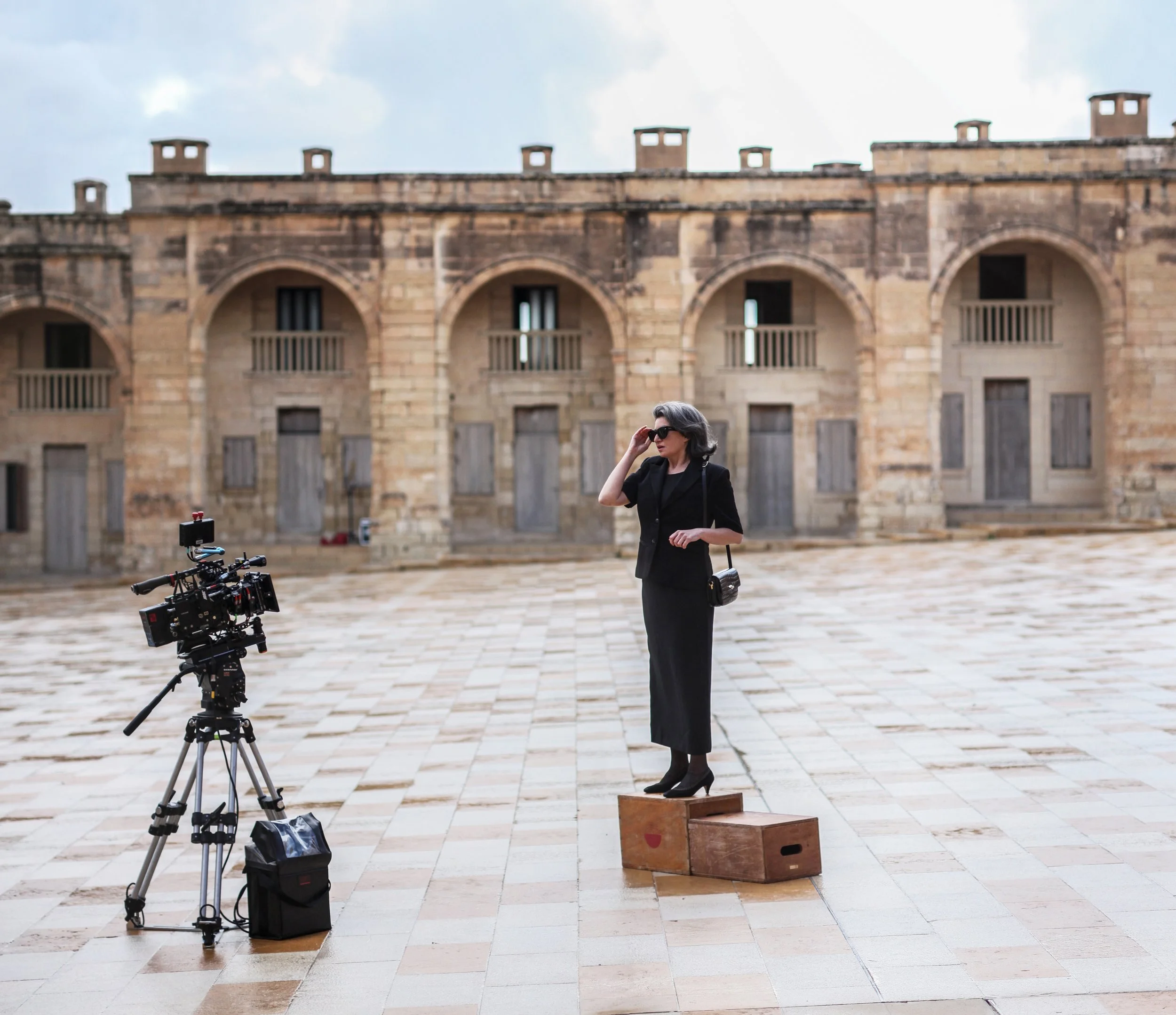
Photo credit: Julian Vassallo
‘The temporal aesthetic of Malta is malleable.’
In a country that doubles for so many other locations and befuddles the outside world as to its language and whereabouts, who is Malta really? ‘We're living in a time where you don't know what is real and what is not,’ Cauchi says, ‘but it feels like that gives us more agency. This is our moment.’ You can see her call to arms throughout Dolce, as her cast and crew, who all work in the island’s film industry, break the fourth wall and stare you down through the camera. The narrative is theirs now.
Cauchi herself acts in the film, before killing herself off in the Napoleonic scene, blood trickling from her mouth. Do women artists have to kill themselves to be seen and represented in patriarchal Malta? ‘I think I chose defiance. That’s why we all stare directly at the viewer. That’s why I open my eyes when I’m playing dead,’ she says, skirting around my question.
We talk about religion, not an intentional preoccupation of her work but unavoidable in any conversation concerning our Roman Catholic island. It’s especially apparent in how the sequence in La Dolce Vita where a statue of Jesus is flown over the Vatican is referenced with a scene where a military helicopter (courtesy of the Air Force) sails Russell Crowe’s likeness over Malta’s skyline. ‘We love Russell in Malta, we love celebrities in general,’ she shares. ‘I’m interested in how celebrities and idols are permeating culture, like modern saints.’
‘I’m interested in how celebrities and idols are permeating culture, like modern saints.’
And lord knows Malta loves its saints: it’s a tiny island with more religious festivals than even locals can keep up with. ‘Maybe it’s a celebration of how much we love to celebrate,’ Cauchi smiles, referring to her chocolate Crowe sculpture, which I say reminds me of something you’d see at a festa, or celebration of a saint’s day. ‘He was made for Hamrun Chocolate Festival by master chocolatier Tiziano Cassar, with Crowe’s permission to use his likeness. Hamrun is typically a very working class town, and I wanted to showcase the beauty of that. It’s all part of what makes Malta who we are.’
Dolce is a visceral film, full of images that shine and melt and bleed. I find myself salivating whilst watching the chocolate Crowe liquify and drip away, as I mull over the impermanence of Hollywood compared to the colossal medieval bastions of Manoel Island in the background, emblematic of Malta’s chequered colonial past. In one penultimate scene Cauchi features in drag, suited and booted in white, shrugging like Marcello Mastroianni does at the end of La Dolce Vita.
That shrug is also a very Maltese gesture. It seems to say, ‘What can we do? We can't do anything.’ Or could we? We should be so much more than just a Hollywood backdrop.
Dolce is one of three works within “No Need to Sparkle; Experiments in Love and Revolution”, Malta Pavilion, Arsenale, Venice, 9 May - 22 November 2026. Commissioned by Arts Council Malta.