
‘A poet who happens to paint’: Carole Gibbons’ The Mythological Landscape
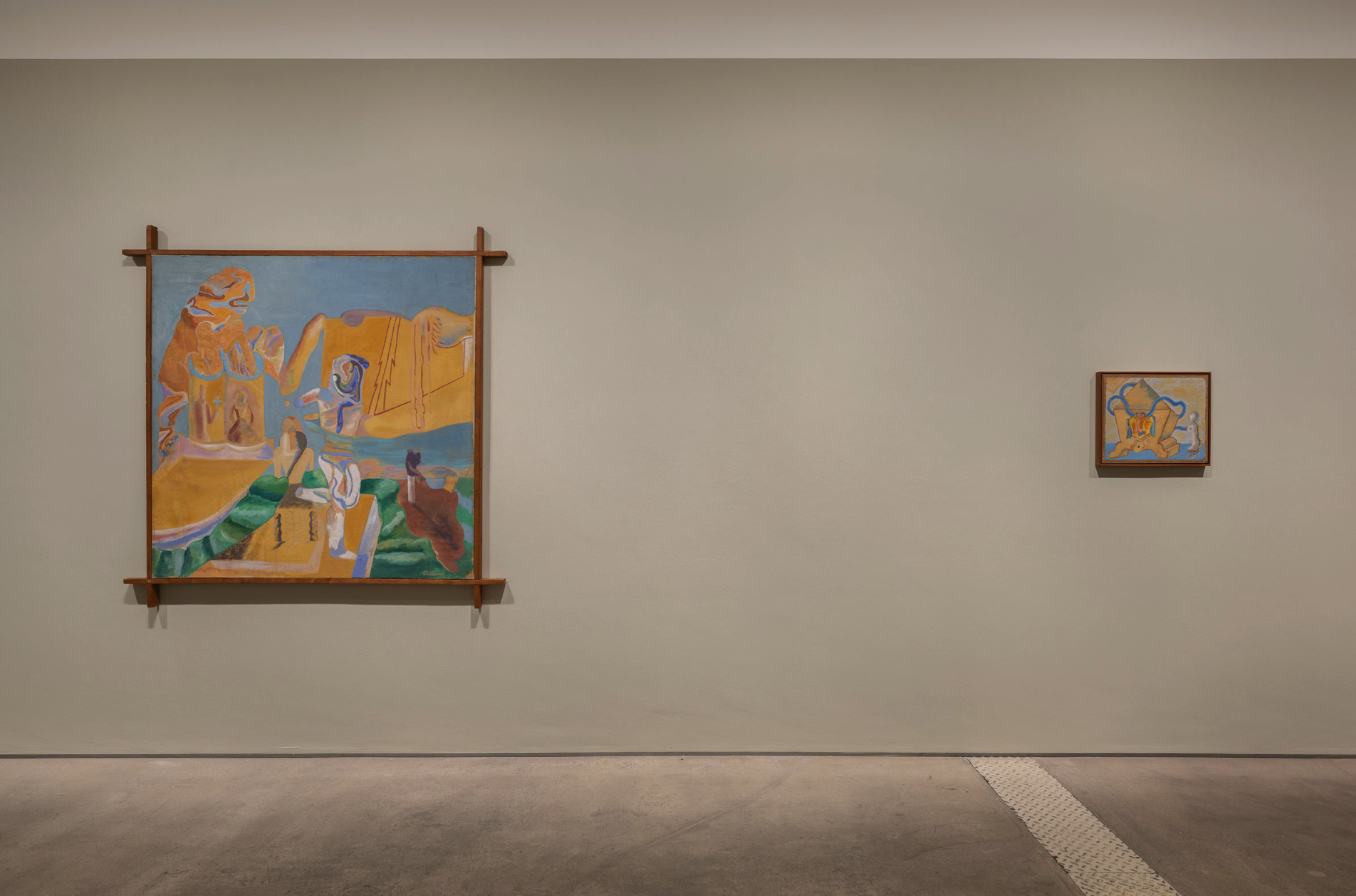
The first thing you notice is the colours: sea-like greens and blues, chalky ochres, and hot, powdery pinks, resonating and repeating across the gallery.
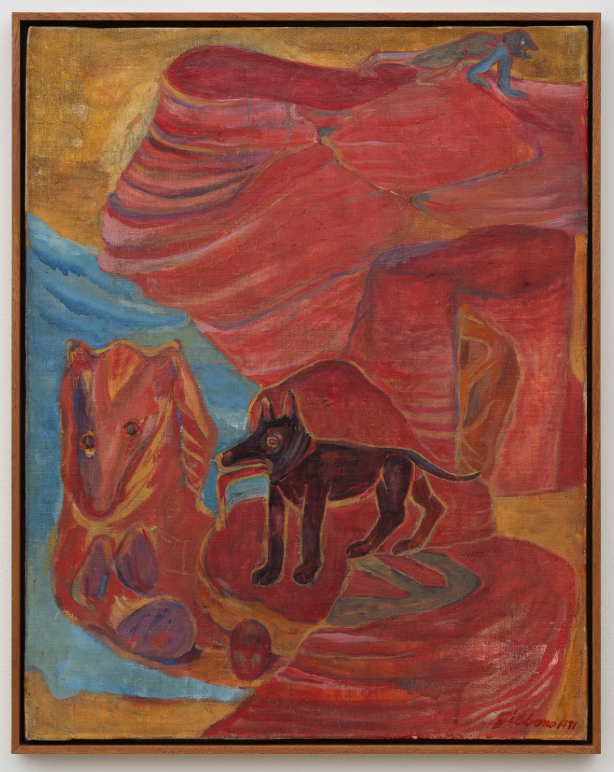
Mythological Landscape, c. 1970-1971
But each canvas has a unique atmosphere. In one, a giant green cat floats in a desert-like landscape, tethered by wormy tendrils. In another, a fragmented marbled statue has come alive, running through the story. There are stairs made of sea, floating keyholes, and lemurs crouching in a pink underworld.
There are stairs made of sea, floating keyholes, and lemurs crouching in a pink underworld
These are just some of the magic images on display at East London’s Hales Gallery in Carole Gibbons: The Mythological Landscape, which brings together a group of paintings made by the Scottish artist in the 60s and early 70s. From ‘The Birth of Venus’ to ‘Mary Queen of Scots’ and ‘Shades’, many of these works draw on mythological, classical, and historical themes.
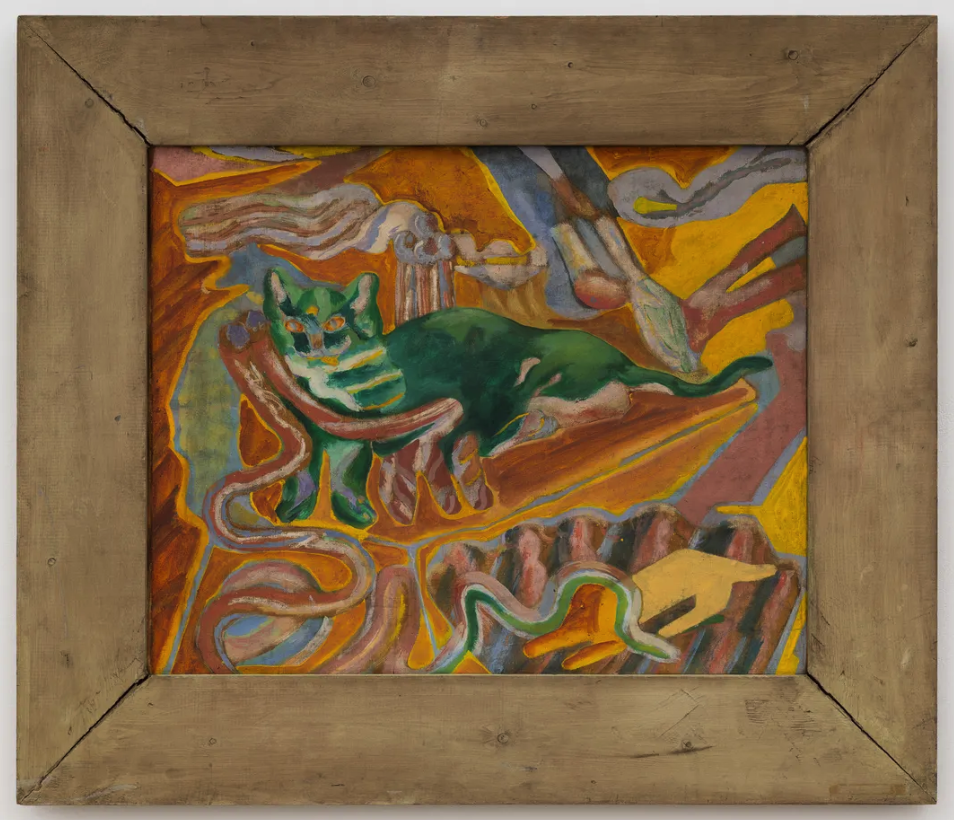
Green Cat, c. 1965
A sense of myth permeates Gibbons’ entire oeuvre, from the earlier works on view here to the later still lifes and portraits which, whilst set in a more domestic realm, retain an air of mystery, of the quotidian injected with a mythic importance. They’ve always reminded me of Vanessa Bell, if she was a bit more witchy.
She’s been called ‘a poet who happens to paint’
The artist’s abiding interest in mythology started in 1941 when she was evacuated to the Scottish Highlands, and her mother sent her Robert Graves’ The White Goddess to read. In this highly original study, Graves argued that ‘true’ poetry is a form of devotion to an ancient, lunar goddess-figure who reappears across time and cultures.
Drawing on Celtic and classical sources, Graves took a distinctly idiosyncratic approach to the study of myth, one outside of academicism and patriarchal constraints, that reimagined it as a more mystical, feminine, and creative force.
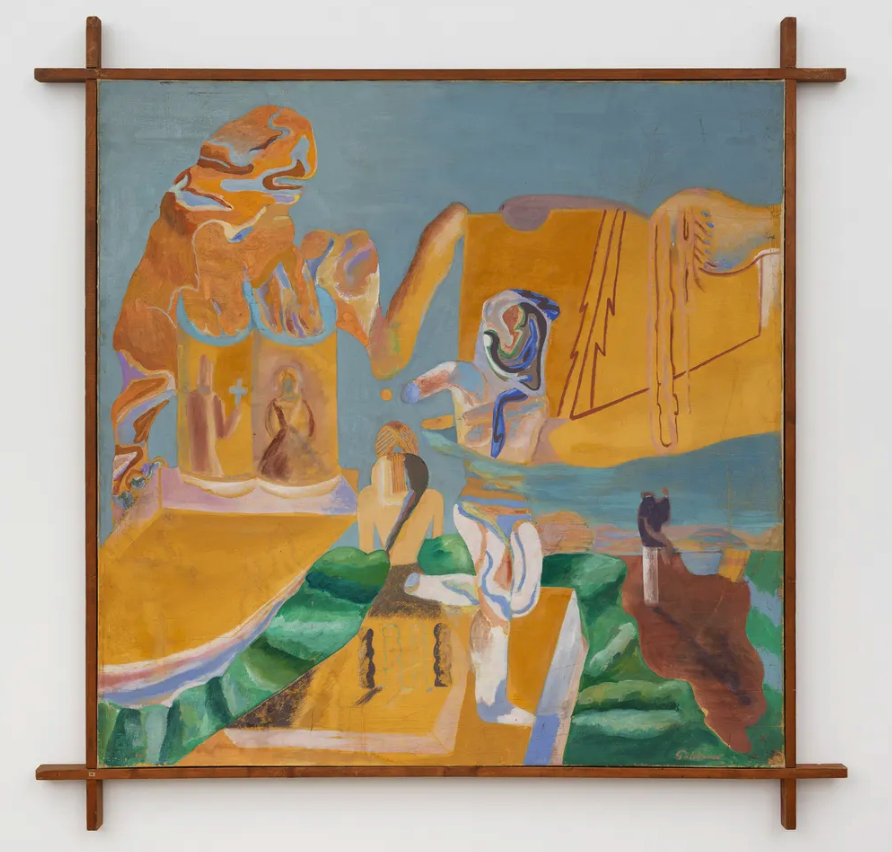
Mary Queen of Scots, 1966
It’s something that Carole Gibbons’ paintings arrive at too. Indeed, she’s been called ‘a poet who happens to paint’, and on display here is her personal visual poetry, one that manages to evoke both the familiar and the strange. While these paintings draw on recognisable narratives, Gibbons takes them into new imagined worlds, infused with her uncanny and unexpected motifs – from keyholes and pawns to classical architecture and cats.
These are dreamscapes ruled by their own logic, and looking at them, I felt as if I was seeing something I innately recognised, while at the same time peering into an individual’s unique interior terrain.
Images courtesy of Hales Gallery and the artist
VISITING INFO:
GALLERY NAME: Hales Gallery
ADDRESS: Tea Building, 7 Bethnal Grn Rd, London E1 6LA
DATES: March 14th – April 11th 2026, Wed - Sat 11AM – 6PM